Serengeti Family Safari Packing List With Kids 2026
Quick answer: for a July to October Great Migration trip with young kids, pack three thin clothing layers in dust-coloured khaki, a pediatrician-cleared malaria kit dosed by your child's weight, ear defenders for the light aircraft, and far more snacks than feels reasonable. Leave the stroller, any camouflage clothing, and the heavy zoom lens at home.
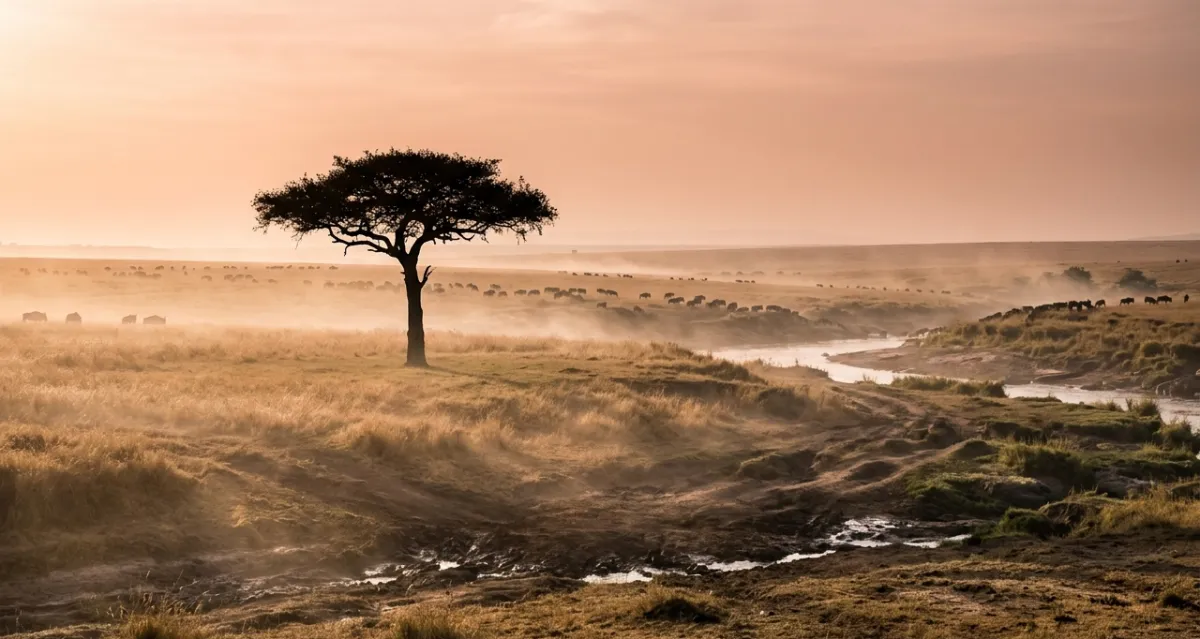
The first river crossing we watched at Kogatende, my four-year-old fell asleep. Twelve thousand wildebeest funneling into the Mara, three crocodiles working the shallows below us, and she was out cold against my chest, drooling on a fleece she did not need yet. That is the northern Serengeti with small kids. You plan for the spectacle. You survive on logistics.
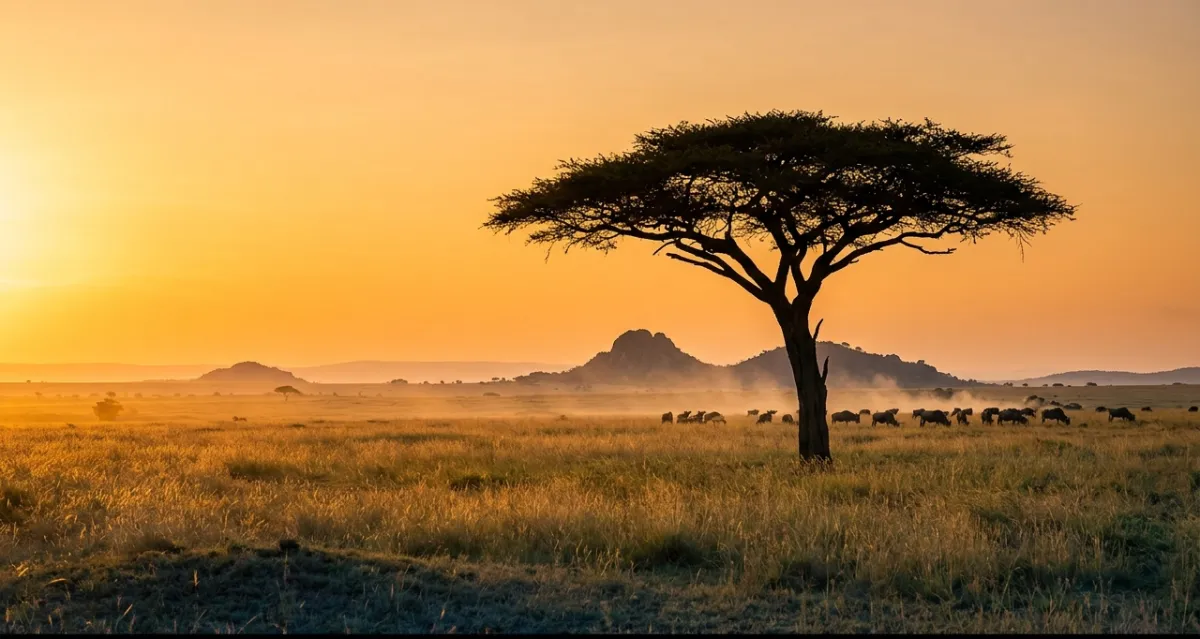
We went in August 2024, dead centre of crossing season, when the herds pile up along the Mara River in the far north near Kogatende and Lamai. This is the single most wished-for safari window on the planet, which also makes it the priciest and the most crowded at the good crossing points. Building a Serengeti safari packing list for a family with a three-year-old and a six-year-old is a different problem than packing for two adults. Below is what survived contact with reality.
What the July to October crossing season actually demands
Mornings on a 6am game drive in August dropped to about 12C (54F) up on the Lamai wedge, cold enough that my six-year-old's teeth chattered through the first hour. By 1pm the same kid was down to a t-shirt in 28C (82F) sun. The dust is the other constant: a fine red talc that gets into zippers, ears, and the back of every throat. Light, not heat, is the rule for clothing here. Light layers, light colours, and nothing you will cry over when it stains.
The bush flight matters more than people warn you. We flew Arusha to Kogatende on a 12-seat Cessna Caravan with Coastal Aviation, about an hour and forty with one stop, and it was loud. Ear defenders for both kids were the cheapest sanity I bought all trip.
The category-by-category list, and why each thing made the cut
Clothing layers (great migration with kids edition)
Three thin layers per child beat one warm coat every time. We packed, per kid: two long-sleeve cotton tops, one fleece, one packable windbreaker, three t-shirts, two zip-off trousers, and a wide-brim hat with a chin strap (the open-side Land Cruiser turns any normal hat into a missile). Skip white and skip bright blue; tsetse flies near the river genuinely chase dark blue and black. Khaki, olive, and sand-grey are the boring, correct answer.
One real mistake we made: I packed sandals for the camp. Useless. Closed shoes only, because of acacia thorns and safari ants, and our camp at Kogatende had warthogs grazing the lawn at breakfast. Two pairs of closed shoes per kid, because one pair will get soaked.
The malaria kit, treated like the serious thing it is
Do not improvise the malaria kit. The northern Serengeti is a malaria zone year-round, and crossing season is also a wetter shoulder with mosquitoes. We carried pediatric atovaquone-proguanil (the generic of Malarone), dosed strictly by weight and signed off by our pediatrician six weeks before travel, plus a paper card listing each child's dose. Pack it in carry-on, never checked.
The rest of our kit: 50%-strength DEET for adults and 20-30% picaridin for the kids, permethrin spray we used on clothing at home a week before (it lasts several washes), a digital thermometer, child paracetamol and ibuprofen, oral rehydration sachets, and a small course of antibiotics our doctor prescribed for traveller's stomach. The clinic visit and antimalarials for our family of four ran about 540,000 TZS equivalent (around 210 USD) through a travel clinic, mostly the drugs.
The kid-survival kit nobody puts on a safari list
Snacks are infrastructure, not treats. Game drives run three to four hours and you cannot just pull over at a cafe. We rationed crackers, raisins, and oat bars across a soft cooler bag and it was the difference between a happy vehicle and a meltdown over a leopard nobody under seven cares about. Add: a tablet pre-loaded with downloaded shows for the airstrip waits, a small cheap pair of binoculars per kid (8x21, light enough for little hands), wet wipes by the hundred, and a favourite small toy for the tent at night.
What should kids wear on a Serengeti game drive?
Dress young kids in three thin layers: a long-sleeve cotton base, a fleece, and a windproof shell over zip-off trousers, all in khaki or olive. Mornings sit near 12C and afternoons near 28C, so layers come off by midday. Add a chin-strap sun hat and closed shoes. Avoid dark blue and black, which attract tsetse flies near the river.
The thing every family forgets until it is too late
Spare glasses, and proof of yellow fever vaccination. Hear me out on both. The dust killed one set of my prescription glasses on day two when the coating scratched to fog, and there is no optician near Kogatende. If anyone in the family wears glasses, bring a backup pair and a hard case.
The bigger one is the yellow fever certificate. Tanzania asked for it on entry because we had transited through Nairobi, and a family at our camp got a tense hour at the airport because their under-fives' cards were buried in a checked bag. Keep the little yellow WHO booklets with your passports, not in the luggage. Also forgotten by almost everyone: a headlamp per person. Camps in the northern Serengeti are unfenced and run on generator hours, so the walk to the tent after dinner is properly dark, with an askari (a Maasai guard) escorting you past the buffalo.
Our guide Emanuel had a line for it: pole pole, which means slowly, slowly. With kids, the slow vehicle sees more. The family that races between sightings sees a checklist. The family that waits sees the hunt.
What you can buy cheaper in Arusha than at home
Do not overpack things you can grab on the ground in Arusha the day before you fly north. Bottled water is one: a 1.5L bottle was about 1,000 TZS (40 cents) at the Village Supermarket on Sokoine Road, versus airport robbery prices. Snacks, fruit, and basic toiletries are all there too, and far cheaper than dragging a suitcase of granola bars across two flights.
The genuinely worth-it buy is a kanga or kikoi, the printed cotton wraps sold at the Maasai Central Market for around 8,000-15,000 TZS (3-6 USD) after a little friendly haggling. One doubles as a nap blanket, a sun shade clipped over the vehicle window, a changing mat, and a picnic ground sheet. We used ours daily. Counter to what every packing list says, you do not need to import a fancy travel blanket; this 4-dollar square of cotton beat it.
What to skip buying, even though it is cheaper
Sunscreen is the trap. It is sold in Arusha but the range is thin and pricey, and small kids burn fast at altitude on an open vehicle. Bring high-SPF mineral sunscreen from home, enough for the whole trip, plus lip balm with SPF. That is the one consumable I would never gamble on locally.
What to leave at home for a Tanzania safari with young kids
The stroller stays home. There is nowhere to push it; camps are sand and grass, and the vehicle is your transport. We brought a lightweight carrier instead and barely used even that. Camouflage clothing also stays home, and this is not a style note: wearing camo is restricted for civilians in Tanzania and can cause real problems at checkpoints. Drones are banned in the national parks without a hard-to-get permit, so leave that too.
Here is the counter-consensus call on the big camera. Everyone says bring the 200-600mm zoom lens. With young kids, you will not use it. You will be wrangling a toddler, not bracing a two-kilo lens, and the guide positions the vehicle so close that a phone and a cheap pair of binoculars do the job. I lugged mine across three flights and shot more keepers on my phone. The honest skip-this is the multi-pocket safari vest; it is hot, the kids' snacks live in the cooler bag anyway, and you will look like you are cosplaying a documentary.
Leave the rigid nap schedule at home too, because this trip is not for families who need one. If your child cannot handle a few unpredictable hours in a vehicle or an early start, the long game drives of crossing season will grind everyone down. The families who do best here are the ones who let the kid sleep when the kid sleeps, even mid-crossing.
How much should a family budget for the packing and prep?
Beyond the safari itself, the prep kit for a family of four runs roughly 210 USD for the malaria clinic and drugs, around 80-120 USD for clothing layers and closed shoes if you buy new, and well under 50 USD topping up water, snacks, and a kanga or two in Arusha. The big-ticket safari cost is the lodging and flights, not the packing list.
One last image to pack around. On our final morning, fog sat on the Mara at 6:40am, the herds were already lined up on the bank, and my six-year-old whispered that the wildebeest sounded like frogs. They do. Bring the layers, the malaria kit, and the snacks, and let the rest of the suitcase go light.
Map-o-World Editorial Team
Travel Research & Editing
Our guides are researched from official tourism sources, local operators, transport authorities and recent traveller reports, drafted with AI assistance and reviewed by our editors before publishing. Prices, opening hours and entry rules change often - please double-check before you travel, and tell us if you spot something out of date.
Read our editorial policy arrow_forward