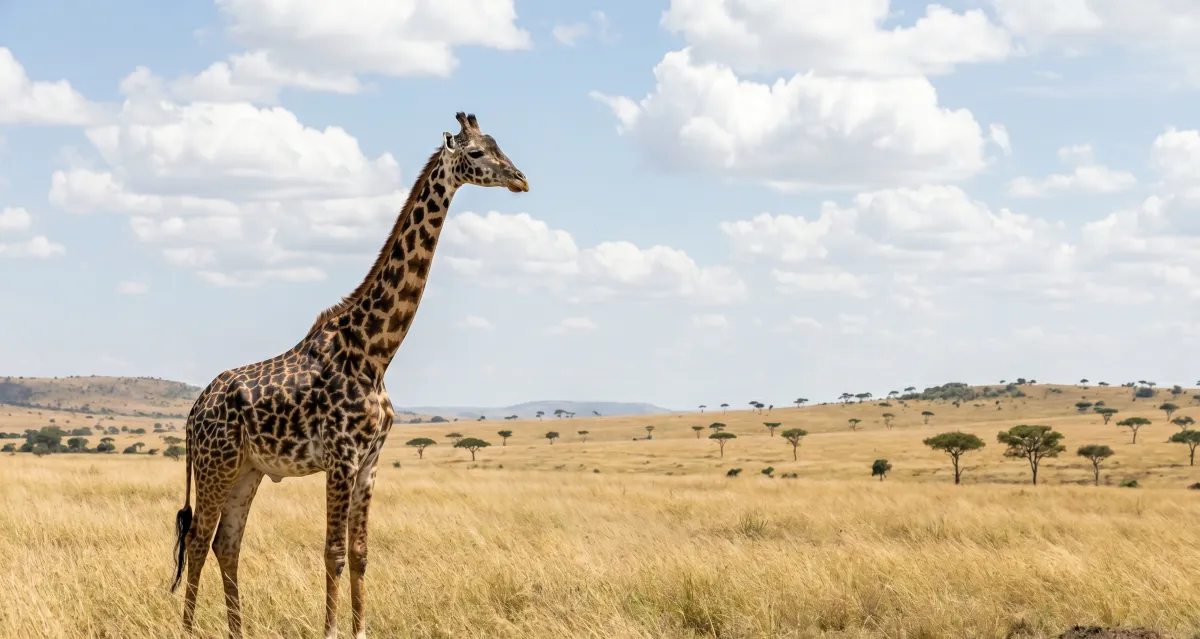
Maasai Mara Budget Safari 2026: Migration Crossings
Quick answer: Base yourself in Nairobi for the wifi, then fly into a community conservancy bordering the reserve rather than the main Mara itself. The conservancy nightly fee buys low vehicle density and off-road sightings, pre-July shoulder rates cut luxury tented camps by 30 to 40 percent, and shared game drives split the 4x4 fuel cost three or four ways.
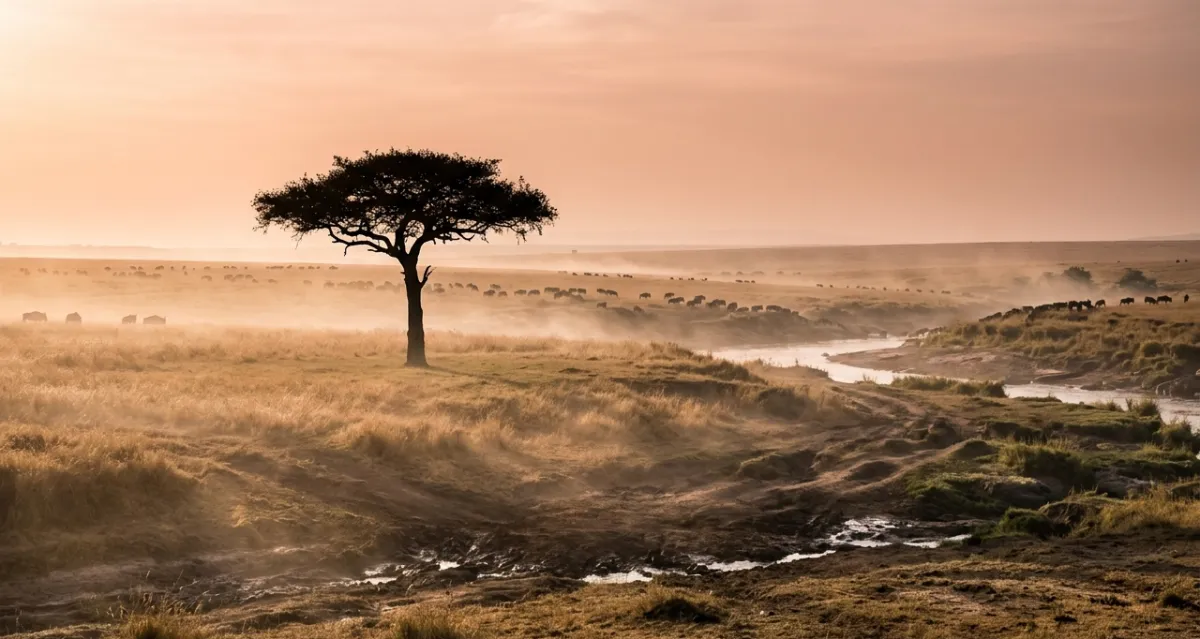
The wildebeest had been pacing the same stretch of bank for forty minutes. Dust, dung, the smell of wet hide and diesel idling. Then one jumped, and the rest followed in a brown river of legs and panic while two crocodiles did the math. I shot it on a phone, from a Land Cruiser I shared with a Dutch couple and a retired teacher from Mombasa, late June 2025. My share of that morning drive: 6,400 KES, about $50.
Here is the thing most operators will not lead with. A Maasai Mara budget safari is not about roughing it. It is about timing and geography. Get those two right and you sleep under canvas with a hot bucket shower and a Starlink signal while paying close to what the package tourists pay for a tin-roof lodge an hour away.
The one splurge worth it: a conservancy, not the reserve
If you spend money on exactly one thing, spend it on staying inside a community conservancy rather than the national reserve. Ol Kinyei, Naboisho, Mara North, Olare Motorogi - these are private leases bordering the reserve where the Maasai landowners cap vehicle numbers. The reserve charges non-residents $200 per day at the gate as of 2024, and you share a single river crossing with thirty vans jostling for the same angle.
The conservancy nightly fee runs $100 to $130 per person, almost always bundled into your camp rate. For that you get night drives, walking safaris and off-road tracking the reserve flatly bans. I sat alone with a leopard and her cub in Naboisho for nineteen minutes. No other vehicle. In the reserve that sighting would have been a scrum.
Worth it? Absolutely. The migration herds drift across conservancy land too, and the Mara River crossings sit a 40-minute drive from most northern conservancy camps. You watch the chaos, then leave it behind for a sundowner where nobody else is parked.
How much does a Maasai Mara budget safari cost?
Budget here means roughly $180 to $280 per person per night all-in during the pre-July shoulder window, dropping to as low as $150 at smaller camps. That covers a tented bed, all meals, conservancy fees and two shared game drives a day. Add about $400 round-trip for the light aircraft from Nairobi.
Compare that to July through October, when the same tent lists at $450 to $900 a night. The Great Migration on a budget is really a calendar trick: the river crossings begin in earnest mid-July, but herds, predators and decent weather arrive weeks before the rates do.
Cheap Maasai Mara tented camps at shoulder rates, with what I paid
I stayed at Encounter Mara in Naboisho for three nights in late June. Listed July rate: $620 per night. My shoulder-season rate, booked direct six weeks out: 33,540 KES, about $260, full board with conservancy fees and twice-daily drives included. Canvas walls, a proper writing desk, a veranda facing a lugga where elephants crossed at dawn, and Starlink strong enough for a 9am call to a client who had no idea I was watching giraffe over the laptop lid.
- Mara Bush Camp, Olare area: shoulder rate around 25,800 KES ($200), six tents, no generator hum after 10pm.
- Enkewa Camp, Ol Kinyei: about 32,000 KES ($248), the quietest conservancy I found and the best guides, hands down.
- Mara Eden, near the river itself: from 19,400 KES ($150) if you skip the conservancy and stay reserve-adjacent, the genuine bottom of the range.
Book direct by email, not through a booking aggregator. Two camps quoted me a lower number the moment I cut out the middleman, and one threw in a free airstrip transfer. Ask plainly: "What is your best pre-July nomad rate for a 3-night direct booking?" The word stay tends to drop the price.
Lunch crossings, dinner rates and the pre-July window
Timing works on three clocks, and most visitors only watch one.
The seasonal clock first. Crossings peak July to October, but the back half of June already has herds massed on the Tanzanian side and short practice crossings on the Sand and Talek rivers. Rates have not jumped yet. You get 80 percent of the spectacle for 50 percent of the money. Fair warning - June can throw a cold, wet morning at you; I needed a fleece and gloves at 6am and the sky stayed grey till nine.
The daily clock second. Crossings cluster mid-morning, roughly 10am to 1pm, once the sun warms the bank and the herds get thirsty and nervous. Be parked by 9:30. The afternoon drive is for cats, not crossings.
The booking clock third. Camps quote per-night rates that quietly soften for stays of three nights or more, and for arrivals on a Sunday or Monday when the weekend Nairobi crowd has flown home. Shift your stay off the Friday peak and you can shave another 15 percent.
A guide named Joseph in Ol Kinyei told me, "The animals do not read the calendar. Only the tourists do." He was right, and his rate proved it.
When is the best time to see the Great Migration?
Mid-July to late October for guaranteed Mara River crossings, with August and September the statistical peak. For value, target the second half of June and the first week of July: herds are present, predators are active, and shoulder rates still apply before the school-holiday surge hits.
The counter-consensus point everyone misses: the crossings are not a parade with a schedule. I waited two full mornings for the jump I described up top. A herd can mass on the bank, spook, and turn back three times before committing, or never cross at all that day. Anyone selling you a guaranteed crossing is selling you a fantasy. Patience is the actual ticket, and a conservancy lets you wait without forty engines idling beside you.
Skip these: where the Mara premium is not worth it
Skip the hot-air balloon. There, I said it. It runs $450 to $550 per person for a 45-minute float and a champagne breakfast, and at shoulder season the light is often flat and the herds are a smudge below you. Beautiful once, not budget-defensible. Put that money toward an extra night in the conservancy and you will see more wildlife per dollar from the ground.
Skip the private vehicle if you are solo or a couple. A private 4x4 adds $250 to $350 a day. The shared drives put four to six people in a Land Cruiser with the same guide, the same sightings, and a chance to split a wine bill with strangers who become friends by day two. The only reason to go private is serious photography with long lenses that need room.
Skip the Nairobi-to-Mara road transfer. It looks cheaper at $120 versus $400 for the flight, but it is five to six hours of teeth-rattling corrugation each way that eats a full day in each direction. For a nomad on a tight trip, the SafariLink or AirKenya flight from Wilson Airport (about 45 minutes, three departures daily) is the right buy.
Is the Maasai Mara realistic for digital nomads?
Yes, if you treat Nairobi as your base and the Mara as a long weekend. Use Westlands or Kilimani for fast fibre, real cafes and a desk, then fly out Thursday and back Monday. Starlink now reaches most conservancy camps, so a half-day of work between drives is genuinely doable.
I worked mornings from Spring Valley Coffee in Nairobi at 200 KES (about $1.55) a flat white, then did a four-day Mara block where I took two calls from camp on Starlink. The honest caveat: signal dips when it rains and the generator window can throttle charging. This is not for the nomad who needs nine uninterrupted hours online daily. It is built for the one who can front-load work and unplug for a sunrise drive.
A big-feel, small-spend day in the Mara
Here is a real day, costed.
- 5:45am - black coffee at camp, free, in a fleece because the dawn is 12 degrees Celsius. The bush is loud with francolins.
- 6:15am - shared morning drive, already paid in your nightly rate. We found a cheetah on a termite mound and a crossing build-up on the Talek by 10am.
- 1pm - lunch at camp, included. I asked the cook for a second helping of the lentil stew and got it without a blink.
- 4pm - afternoon drive, included, ending with a sundowner gin the camp poured for free on a rise above the plains.
- 8pm - dinner under canvas, included, then a guided walk to my tent past a snorting hippo that nobody warned me about. My one heart-in-throat moment of the trip.
Out-of-pocket spend that day, on top of the room: zero. The morning crossing watch cost nothing extra because the conservancy keeps the herds and the vehicles close. That is the whole budget play - pay once for the right address, then let the Mara come to you.
The last image I have is the leopard cub from Naboisho, batting at its mother's tail in low gold light while my shared 4x4 sat in total silence. Six strangers, one engine off, nineteen minutes nobody wanted to end.
Map-o-World Editorial Team
Travel Research & Editing
Our guides are researched from official tourism sources, local operators, transport authorities and recent traveller reports, drafted with AI assistance and reviewed by our editors before publishing. Prices, opening hours and entry rules change often - please double-check before you travel, and tell us if you spot something out of date.
Read our editorial policy arrow_forward