Ubud July Crowds: How to Do High Season Right 2026
Yes, come to Ubud in July even though it is the busiest month of the year. Wake before dawn for the rice terraces, base yourself north of Jalan Raya Ubud, and drive down for the Bali Arts Festival in Denpasar. Shift your day two hours earlier and the crowds mostly vanish. That is the whole trick.
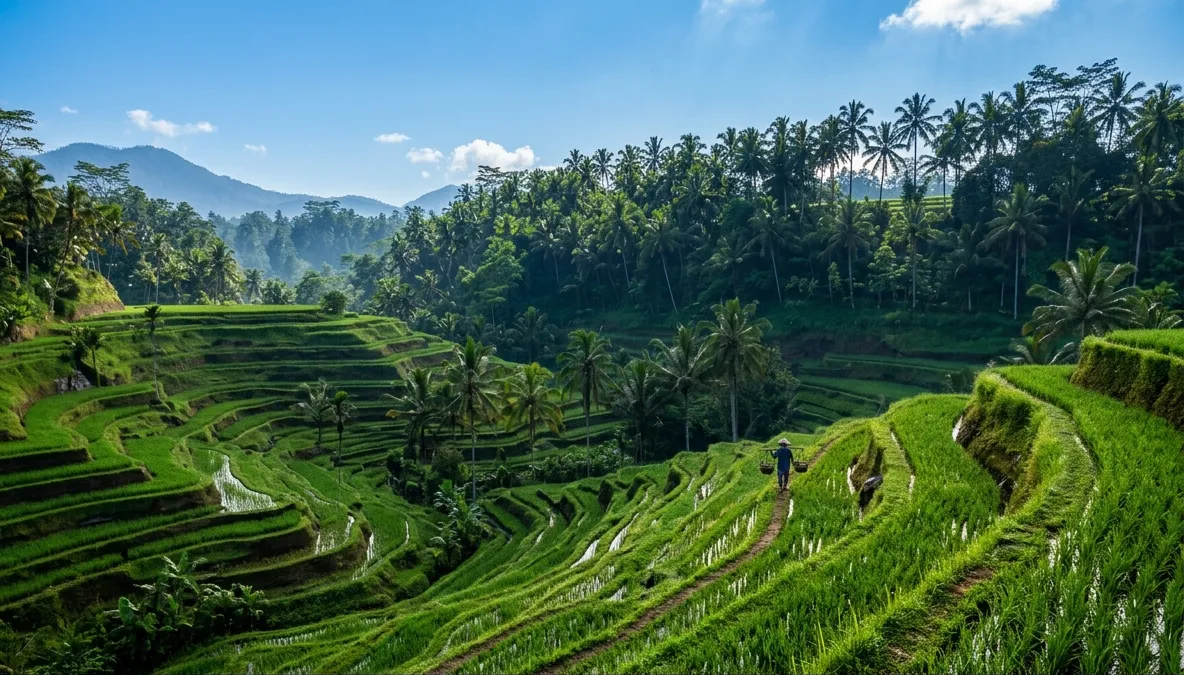
At 6:40am on July 12 last year, I had the top tier of Tegallalang Rice Terrace almost to myself. One rooster losing its mind, two farmers adjusting an irrigation gate with their feet, and a French couple who had clearly run the same 5am math I had. By 9:30 the same slope held maybe 200 people and a small traffic jam of drones. Same terrace. Same light, gone.
Here's the thing about Ubud July crowds: they are real, they are worse than TikTok admits, and they are almost entirely a 10am-to-4pm problem. Everything you actually came for happens on the edges of the day.
The one-line verdict on July in Ubud
Go, but treat the morning as your real trip and the afternoon as downtime. July sits squarely in Bali's dry season, which is exactly why everyone piles in, and exactly why the light on the terraces is worth setting an alarm for. The demand climbing on TikTok around the Bali Arts Festival 2026 and the new wellness resort openings is not hype invented from nothing. It is just badly timed by most people, who show up at midday and then complain online.
I have been to Ubud three times, twice in shoulder months and once in this high-season crush. The July trip was, honestly, my favourite. Not despite the planning. Because of it.
What you gain by braving Ubud's high season
Dry season is the gain. July mornings ran about 24C when I stepped out at 6am, climbing to 28C by lunch, and it did not rain on me once in nine days. Compare that to my February visit, when the Campuhan Ridge Walk turned to red mud by 8am and I gave up. The paddies in July are a hard, saturated green that photographs never quite match, because the rice is mid-cycle and the sun angle is low and clean.
You also gain the festival. The Bali Arts Festival, Pesta Kesenian Bali to locals, runs mid-June to mid-July at the Taman Werdhi Budaya Art Centre in Denpasar, about a 50-minute drive south of central Ubud. Entry is free for most of the grounds. I paid a Grab driver 180,000 IDR (about $11) each way and caught a gamelan competition where 40 musicians from a single village played for a panel of stone-faced judges. No tour bus brought me there. Barely any foreigners were in the crowd. That gap tells you something.
Space and mood, then, are things you build rather than find. The energy on Monkey Forest Road at sunset in July is genuinely fun if you like a bit of chaos. The calm you have to schedule.
How much does a trip to Ubud cost in July 2026?
Expect to pay 20 to 40 percent more for rooms than in April, but food and transport barely move. A clean guesthouse with a pool in the Penestanan neighbourhood ran me 550,000 IDR a night (about $34). A full nasi campur lunch at Warung Biah Biah cost 45,000 IDR, roughly $2.80.
The squeeze is entirely on accommodation, and it is worst for the handful of Instagram-famous jungle villas. Book those 8 to 10 weeks out or forget them. Everything downstream stays cheap. A scooter rental was 70,000 IDR a day, a full-day private driver 700,000 IDR (about $43) split between four of us, and temple entries sat between 30,000 and 80,000 IDR. Your money goes further in July than the panic online suggests, as long as you are not chasing one specific villa off a reel.
What actually changes when the July crowds land
Some things bend under the weight of high season, and you should know which before you build a plan around them.
The classic Tegallalang terraces become genuinely unpleasant from about 9:30am. The famous jungle swings turn into a queue with a photographer upselling you a 250,000 IDR photo package. Traffic on Jalan Raya Ubud can add 25 minutes to a two-kilometre hop, so a scooter beats a car most of the day. Restaurant waits at the big-name brunch spots hit 40 minutes by 9am.
Here is my honest skip: do not bother with Tegenungan Waterfall between 10am and 3pm in July. I went at noon, paid the 20,000 IDR entry, and shared a knee-deep pool with what felt like a school trip. The luwak coffee plantations along the Tegallalang road are the other easy no. You pay for a view and a cup of civet coffee that tastes like a mild disappointment, surrounded by other buses. Skip both. Nobody will miss them.
When is the best time to visit the rice terraces without crowds?
Be standing in the paddies by 6:30am, full stop. Sunrise in July lands around 6:25, and you get a clean 90-minute window before the first tour vans arrive around 9. The light is soft, the air is cool, and the farmers are actually working, which is the photo you want anyway.
The counter-consensus move: everyone films Tegallalang, but the far bigger and quieter UNESCO-listed terraces at Jatiluwih sit about 90 minutes northwest and almost nobody on a fast Ubud itinerary makes the drive. I spent a full morning there in July and counted fewer than 15 other visitors across a valley you could lose an afternoon in. Entry was 40,000 IDR. The trade-off is real: it is a longer, winding drive and there is no viral swing. What you get instead is space to hear the water moving through the channels. If you only have Tegallalang, go at dawn and leave by 8:30. If you have a spare morning, drive to Jatiluwih and thank me later.
Closer in, the Kajeng Rice Field walk starts a five-minute stroll off Ubud Palace and stays quiet even in peak week, because it does not photograph as dramatically. That is precisely why it survives July.
What to pack and plan for Ubud high season
Pack for early starts and sudden sun, not for rain. A few things earned their place in my bag:
- A real alarm and the discipline to use it. Your whole crowd-dodging strategy collapses if you sleep in.
- A light long-sleeve layer. Mornings at 24C on a scooter feel cold at speed, then you are sweating by 10.
- A sarong. Some temples rent them, some do not, and Tirta Empul gets a long queue for the rental desk by mid-morning.
- Reef-safe repellent for the dawn paddy walks, when the mosquitoes are at their most committed.
- Cash. Plenty of warungs and terrace entries are cash-only, and the ATMs near Monkey Forest run dry on busy July weekends.
Plan bookings in two tiers. Lock your room and any spa or wellness treatment weeks ahead, because the new luxury openings are running near capacity. Leave everything else loose. The best meals I had were unbooked walk-ins to family warungs at 11:30am, well before the dinner rush.
A driver named Wayan told me, over terrible instant coffee at 6am, "The mountain gives its best light to the people who are angry at their alarm." He was right, and I stayed angry every morning.
Who should still book Ubud in peak season?
Come in July if you are an early riser, a shoulder-season sceptic who wants guaranteed dry weather, or anyone who cares about the Bali Arts Festival 2026. The dance, gamelan, and craft programming only happens in this window, and it is the single best reason to accept the Ubud July crowds rather than fight them.
Now, who this is not for. If your idea of a holiday is sleeping until 10 and having a quiet, empty rice terrace handed to you, do not come in July. You will be disappointed and you will blame Ubud when the fault is the calendar. Late risers, honeymooners chasing solitude, and anyone allergic to a bit of scooter chaos should aim for late April or September instead, when the rooms are cheaper and the midday paddies are still walkable.
My last morning, I sat on a wet stone bench above the Kajeng fields with a 15,000 IDR banana fritter going soft in my hand, watching a single farmer flood a paddy while the town behind me was still asleep. Then a rooster started up, a scooter coughed to life somewhere below, and I knew the crowds were about to wake. I had already had the part of Ubud that matters. So can you, if you are willing to be angry at your alarm.
Map-o-World Editorial Team
Travel Research & Editing
Our guides are researched from official tourism sources, local operators, transport authorities and recent traveller reports, drafted with AI assistance and reviewed by our editors before publishing. Prices, opening hours and entry rules change often - please double-check before you travel, and tell us if you spot something out of date.
Read our editorial policy arrow_forward