Chiang Mai Green Season: 6 Rain-Only Secrets
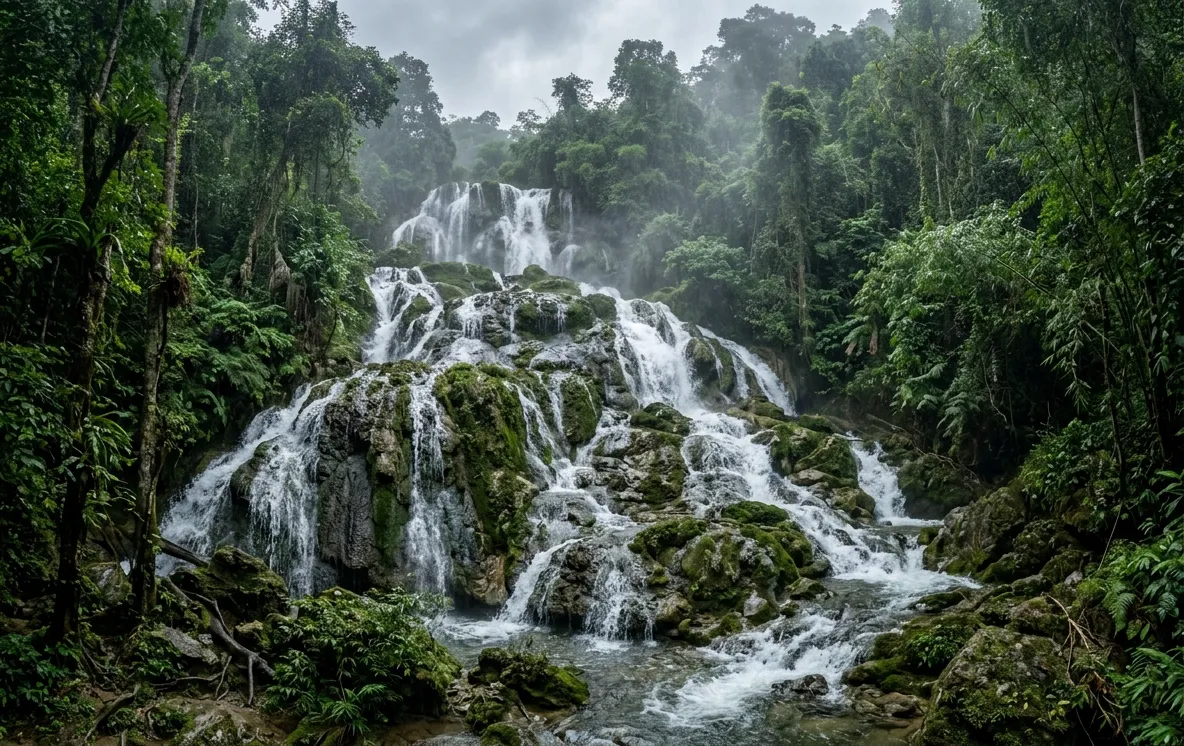
Chiang Mai green season runs roughly mid-June to September, when monsoon rain refills the waterfalls, greens the rice terraces, and empties the tourist trail. The best rain-only spots: Bua Tong sticky falls at full flow, Mae Sa's tiered pools, and the misted hill cafes above Mae Rim. Cheaper, cooler, quieter.
A songthaew driver named Somchai quoted me 200 baht (about $5.60) for the run out to Bua Tong on a Tuesday in July 2025. "High season, four hundred," he shrugged, tapping the wheel. That gap is the whole point. The rain scares off the crowds and halves the prices, and the locals who stay behind get the mountain to themselves.
I have spent three green seasons up here now. Wet socks, ruined guidebook, one motorbike skid on a mossy corner near Mae Sa that I would rather not relive. Here is what the rain actually reveals.
Why do Chiang Mai locals love the rainy season?
Because the mountain finally works. Dry-season waterfalls up here are sad trickles over grey rock; the sticky falls barely stick. Come July, everything runs. Temperatures drop to a workable 26-28C, the burning-season haze is long gone, and room rates fall 30-40 percent. Locals call it the honest season.
The rain arrives on a schedule you can plan around. Mornings stay clear until about 1pm, then the sky opens for two hours, then clears again for a gold-lit evening. Plan your outdoor spots before lunch and your cafe hours for the downpour. Do that, and you barely get wet.
Bua Tong: the waterfall you climb up, not look at
Bua Tong sticky waterfalls, 60km north near Sri Lanna National Park, is the one everyone should see and almost nobody does in July. The surprising part: you climb straight up the falling water. The limestone is coated in mineral deposit that grips your bare feet like a cat's tongue, so a slope that should be lethal is instead a staircase. Free entry, open 8am-5pm.
In dry months the water is thin and the magic is muted. After a week of rain the whole face roars and the mineral grip somehow holds even better. I climbed the middle tier barefoot in a July drizzle, water sheeting over my ankles, heart going hard, and my brain screaming that this was physically impossible. It is not. Test each foothold, keep three points of contact, and trust the rock.
Skip the roadside food stalls at the top car park. Overpriced and greasy. There is a natural spring and picnic pavilion 200m in with drinkable cold water; bring your own sticky rice and mango from the morning market instead.
How to find it: rent a scooter or hire a songthaew from the north gate. The turnoff past Mae Jo is poorly signed, so drop a pin. Best time is 9-11am on a weekday, before the local families arrive with their coolers around noon.
Mae Sa's tiered pools, minus the elephant tourists
Mae Sa waterfall in the Mae Rim valley has ten tiers over 1.5km of forest path. The tour buses stop at tiers one and two, snap photos, and leave. Everyone says Mae Sa is crowded. Here is what they miss: tiers six through nine, a 25-minute uphill walk that filters out 90 percent of visitors. Entry is 100 baht (about $2.80) for foreigners, open 8am-5pm.
In green season those upper pools fill deep enough to swim. The water runs cold and slightly sweet-smelling from the wet leaf litter, and the only sound is the falls and the whine of cicadas. I had tier eight entirely to myself on a grey afternoon, floating on my back while the rain started, unable to tell the drops from the spray.
Fair warning: the path above tier seven turns to slick red clay when it rains. I went down hard on my backside and wore the mud stain home. Wear grippy shoes, not flip-flops, and use the rope handholds the park staff have strung along the steep bits.
Where do you find Chiang Mai's hidden rainy-season cafes?
Up the mountain, above the cloud line, past where the tour maps stop. The Mae Rim and Samoeng loop hides a dozen tiny coffee houses that live for the monsoon fog. My pick is a two-table place off Route 1096 with no English sign, run by a woman who roasts her own beans grown on the slope behind the kitchen.
A hot drip of local Doi Chang beans cost me 60 baht (about $1.70). She brought it out with a slice of coconut cake she had not charged me for, then pointed at the valley, which had just vanished into white cloud rolling up the ridge. The whole village dropped out of sight in under a minute. My coffee went cold because I forgot to drink it.
These places are not on Google with hours you can trust. They open when the owner wakes and close when the rain gets serious. Go mid-morning, order slow, and do not ask for oat milk. This is filter-black country.
The Ristr8to alternative most guides won't mention
In the old city, everyone sends you to Ristr8to for latte art and a queue. It is genuinely good. It is also loud and full of laptops. The trade-off spot is Akha Ama on Ratchadamnoen, a social enterprise buying direct from Akha hill farmers. Smaller, warmer, and the story behind the cup is real rather than printed on a wall. A flat white runs 70 baht (about $1.95).
The rice terraces at Mae Klang Luang, green and dripping
An hour and a half southwest, on the shoulder of Doi Inthanon, the Karen village of Mae Klang Luang farms rice on stepped terraces that only turn full green in the wet months. July floods the paddies into a set of mirrors that hold the sky. This is the image the postcards steal and the dry-season visitors never see.
Walk the raised bunds between paddies at first light, before the mist burns off. I paid a village homestay 500 baht (about $14) for a night, dinner and breakfast included, and woke to a valley of frogs so loud I thought it was rain. The family grows arabica between the rice; ask and they will brew you a cup from beans dried on a tarp by the door.
"Fon ma, khao ngam," the grandmother told me, laughing. When the rain comes, the rice is beautiful. She had farmed that slope for fifty years and still said it like a discovery.
This is not for you if you need dry feet, fast wifi, or a flushing toilet at 3am. It is for you if you want to see where your coffee and your rice actually come from, sharing a fire with the people who grow both.
The local ritual worth stealing: khao soi when it pours
Watch what Chiang Mai people do the moment the sky breaks. They find khao soi. The curved-noodle coconut curry is a rainy-day food here, eaten hot and fast while the water hammers the tin roof. There is a logic to it. The heat of the broth against the cool wet air is the whole comfort.
My spot is Khao Soi Khun Yai near Wat Manorom, a lunch-only shack that sells out by 1:30pm. A bowl of chicken khao soi is 50 baht (about $1.40). Squeeze the lime, spoon in the pickled mustard greens and shallots, do not skip the chili paste. Time it so you are sitting down just as the afternoon rain starts, and you will understand why locals almost look forward to the clouds.
How to behave like a Chiang Mai regular in green season
Slow down and read the sky. Locals do not fight the rain or over-plan around it; they carry a cheap 20-baht poncho, adjust the day by an hour, and let the two o'clock downpour dictate lunch. Panicking about a soaking marks you as a visitor faster than anything.
A few things that earn you a nod instead of a tourist price. Learn the two useful weather words: fon (rain) and naam tok (waterfall). When a driver quotes you a green-season rate, take it; haggling hard in the quiet season when they are barely working is a bad look. Buy from the family stall, not the branded cafe, when the choice exists. And when the cloud rolls up the valley and everyone goes quiet to watch, put the phone down and watch too.
One last thing the guidebooks get backwards. They warn you off Chiang Mai in July like it is a washout to survive. The rain is not the problem here. The rain is the ticket, and it stops selling in October when the buses come back.
Bring shoes you do not mind ruining. You will ruin them.
Map-o-World Editorial Team
Travel Research & Editing
Our guides are researched from official tourism sources, local operators, transport authorities and recent traveller reports, drafted with AI assistance and reviewed by our editors before publishing. Prices, opening hours and entry rules change often - please double-check before you travel, and tell us if you spot something out of date.
Read our editorial policy arrow_forward