Karakol Travel Guide 2026: Treks, Yurts & Issyk-Kul
Karakol sits at the eastern tip of Lake Issyk-Kul and works as Kyrgyzstan's best budget base for summer trekking. Visit between June and September, hike the Ala-Kul or Jeti-Oguz routes, sleep in yurts for around 1,500 som a night, and beat the August crowds by arriving early in the season.
I'd been warned that Karakol was scruffy. Soviet apartment blocks, potholes, stray dogs sunbathing in the middle of Abdrakhmanov street. All true. And honestly? That's exactly why I loved it. The town doesn't perform for tourists the way Almaty or Bishkek sometimes do, and the mountains start so abruptly at the southern edge that you can be eating breakfast in a guesthouse and standing on a glacier by mid-afternoon.
This is the window everyone on Reddit and TikTok has finally clocked: the snow on the high passes melts out by mid-June, and the wildflower meadows below Ala-Kul go off like a paint bomb. Get there before August and you'll have the trails to yourself.
Getting to Karakol Without Losing a Day
Most people fly into Bishkek (Manas airport) because the flights are cheaper and Kyrgyzstan is visa-free for over 60 nationalities, including the UK, EU, US, and Canada. From Bishkek's western bus station you grab a marshrutka (shared minibus) heading east along the northern shore of Issyk-Kul. The ride costs about 500 som and takes six to seven hours. A shared taxi runs closer to 1,000 som and shaves an hour off, mostly by terrifying you on the mountain bends.
Here's the thing nobody tells you: take the southern shore route at least one direction. Drivers prefer the north because it's faster, but the south passes Skazka Canyon and the strange salt flats near Bokonbayevo, and the marshrutka driver will usually stop if you ask nicely and tip a little. Fair warning - this one adds two hours. Worth it? For me, absolutely.
Once in town, everything is walkable. The main artery, Toktogul, runs through the centre, and the trailheads sit a 700-som taxi ride to the south. Skip the urge to rent a car. You won't need one, and the roads to the valleys are rough enough that the shared 4x4 transfers (which the guesthouses arrange) make far more sense.
The Ala-Kul Trek Itinerary, Day by Day
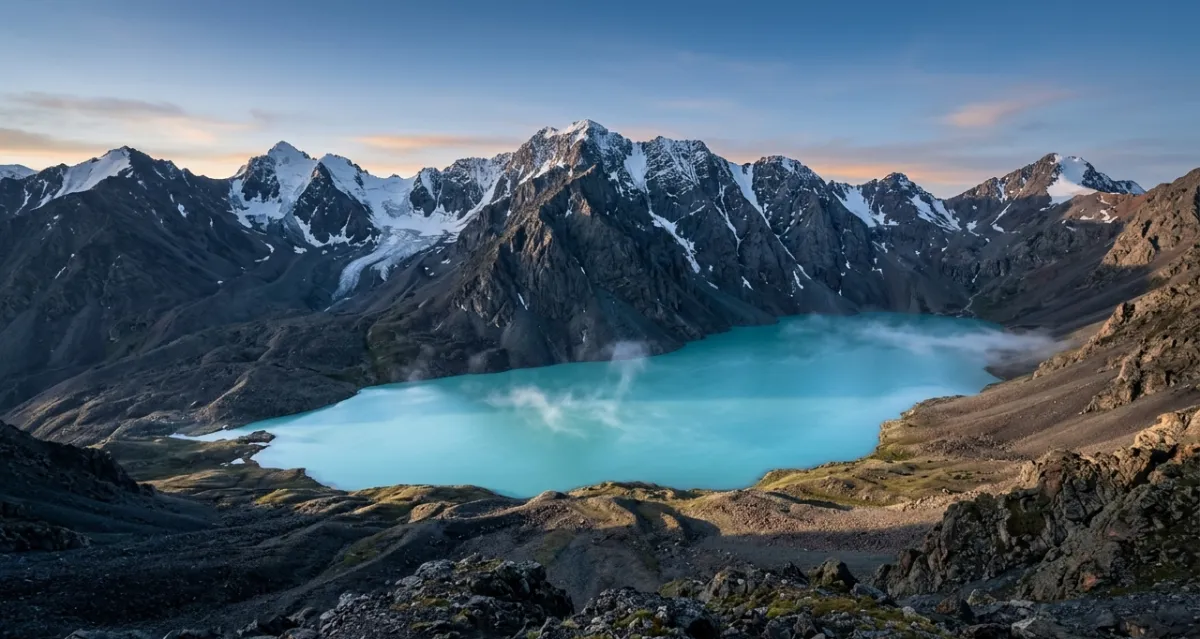
This is the headline act and the reason most travellers come. The Ala-Kul trek loops from the Karakol valley up to a glacial lake at roughly 3,500m, over a high pass, then down to the hot springs at Altyn Arashan. You can do it in three days at a steady pace. I met people who crushed it in two and limped for a week afterward.
Day 1 - Karakol Valley to Sirota Camp
A 4x4 carries you to the trailhead, then you walk maybe five hours through pine forest and along a loud, milky river. The gradient is gentle until the last hour, when it bites. Sirota is a flat patch of meadow with a couple of yurt camps charging around 1,500 to 2,000 som for a bed and a hot dinner of lagman or fried potatoes. Camping is free if you carry your own tent.
Day 2 - Over Ala-Kul Pass to Altyn Arashan
The big day. You climb to the lake first, and the water is this absurd milky turquoise that doesn't look real in photos until you see it yourself. Then comes the pass at 3,860m, which is a slog of loose scree and false summits. Take it slow; altitude is the silent enemy here, not distance. The descent toward Altyn Arashan is long on the knees but ends at hot springs, where soaking your wrecked legs in a wooden tub of geothermal water might be the single best two dollars I have ever spent.
Day 3 - Altyn Arashan Back to the Road
A relaxed downhill walk through valley pasture, dodging horses and the occasional herder's dog. A 4x4 meets most groups at the bottom for the bumpy ride back into Karakol. By early afternoon you're showered and inhaling a plate of food in town.
A local guide named Aibek told me, half-joking: "In Kyrgyzstan the mountains decide, not the calendar." He meant it as a warning. Snow can close the Ala-Kul pass even in early July, so always ask the CBT office about current conditions before you set off.
One common mistake I have to correct: people treat this as a casual hike because it's "only" three days. It is not casual. The pass is genuinely strenuous, the weather turns in minutes, and a surprising number of trekkers underestimate how cold a yurt at 3,000m gets at night. Bring a proper sleeping bag rated to at least minus five, even in July.
How much does a trip to Karakol cost?
A comfortable budget runs roughly 25 to 40 US dollars a day, or about 2,200 to 3,500 som. That covers a guesthouse bed, three local meals, shared transport, and trailhead transfers. Add a guide or porter and you're looking at another 30 to 50 dollars per day split across your group.
Food is where Karakol genuinely surprises. A bowl of ashlan-fu, the cold Dungan noodle dish the town is famous for, costs around 80 som from a stall at the animal market. A full sit-down meal of manty (steamed dumplings) and tea at a cafe on Gebze street rarely tops 350 som. Beer is cheap, the bread is fresh and everywhere, and the coffee scene has quietly improved thanks to a few places near the centre roasting their own.
Guesthouses cluster in the residential blocks and charge 600 to 1,200 som for a dorm or simple double, breakfast usually thrown in. The Community Based Tourism (CBT) office on Abdrakhmanov handles guides, homestays, and trek logistics at fixed, fair rates, which saves you the haggling and funnels money to local families.
Things to Do in Karakol Kyrgyzstan Beyond the Trails
Give yourself a rest day. Your legs will demand it, and the town rewards slow wandering. Start with the Holy Trinity Cathedral, a Russian Orthodox church built entirely of wood in the 1890s, painted in soft greens and golds, with not a single nail in the original frame. A short walk away stands the Dungan Mosque, which looks more like a Chinese pagoda than anything you'd expect to find this far north - built by Chinese Muslim craftsmen, also without nails, every beam slotted and pegged.
If your timing lands on a Sunday morning, get to the Mal Bazaar (the livestock market) by 7am. It is loud, muddy, smells of sheep and grilled meat, and absolutely buzzes with herders trading horses and haggling over fat-tailed sheep. Tourists are a curiosity there, not a target, which is rare and refreshing. Go early, because by 10am the best of it has packed up and gone home.
- Soak at Jeti-Oguz, the "Seven Bulls" rock formation, where rust-red cliffs rise straight out of green pasture about an hour from town.
- Rent a bike and ride out toward the lakeshore villages for an afternoon of flat, easy pedalling.
- Track down a plate of ashlan-fu and eat it the local way, with a side of fried dough.
- Visit the Przhevalsky Museum if you have a soft spot for slightly eccentric 19th-century Russian explorers.
Lake Issyk-Kul itself deserves at least a half day. It's the second-largest alpine lake on the planet, slightly saline, and it never freezes despite sitting at 1,600m ringed by snow peaks. The water near the eastern shore is calm and surprisingly swimmable by late June. I floated on my back staring at white summits and genuinely forgot what month it was.
When is the best time to visit Karakol?
Mid-June through early September is the trekking window, and late June to mid-July is the sweet spot. Snow has cleared the high passes, the meadows are in full bloom, and the crowds that hit in August haven't arrived yet. Outside this window the passes are dangerous or closed.
If you only care about the lake and the town, May and late September work fine and you'll pay even less. The trade-off is that Ala-Kul and the higher routes may still hold snow in spring or get an early dusting in autumn. Winter turns Karakol into a small ski destination - the resort just south of town is cheap and uncrowded - but that's a completely different trip and most summer infrastructure shuts down.
A practical note on this surge of attention: the town is busier than it was even two years ago, guesthouses near the centre book out in July, and the popular yurt camps on the Ala-Kul route fill fast. Reserve your first two nights in town before you arrive, then stay flexible. Karakol still runs on a slower clock than the internet would have you believe, and that, more than any single sight, is the reason to go now.
Map-o-World Team
Travel Writers & Destination Experts
We're a team of passionate travelers and writers who have explored destinations across 7 continents. Our guides combine first-hand experience with deep local research to help you plan unforgettable trips. Every recommendation comes from real visits and genuine insights.
Learn more about us arrow_forward