Spiti Valley in June-July 2026: Your Complete Trip Plan
The first thing that hits you in Kaza is not the altitude. It's the silence. At 3,650 meters above sea level, in a valley so dry that the air tastes like dust and cold stone, your ears ring with the absence of noise. No honking. No construction. Just wind scraping across bare mountains that look like they belong on Mars. I spent two weeks in Spiti Valley during a June trip, and I still think about that silence when Delhi traffic makes me want to scream. If you're planning a Spiti trip for June or July 2026, here's everything I wish someone had told me before I went.
Two Roads Into Spiti - and Why Your Choice Matters
There are exactly two ways to reach Kaza by road. From Manali, you cross the Rohtang Pass (3,978m) and then the Kunzum Pass (4,551m), a route that typically opens in early to mid-June depending on snowfall. From Shimla, you drive through Kinnaur via Reckong Peo and Nako, a route that opens earlier - usually by late May. Here's the thing: most first-timers want to enter from Manali because it sounds more dramatic. And it is. But the Shimla route gives your body time to acclimatize gradually as the elevation climbs slowly over two days.
My recommendation? Enter from Shimla, exit via Manali. You gain altitude gently, spend your time in the valley properly adjusted, and save the jaw-dropping Kunzum Pass descent for when your lungs can actually handle it. The Manali-to-Kaza stretch takes about 10-12 hours in good conditions. And honestly? "Good conditions" in Spiti means the road hasn't been washed away this week. Budget two extra days for delays. I'm serious.
Kaza as Base Camp - What to See and How Long to Stay
Most travelers blow through Kaza in a day. That's a mistake. Give yourself at least 4-5 nights here. The main market road has everything from yak-wool socks (around 200-350 INR) to locally grown sea buckthorn juice (50 INR a glass at the stalls near the bus stand). The old monastery in the upper part of town is worth an early morning visit - get there by 7 AM when the monks are chanting and the light through the prayer hall windows turns the dust golden.
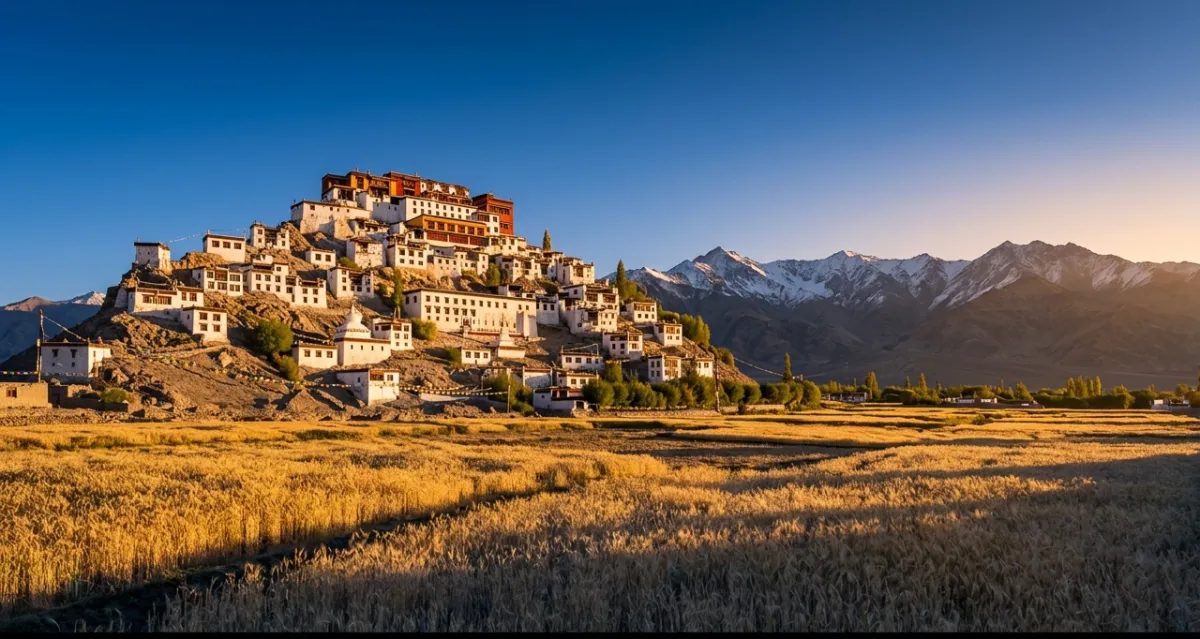
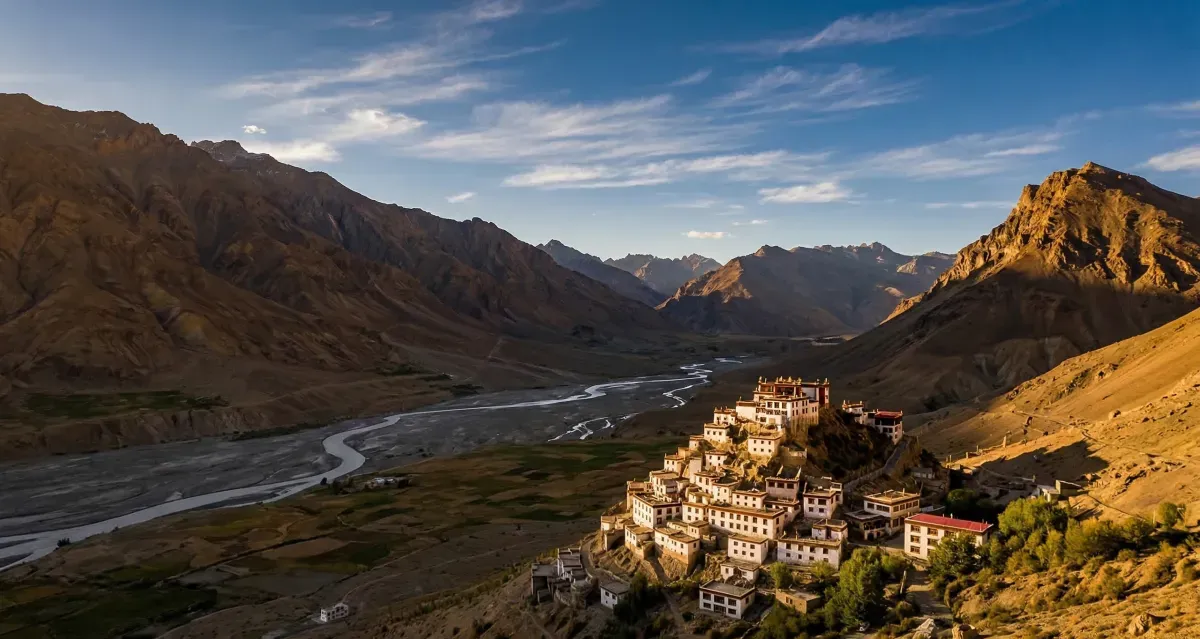
From Kaza, you can day-trip to the places that make Spiti special. Key Monastery sits about 12 km away on a hilltop that looks like a sand castle from a distance. Kibber village, at 4,270 meters, claims to be one of the highest inhabited settlements in the world. Hikkim has the world's highest post office - yes, you can mail a postcard, and yes, it will actually arrive. Fair warning - the road to Langza village is rough even by Spiti standards, but the 1,000-year-old Buddha statue overlooking fossil-strewn fields makes the rattled spine worth it.
Chandratal Lake is the big draw. About 70 km from Kaza near Kunzum Pass, this crescent-shaped glacial lake sits at 4,300 meters and changes color depending on the time of day. Early morning, it's a deep teal. By noon, almost turquoise. You'll need to camp overnight at the designated campsite about 2 km before the lake. No permanent structures are allowed. The camping fee runs about 800-1,500 INR per night depending on the operator, meals included.
Permits, Cash, and the Altitude Problem Nobody Talks About Enough
You need an Inner Line Permit (ILP) to enter certain parts of Spiti, specifically the areas near the Indo-Tibetan border. Indian nationals can get this at the SDM office in Kaza - it costs about 20 INR and takes 30 minutes if you go in the morning. Foreign nationals need to arrange permits through a registered tour operator or apply at the District Commissioner's office in Shimla before entering. Do not skip this. There are checkpoints, and they will turn you back.
ATMs exist in Kaza - there are two, both on the main road. They run out of cash regularly. Bring enough physical currency for your entire stay. Cards work at exactly zero homestays and maybe two restaurants. I'd budget 2,000-2,500 INR per day for a comfortable homestay stay with meals.
"Don't rush to the high passes on your first day. The mountain doesn't care about your itinerary." - advice from my homestay host in Kaza, who had seen too many tourists end up at the local clinic with altitude sickness.
About altitude sickness: it's real, it's common, and the counterintuitive part is that fit young travelers get hit hardest because they push too fast. Spend your first full day in Kaza doing nothing strenuous. Walk slowly. Drink water constantly - at least 3-4 liters a day. Carry Diamox if your doctor approves it, but don't treat it as a substitute for proper acclimatization. The clinic in Kaza is basic. The nearest real hospital is in Reckong Peo, seven hours away on a good road day.
Packing Smart and Timing Your Days
June days in Kaza hit 20-22 degrees Celsius in the sun. Nights drop to 2-5 degrees. You need layers - a proper down jacket, thermal base layers, a windproof shell. Sunscreen is non-negotiable. The UV at this altitude will burn you through clouds. I learned this the hard way on day two when the back of my neck looked like a tomato despite overcast skies. Bring SPF 50 and reapply every two hours.
The best light for photography - and for simply being outside without frying - is between 6-9 AM and 4-7 PM. Midday sun at 3,650 meters is brutal and flat. Most monasteries open by 6 or 7 AM and close by 6 PM. Restaurants in Kaza tend to stop serving by 9 PM, and the town shuts down after that. Which is fine, because you'll be exhausted anyway.
One last thing. July is technically still within the travel window, but you're gambling with the monsoon. Late July sees increased rainfall on the Manali side, and landslides can strand you for days. If your schedule allows, aim for the first three weeks of June. The passes are freshly open, the tourist crowds haven't peaked yet, and the skies are their clearest. Book homestays at least two weeks ahead through direct phone calls - Google Maps listings for Spiti are wildly unreliable. Ask your homestay to arrange a local driver if you're not bringing your own vehicle. A Kaza-based driver who knows these roads is worth every rupee.
Tags
Map-o-World Editorial Team
Travel Research & Editing
Our guides are researched from official tourism sources, local operators, transport authorities and recent traveller reports, drafted with AI assistance and reviewed by our editors before publishing. Prices, opening hours and entry rules change often - please double-check before you travel, and tell us if you spot something out of date.
Read our editorial policy arrow_forward