Koh Mak Travel Guide 2026: Thailand's Car-Free Isle
Quick answer: Koh Mak is a flat, car-free island in Thailand's Trat province, reachable in roughly 6 hours from Bangkok by overnight bus and speedboat. It carries Thailand's official Low-Carbon Destination status, with calm beaches, family-run bungalows from around 600 THB in green season, and a fraction of the crowds you fight on Phuket or Koh Samui.
The first thing I noticed stepping off the boat at Ao Nid pier was what I could not hear. No engines. No touts with laminated taxi menus. A bicycle bell somewhere behind the coconut trees, and the slap of small waves against the jetty pilings. My shirt was already glued to my back, the air thick and warm the way only late afternoons in the Gulf of Thailand get. A dog walked me to the road and then lost interest.
I came for a long weekend in June and stayed nine days. This Koh Mak travel guide 2026 is the one I wish someone had handed me before I booked the wrong ferry and nearly ended up on the wrong island entirely. Here's the thing: almost nobody writes about this place, and the people who live here seem perfectly content to keep it that way.
How to Get to Koh Mak From Bangkok Without Losing a Day
How to get to Koh Mak from Bangkok comes down to one combination most travelers overcomplicate: a bus east to Trat, a short transfer to the pier, then a speedboat. Total travel time runs 6 to 7 hours and costs under 1,000 THB if you plan it right. Skip the agency packages that mark this up to double.
From Ekkamai (Eastern Bus Terminal) the buses to Trat leave through the day and overnight, around 270 to 330 THB for the five-hour run. I took the 11pm and slept most of it. From Trat a songthaew runs you out to Laem Ngop, where the Boonsiri and Panan speedboats depart. Reckon on 450 to 600 THB for the crossing to Ao Nid pier, about an hour on the water.
Fair warning, this one trips people up: in green season the boat timetable thins out, and the last departure can be early afternoon. Boonsiri runs year-round, which is why I lean on them in June. Miss the boat and you are sleeping in Trat, which is a perfectly fine town but not the one you paid for.
A boatman at the pier told me, in slow careful English, that on Koh Mak the rule is simple: the island decides the pace, not you. He was right, and it took me about a day to stop fighting it.
One genuine money saver: fly into Trat instead of busing. Bangkok Airways runs a short hop from Suvarnabhumi to Trat airport for the days you value time over baht. It puts you near the pier in under an hour of flying. Pricey, yes, but for a four-day trip it buys back a whole evening.
The Best Beaches on Koh Mak (and the Car-Free Catch)
The best beaches Koh Mak hides are not the loudest. The island is small, maybe 16 square kilometres, shaped a little like a starfish, and you can cross the whole thing on a bicycle in twenty sweaty minutes. That flatness is the secret. No hills, no traffic, no horizon full of jet skis.
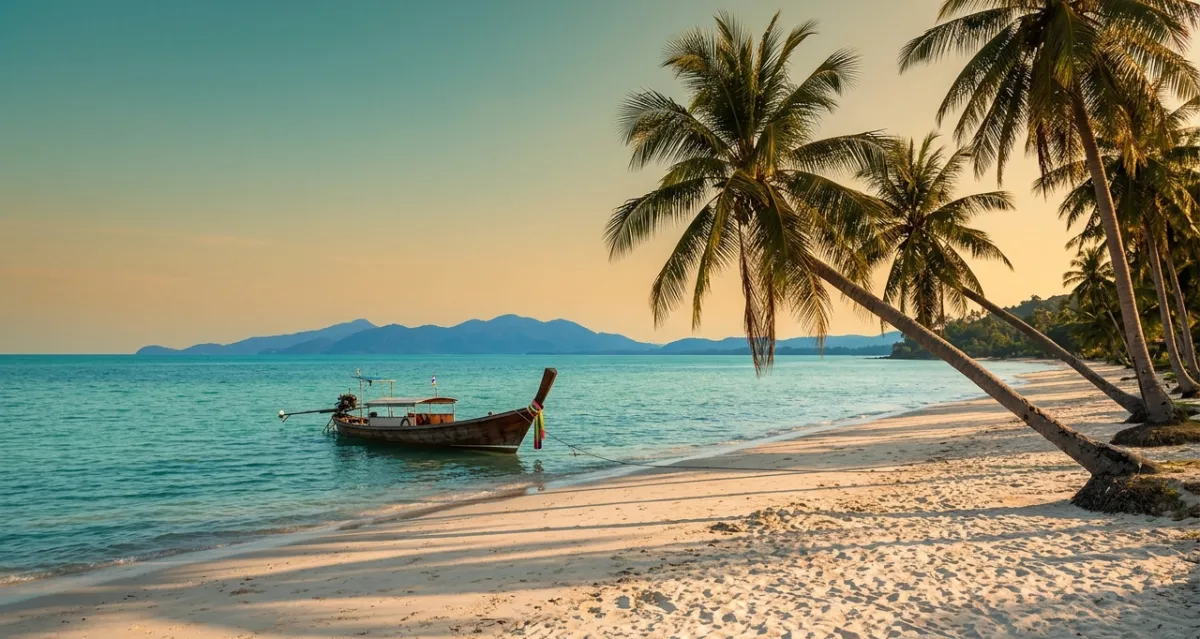
Ao Kao on the southwest coast is the long one, soft pale sand backed by leaning palms and a handful of low-key bars that string fairy lights at dusk. This is where the sun goes down and where most of the bungalows sit. Ao Suan Yai on the north shore is wider and looks straight across the water at the mountains of Koh Chang, which turn deep blue around six in the evening. Ao Tan Khu and tiny Ao Nid round it out, both quieter, both good for a swim when the tide cooperates.
Which Koh Mak beach is best for swimming?
Ao Kao is the safest bet for actual swimming, with a gentle gradient and clear water at high tide. Ao Suan Yai is calmer but shallower, better for wading and sunset photos than laps. Check the tide before you commit, because at low water some stretches turn to walkable flats for fifty metres out.
Now the car-free catch, because there is one. With no cars and no public transport to speak of, you move by bicycle, by scooter, or on foot. Most travelers rent a scooter on instinct the moment they land. I'd push back on that. The island is so small and so flat that a 100 THB bicycle does almost everything a 250 THB scooter does, minus the chance of laying it down on a sandy corner. Save the scooter for the one day you want to chase a far beach with a picnic.
Interior Koh Mak is rubber and coconut plantation, owned for over a century by descendants of the families who first settled it. Cycle the inland lanes at golden hour and you ride through corridors of trees with the latex cups still strapped to the trunks, the air smelling faintly of cut grass and warm earth. I never saw another tourist on those roads. Not one.
Koh Mak vs Koh Kood: Which Island Should You Pick?
Koh Mak vs Koh Kood is the question every traveler in this corner of Thailand eventually asks. Short version: Koh Kood is bigger, greener, more dramatic, with waterfalls and proper jungle, but it is also more spread out and increasingly chased by resort developers. Koh Mak is smaller, flatter, social, and easier to do without a vehicle. Pick by temperament, not by Instagram.
I have stayed on both. Koh Kood wins on raw scenery, no argument. The waterfalls at Khlong Chao are real and worth the trek. But here is the common mistake I want to correct: people book Koh Kood believing it is the quieter, more untouched choice, when in 2026 the larger resorts there are exactly what is changing it. Koh Mak, because it is car-free and community-run, has stayed deliberately small. The low-carbon designation is not marketing fluff. It shapes what gets built and how.
If you want one base for nights out, beach bars, and easy cycling between coves, choose Koh Mak. If you want isolation, hiking, and you do not mind a scooter and a thinner social scene, choose Koh Kood. Or do what I did and island-hop. The speedboats link the two in under an hour, and seeing them back to back makes the contrast obvious.
Where to Stay and When to Go
Accommodation on Koh Mak runs from beach shacks to a couple of genuinely lovely boutique places, and almost all of it is locally owned. Ao Kao is your most convenient base for food and sunsets. Makathanee and Koh Mak Resort sit on good sand with restaurants attached. For something cheaper and more low-key, the bungalow clusters behind Ao Kao beach run 600 to 900 THB a night in green season, which is roughly half what they ask in February.
Eat at the local spots inland rather than only at your resort. The som tam and grilled chicken at the small roadside places near Ban Koh Mak village cost about 60 to 90 THB a plate and taste better than anything on a resort menu. There is even an Italian-run pizza place on the island that has no business being as good as it is. A large Chang at the beach bars runs 60 to 80 THB, less if you walk one lane back from the sand.
When is the best time to visit Koh Mak?
The best time to visit Koh Mak is November to April for guaranteed dry weather and calm seas. But June through September, the green season, is the underrated window: lush scenery, rooms at half price, and far fewer people. The trade-off is afternoon rain and a reduced boat schedule, both manageable if you stay flexible.
And honestly? June surprised me. The mornings were clear and bright, the island impossibly green from the rains, and the brief downpours rolled through around three in the afternoon like clockwork, which is exactly when you want an excuse to lie in a hammock anyway. The water was warm as a bath. I had Ao Suan Yai entirely to myself one morning, just me and a fisherman mending a net, and that is not something you can buy in high season at any price.
How much does a Koh Mak trip cost?
A comfortable mid-range trip to Koh Mak runs about 1,200 to 1,800 THB per person per day in green season, covering a decent bungalow, three local meals, bike rental, and a couple of beers. Budget travelers can do it for well under 1,000 THB a day. High season roughly doubles the room cost.
That math is the quiet reason this island stays special. It is cheap enough to linger, small enough to learn, and stubborn enough to have refused the development that swallowed its louder neighbours. Go before the rest of the internet catches on. They will, eventually. Worth it? For me, absolutely.
Tags
Map-o-World Editorial Team
Travel Research & Editing
Our guides are researched from official tourism sources, local operators, transport authorities and recent traveller reports, drafted with AI assistance and reviewed by our editors before publishing. Prices, opening hours and entry rules change often - please double-check before you travel, and tell us if you spot something out of date.
Read our editorial policy arrow_forward