
Venice on a Budget: 2026 Guide to Cheap Travel Tips
Venice on a budget in 2026 is realistic: plan for roughly 70-100 euro a day. Sleep in the Cannaregio district or across the bridge in Mestre, eat standing up at cicchetti bars for 1-2 euro a bite, refill at the free public fountains, and walk instead of paying 9.50 euro per vaporetto ride.
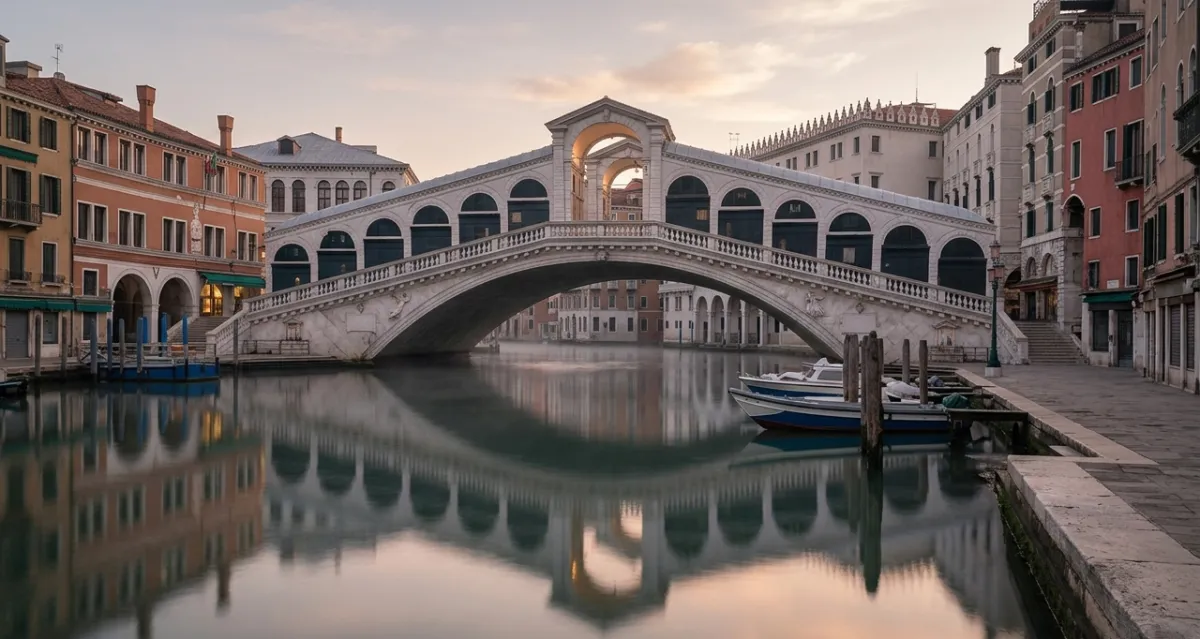
I have lost count of how many people have told me this city is too expensive to enjoy properly. They are wrong, and I can prove it. On my last trip I spent four days here and came in under 90 euro a day, sleeping ten minutes from the Grand Canal and eating far better than the tourists handing over 40 euro for soggy spaghetti near Piazza San Marco. The trick is knowing where locals actually go. At 7am the alleys behind the Rialto market smell of salt and wet stone, silent except for the slap of delivery boats against the fondamenta. That quiet costs nothing. Most visitors sleep right through it.
How much does a trip to Venice cost in 2026?
A careful budget traveller spends about 70-100 euro per day in 2026. That covers a hostel bed or cheap shared room, two cicchetti meals, a couple of spritzes, and walking everywhere. If you are a day-tripper rather than an overnight guest, add the 5 euro access fee charged on peak dates. Couples sharing a room push the per-person cost lower.
Here is the real breakdown. A dorm bed in Cannaregio runs 35-55 euro depending on season, and a basic double can be found for 80-110 euro if you book early. A single vaporetto ticket is 9.50 euro and lasts 75 minutes; the 1-day pass is 25 euro and the 3-day pass 45 euro. Coffee taken standing at the bar costs around 1.20 euro. Sit down at a table and you pay double for the privilege, so I drink mine on my feet like everyone else.
One number catches people out: the day-tripper access fee. In 2026 Venice charges visitors who do not stay overnight 5 euro on roughly 50 busy days, mostly spring and summer weekends, rising to 10 euro if you book last-minute. Overnight guests skip it entirely but pay a small per-night city tax instead. Register online before you arrive and keep the QR code on your phone.
Where to Sleep and How to Get Around for Less
Cannaregio is where I always stay. It is a ten-minute walk from the train station, the canals are wide and calm, and the evening bar scene along Fondamenta della Misericordia is full of Venetians rather than tour groups. Rooms here cost a fraction of what you pay around San Marco for the exact same fifteenth-century ceilings. If even that stretches your budget, sleep in Mestre on the mainland. Trains into Venezia Santa Lucia take eleven minutes and run constantly, and a hotel there can cost half the island rate.
Now the counterintuitive part, and the tip I argue about with other travel writers. Do not automatically buy the vaporetto pass. Venice is tiny. You can walk from the train station to St Mark's Square in about 40 minutes, and getting briefly lost on the way is the best part of being here. Unless you have heavy bags or want to reach the outer islands, your own two feet are free and faster than the queues at the water-bus stops.
There is one boat I never skip. The traghetto gondola crossings ferry you straight across the Grand Canal for 2 euro, standing up among locals carrying their shopping. A proper gondola ride starts near 90 euro. The traghetto is the same boat, the same water, the same striped shirts, for the price of a coffee.
Eating Like a Venetian on Pocket Change
Forget restaurants for a moment. The cheapest and best meals in Venice come from bacari, the little bars that serve cicchetti: small plates of crostini, fried sardines, baccala mantecato, polpette. Each bite costs 1-2 euro. Order a few, grab an ombra (a small glass of house wine for about 1.50 euro), and you have eaten like a local for under 12 euro. All'Arco near the Rialto market does some of the finest cicchetti in the city; Cantina Do Spade a few alleys away has been feeding people since the 1400s.
Go to the Rialto fish and produce market early, before 9am, when the stalls are loud and the prices honest. Even if you have no kitchen, it is worth seeing where the bacari owners shop. For drinks, a spritz at a Cannaregio bar runs 3-3.50 euro versus the 12 euro you will pay in a square with a view. And the drinking water is genuinely free: Venice has dozens of public fountains called nasoni that pour clean, cold lagoon-aqueduct water all day. I refill the same bottle the whole trip.
A Venetian friend put it best over an ombra one evening: in this city, the people who pay the most almost always see the least.
The single mistake I watch tourists make again and again is sitting down for lunch within sight of the Basilica. That postcard view is bundled into a 30 euro bill for mediocre food. Walk five minutes in any direction, into Castello or Dorsoduro, and the same meal halves in price and doubles in quality.
When is Venice cheapest to visit?
The cheapest months are November through March, with January the clear winner once Carnival and New Year are out of the way. Room rates can drop 40 percent, the alleys empty out, and the light over the water turns soft and grey-gold. The trade-off is cold, damp days and the occasional acqua alta high tide.
Acqua alta sounds alarming but it is manageable. The city sets up raised walkways across the low squares, the flooding usually lasts a few hours around high tide, and a cheap pair of rubber boots from any hardware shop sorts you out. Sirens warn you in advance. I find a flooded Piazza San Marco at dawn, mirror-flat and almost empty, more memorable than the same square baking under July crowds.
What can you do in Venice for free?
Plenty. Walking the back canals of Castello, watching the sunset from the Zattere promenade, wandering into churches that charge nothing to enter, and simply getting lost cost zero euro. The city itself is the attraction, and the best of it has no ticket booth.
A few specifics earn their place on any cheap itinerary. The bell tower of San Giorgio Maggiore, reached by a short vaporetto hop, gives you the finest view in Venice for 8 euro, and you look back at the famous Campanile instead of queuing 90 minutes to climb it for 12. Libreria Acqua Alta, the bookshop that stores its stock in bathtubs and a real gondola, is free to browse. Wander the public gardens of the Giardini in the east, where almost no day-tripper bothers to go. Stand on the Ponte dell'Accademia at dusk and watch the Grand Canal turn copper. Venice rewards the people willing to walk and look more than the ones who arrive with the deepest wallets.
Map-o-World Editorial Team
Travel Research & Editing
Our guides are researched from official tourism sources, local operators, transport authorities and recent traveller reports, drafted with AI assistance and reviewed by our editors before publishing. Prices, opening hours and entry rules change often - please double-check before you travel, and tell us if you spot something out of date.
Read our editorial policy arrow_forward