Lisbon on a Budget: $50 a Day Backpacker Guide 2026
Yes, you can do Lisbon on a budget for around 50 dollars a day in 2026. Plan on roughly 20 dollars for a hostel bed, 15 for food, and the rest split between 1.65-euro tram rides, a pastry or two, and a beer at sunset. The miradouros, the viewpoints that sell the whole city, cost nothing.
The first thing that hit me in Lisbon wasn't a building or a view. It was the smell of grilled sardines drifting up a side street in Alfama at lunchtime, mixed with diesel from a passing tram and something sweet from a bakery I couldn't see. The cobblestones here, the little black-and-white calcada ones, catch the morning light in a way that makes the whole hill look wet even when it hasn't rained in weeks. I came expecting Paris prices with a tan. I left having spent less per day than I do at home.
Here's the thing about Lisbon on a budget: the city almost rewards you for being broke. The expensive stuff is mostly forgettable. The cheap stuff is the soul of the place.
How much does a trip to Lisbon really cost?
A frugal backpacker can run Lisbon on 45 to 55 dollars a day in 2026, sleeping in hostel dorms, eating at neighborhood tascas, and walking most of the time. Couples splitting a private room and a few taxis should budget closer to 70 dollars each. Compared to Paris or Amsterdam, you are paying roughly half.
Let me break down a real day. My cheapest one looked like this: 18 euros for a dorm bed in Mouraria, 1.30 for a pastel de nata and a coffee standing at the counter, 7 euros for a grilled-fish lunch with wine at a tasca, a 1.65 tram ride, 4 euros for two glasses of ginjinha, and 6 euros for a bowl of caldo verde at night. That is under 40 euros, which lands right around 43 dollars. The view from Miradouro da Senhora do Monte that evening cost me exactly zero.
A Lisbon hostel owner told me over breakfast: "Tourists pay for the view from the rooftop bar. We just walk up the hill behind it. Same sunset, no bill."
Where to sleep and eat without wrecking your wallet
Accommodation will be your single biggest line item, so this is where the math gets won or lost. Skip the trendy pods near Cais do Sodre and look at Mouraria, Graca, and Anjos instead. These are real neighborhoods where dorm beds run 16 to 24 euros even in summer, and you wake up to old women hanging laundry rather than stag parties stumbling home.
Food is where Lisbon genuinely spoils the broke traveler. The trick is learning the word tasca, the small family-run spots with paper tablecloths and a daily special chalked on a board out front. A prato do dia, the dish of the day, usually comes with bread, a main, and sometimes wine for 7 to 9 euros. Look for places full of construction workers at 1pm. They have a nose for value that no guidebook can match.
What about the famous pastel de nata?
Everyone tells you to queue at Pasteis de Belem for the original custard tart. I did it once, waited 25 minutes, and honestly? It was very good but not life-changing. The counterintuitive move: go to Manteigaria in Chiado or inside Mercado da Ribeira instead. The tarts come out hot every few minutes, cost about 1.30, and a little bell rings when a fresh batch lands. No queue, warmer pastry, same euro in your pocket.
One more food warning. The Time Out Market looks like backpacker heaven and is actually a tourist trap dressed as a foodie paradise. Plates there run 12 to 18 euros for portions you would pay half as much for two streets over. Walk five minutes to a tasca in Bica and eat better for less.
The free side of Lisbon: miradouros, trams, and tiles
This is the part that makes Lisbon the smartest budget pivot in Western Europe right now. The best experiences are free or close to it. Among the cheap things to do in Lisbon, nothing beats the miradouros, the public viewpoints scattered across the seven hills. My favorites, in order:
- Miradouro da Senhora do Monte, the highest one, almost no crowds at sunset
- Miradouro de Santa Catarina, where locals bring guitars and beers as the light drops
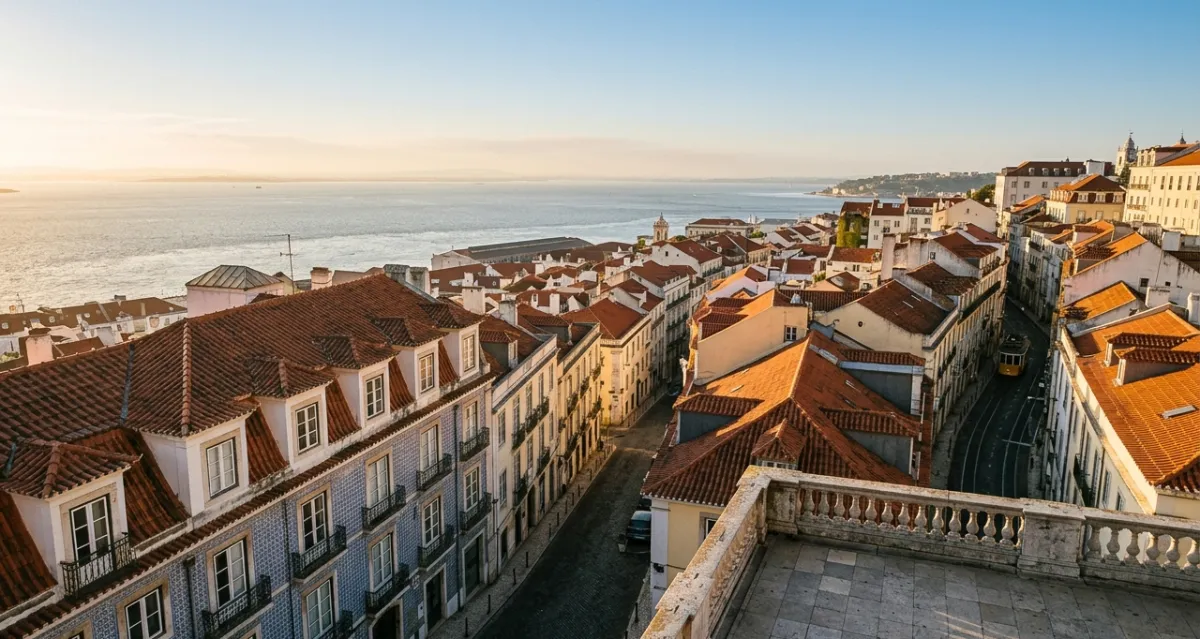
- Miradouro das Portas do Sol, the postcard shot over the Alfama rooftops to the river
- Miradouro de Sao Pedro de Alcantara, an easy walk from the Bairro Alto bars
Beyond the views, wandering Alfama and Mouraria costs nothing and delivers everything. Get deliberately lost. The streets are too narrow and steep for tour buses, so you get fado drifting out of open windows, lines of drying clothes overhead, and azulejo tiles climbing the walls in blue and white. Lisbon's free attractions also include the riverside walk from Cais do Sodre to Belem, the street art around LX Factory, and the Se cathedral whose main nave you can enter without paying.
Fair warning on one beloved freebie: Sao Jorge Castle is not free. It runs 15 euros now, and the truth is the view from Miradouro das Portas do Sol, just below it, is nearly as good for nothing. Spend the 15 euros on three tasca lunches instead.
What is the cheapest way to get around Lisbon?
Walking is free and unavoidable given the hills, but for trams and metro, buy a reusable Viva Viagem card for 0.50 and load it. A single ride is 1.65 euros when you tap with credit, versus 3 euros if you buy a paper ticket from the driver onboard. A 24-hour unlimited Carris and metro pass is 6.80, which pays for itself in four rides.
The classic Tram 28 rattles past most of the famous sights, and it is genuinely a lovely ride. The mistake people make is queuing 40 minutes at the Martim Moniz starting point in the heat. Board it mid-route at a stop like Graca instead, or ride Tram 12 which loops a shorter version of the same hills with a fraction of the crowd. Either way, tap your Viva Viagem and skip the onboard markup.
From the airport, take the metro, not a taxi. The red line into the center costs about 1.80 with your card. A cab will run you 15 to 20 euros for the same trip and sit in traffic doing it.
When is the best time to visit Lisbon on a budget?
For the best mix of cheap prices and decent weather, aim for late September through November or March into May. You dodge the August heat and the peak-season hostel rates, which can nearly double in summer. Days stay warm, the river light turns golden earlier, and the miradouros empty out.
Summer 2026 will be busy and pricier as more travelers swap overcrowded, expensive cities for affordable Europe, and Lisbon sits at the top of that list. If you can only come in July or August, book dorms a few weeks ahead and eat your big meal at lunch when tascas run their cheapest specials. The shoulder season simply stretches your 50 dollars further, and the city feels more like itself when the cruise crowds thin out.
One last piece of advice I wish someone had given me on day one: don't over-plan Lisbon. The best afternoon I had cost three euros, started with getting lost in Mouraria, and ended sitting on a miradouro wall watching the 25 de Abril bridge turn pink. This is a budget Europe destination that pays you back for slowing down. Bring good shoes for the hills, a refillable water bottle, and an appetite. The rest sorts itself out.
Map-o-World Editorial Team
Travel Research & Editing
Our guides are researched from official tourism sources, local operators, transport authorities and recent traveller reports, drafted with AI assistance and reviewed by our editors before publishing. Prices, opening hours and entry rules change often - please double-check before you travel, and tell us if you spot something out of date.
Read our editorial policy arrow_forward