Medellin Safety in 2026: Solo Adventure Scam Guide
Quick answer: Medellin is safe enough for a fit, switched-on solo adventure traveller in 2026, as long as you treat Parque Lleras at 2am and every dating-app match with real suspicion. Trails, cable cars and paragliding launches are not where people get hurt. A spiked drink and an empty bank account by dawn is the actual threat.
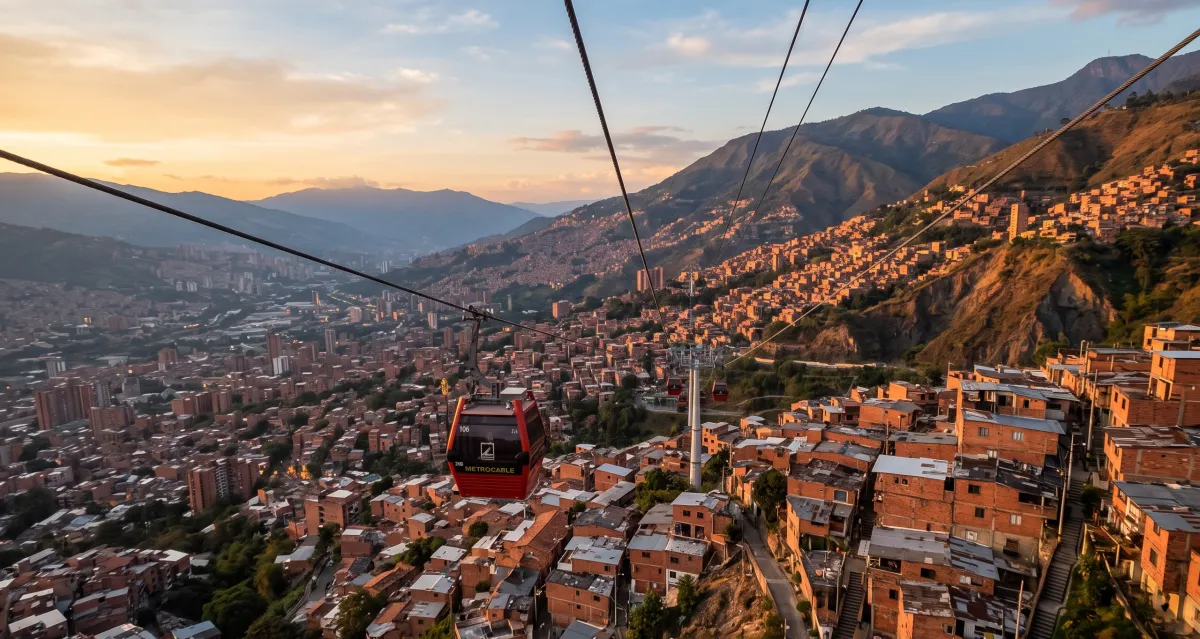
Edgar cut the engine on his pickup halfway up the ridge to San Felix and turned to face me before he let me clip in. 'No des papaya,' he said. Don't give papaya. Don't hand anyone the opening. Two minutes later we ran off a wet grass slope at 2,400 metres and the Aburra Valley tilted hard under my boots, brick towers stacked up both canyon walls, a hawk working the same thermal a wingspan off my shoulder.
I spent five weeks here in August 2025, mostly chasing height and water. The flying never scared me. The Tinder warnings from three separate hostel owners did.
Is Medellin safe for solo travel in 2026?
Yes, with conditions. Medellin safety in 2026 comes down to your habits, not your luck. Daytime adventure activity is low-risk. The danger spikes at night, around alcohol, sex and dating apps, where drugging and robbery are organised and common. Stay sober-ish, skip strangers' drinks, and your odds are good.
Here's the thing the fear-bait videos miss: violent stranger attacks on tourists are rare. What's common is the slow, quiet robbery - the date who orders for you, the friendly guy who buys a round, the apartment you wake up in stripped of phone, watch and cash. The US Embassy flagged a sharp rise in these incidents through 2024 and 2025, several ending in death from overdose. Take that seriously even if nothing else here lands.
Where and when Medellin turns risky
Geography matters less than the clock. Most neighbourhoods a traveller actually uses are fine by day and edgy after midnight.
El Poblado is the comfortable landing zone - hostels, climbing gyms, smoothie bars, and Parque Lleras, which is also ground zero for spiked drinks and sex-work stings after 11pm. I based myself in Laureles instead, around the Segundo Parque. Flatter, leafier, locals over influencers, and a 20-minute walk to the Estadio metro. Rooms ran me about 95,000 COP a night (around $23) versus the 140,000 COP Poblado wanted for less.
Envigado and Sabaneta, south of the centre, stay calm and cheap and put you closer to the highway out toward Cerro Tusa and the south-west trails. The Centro (La Candelaria, around Plaza Botero) is fine for a daytime walk and genuinely worth it for the fat bronze sculptures, but I cleared out by 5pm. Locals will tell you the same.
Areas to skip after dark as a solo traveller: the upper, unpaved parts of Comuna 13 beyond the tourist escalators, San Javier's fringes, Niquitao, Barrio Antioquia, and Prado Centro. Not because you'll definitely get robbed, but because you'd be giving papaya for no payoff.
When is the best time to visit Medellin for outdoor adventure?
July through September, the second dry season. Mornings run clear and cool for paragliding and hiking, with rain holding off until late afternoon. This window beats the December-January peak on crowds and price, and the thermals for flying stay reliable most mornings before 11am.
Eternal spring is real but oversold. August still threw a hard 4pm downpour at me maybe one day in three, the kind that turns Comuna 13's tiled steps into a slide. Climb, fly and hike in the morning. Save markets, museums and cable cars for the wet afternoons.
The scams that actually catch travellers
Forget the cartoon stuff. The schemes that work in Medellin are social, patient and aimed at your judgement, not your pockets directly.
How do you avoid getting drugged in Medellin?
Never accept an open drink, never leave one unattended, and never meet a dating-app match at your own place on night one. Scopolamine, which locals call burundanga, is colourless, tasteless, and wipes both memory and willpower for hours. Meet in public, stay sober enough to leave, and tell someone where you are.
The classic version: a match on Tinder or Bumble, charming, quick to suggest a quiet drink at yours. She doses you, sometimes lets associates in, and you surface the next afternoon cleaned out. Men chasing nightlife and hookups are the prime target, which is exactly why generic 'is Medellin safe' articles aimed at couples underplay it. As a solo guy hitting the bars, you are the demographic.
Other ones I watched play out, or got warned about on repeat:
- Taxi meter games and broken meters from the street. I stuck to Uber, DiDi and Cabify. A ride from Laureles to the Terminal Norte ran about 14,000 COP ($3.40) with the price locked before I climbed in.
- Counterfeit notes slipped as change. A juice cart in Envigado handed me a fake 50,000 ($12) and flat refused to swap it. Now I check the watermark and the colour-shift ink on every big bill.
- The tourist-police shakedown, real-looking guys asking to inspect your wallet for fake dollars. Actual police don't do this. Decline and walk toward a busy shop.
- The motorbike phone-snatch. Two up, they grab and gun it. Don't walk with your phone out at a red light, ever.
No des papaya. It isn't a warning about danger out there. It's a rule about not creating the opening yourself.
What the headlines get wrong about Medellin
Every Medellin scam warning piece leans on Pablo Escobar and murder stats from the early 90s, when this was the most dangerous city on earth. That Medellin is gone. The homicide rate today sits below several US cities, and as an adventure traveller you'll spend most days in cable cars and on ridgelines where the only real hazard is your own footing.
What the headlines actually miss runs the other way. The threat isn't random crime in poor barrios you'll never visit. It's targeted, transactional crime in the rich nightlife strip you'll be tempted by every single night. The danger lives inside El Poblado, not up in Comuna 13. Reverse your instincts.
And the famous Comuna 13 tour? Worth one daytime visit for the graffiti and the outdoor escalators, but it has become a packed line of selfie sticks by 11am, vendors shouting over reggaeton, the actual history flattened into a backdrop. Go at 8am with a local guide from the barrio (around 60,000 COP, $14.50) or skip it outright and put that morning into Cerro Tusa instead, a near-perfect pyramid peak two hours south, a real 4-hour climb, almost nobody on it.
Precautions that actually matter
Most safety listicles pad themselves with filler. Boiled down, Medellin safety in 2026 is a habits game, not a luck game. Here's what genuinely moved the needle over five weeks.
- Carry a cheap second phone for nights out and dates. Leave passport, real cards and your main phone in the hostel safe.
- Use ATMs inside banks or malls (Santafe, El Tesoro) in daylight, never a street machine at night.
- Set a daily cash cap. I drew 200,000 COP ($48) and left cards behind on nights out, so the worst case was a bad night, not a drained account.
- Learn ten words of Spanish: listo, cuanto vale, no gracias. Looking like you've been here a week changes how the street reads you.
- Download offline maps and your ride app before you fly in. Standing on a corner squinting at a lost-looking phone is the papaya.
For the adventure itself, the city is a launchpad and the risk profile is genuinely low. Tandem paragliding off San Felix ran me 90,000 COP (about $22) for roughly 20 minutes with a certified pilot, every morning the weather held. El Penol at Guatape, the 740-step monolith over a maze of green islands, is a 2-hour bus from Terminal Norte (16,000 COP each way) and 25,000 COP ($6) to climb. Go for the 7am opening, before the day-trippers and the haze. Rio Claro's marble canyon, three hours east, is the best swimming and caving in the department and stays quiet midweek.
Who this isn't for: if your trip is built around Parque Lleras and matching with strangers every night, Medellin will eventually take something from you, and no guide fixes that. If you're here for the height, the water and the 6am starts, it's one of the best-value adventure bases in the Americas.
Last practical thing. Screenshot your hostel address and a photo of your passport, put your real phone away, and when a pilot you've known for ten minutes tells you not to give papaya, listen. Then go run off the mountain.
Map-o-World Team
Travel Writers & Destination Experts
We're a team of passionate travelers and writers who have explored destinations across 7 continents. Our guides combine first-hand experience with deep local research to help you plan unforgettable trips. Every recommendation comes from real visits and genuine insights.
Learn more about us arrow_forward