Tbilisi First-Timer Mistakes: 8 Traps to Skip 2026
The biggest mistake first-timers make in Tbilisi is hailing a street taxi without fixing the fare first. Use the Bolt app instead. It's cheaper, tracked, and kills the haggling before it starts. Most other rookie errors here are cash, transit, and timing problems, and all of them are fixable in about five minutes of prep.
Last August I stood outside the airport arrivals door at 1am, jet-lagged and sticky, when a man in a leather jacket grabbed my duffel and announced, "50 lari, very good price, friend." The Bolt I booked thirty seconds later cost 32 GEL (about $12) to my guesthouse in Sololaki. His "good price" was 50 GEL, roughly $18, for the identical ride. I learned the rest of these the hard way over two weeks of sweating through a Caucasus summer where the afternoons hit 38C and the old town pavements radiated heat like a stovetop.
Georgia is having a moment. Wizz Air keeps dropping cheap routes, r/travel won't shut up about it, and the rtveli grape harvest pulls a wave of Western visitors every September. Plenty of them arrive thinking these tbilisi first time tips are optional. They are not.
The taxi trap that catches almost everyone
Street taxis in Tbilisi run on vibes and your perceived gullibility. There's no meter in the old white Mercedes wagons idling near Liberty Square or the funicular base. The driver names a number, you either accept or you don't, and the number triples the second he clocks your hiking boots and confusion.
How much does a taxi cost in Tbilisi?
A Bolt across the city center runs 6-12 GEL ($2.20-$4.40). The airport into town is 28-35 GEL ($10-$13) by app, depending on traffic and time. A hailed street taxi for that same airport run will start at 50-60 GEL and the driver will swear it's a bargain. Book the app, watch the price lock in, done.
Here's the thing: download Bolt before you land and add a card while you still have airport wifi. I made the rookie error of waiting until I had a local SIM, which meant my first night I was stuck negotiating in the dark. Bolt covers the city, the airport, and even day trips to Mtskheta. Yandex Go works too, but I found Bolt drivers showed up faster around Vake and Saburtalo. Skip the leather-jacket guys entirely. They are not a charming local experience. They are a markup with a smile.
The marshrutka scramble nobody warns you about
The marshrutka is a battered minibus, usually a Ford Transit with a cracked windscreen and a driver who treats lane markings as a suggestion. They are how Georgians actually move between towns, and they are dirt cheap. They are also chaos if you don't know the rules.
Marshrutkas to Kazbegi, Gori, or Sighnaghi leave from Didube station, a concrete sprawl behind the metro stop where nothing is signposted in English and everyone shouts destinations at once. The Kazbegi one costs 15 GEL (about $5.50), takes roughly three hours, and leaves only when full. Not on a schedule. When. Full. I sat in a baking van for 25 minutes waiting for two more passengers, watching the driver smoke and ignore my pointing at my watch.
- Arrive at Didube by 9-10am for mountain routes; the good morning departures fill first and afternoon ones thin out.
- Ask three people, not one. The first guy will point you wrong with total confidence.
- Pay the driver in cash, exact-ish small notes. Keep your bag on your lap; overhead space is a fantasy.
For getting around the city itself, grab a green Metromoney card from any metro booth. The card is 2 GEL, each metro or bus ride is 1 GEL (37 cents), and one tap covers 90 minutes of transfers. I rode the metro for two weeks and spent less than a single bad taxi would have cost.
Why your card keeps getting waved away at wine bars
Tbilisi is more cashless than people expect. Big restaurants, supermarkets, and hotels take cards without blinking. But the small, good places, the qvevri wine cellars and the family kitchens, still run on cash, and that catches everyone.
Is Tbilisi cash or card?
Both, but lean cash for anything small or special. Card works at chains, malls, and mid-range restaurants. The natural-wine bars, neighbourhood bakeries, marshrutka drivers, and bazaar vendors want lari in hand. Pull 200-300 GEL from a Bank of Georgia or TBC ATM (avoid the Euronet machines, which gouge you on the exchange) and you're set for days.
At Vino Underground, the natural-wine spot tucked below street level near Erekle II Street, a glass of amber rkatsiteli runs 12-18 GEL ($4.40-$6.60) and the staff will happily talk you through six qvevri producers. Lovely place. Cash only when I went, and the nearest ATM was a five-minute walk that I made at 11pm with an empty wallet and a half-finished glass waiting. Learn from me. Carry 100 GEL in small notes you didn't plan to spend.
"In Georgia, the guest is a gift from God," an old woman told me in her courtyard kitchen in Betlemi, ladling out lobio. "But God does not give change for a hundred."
The myth that Tbilisi is still impossibly cheap
Everyone arrives quoting the same Reddit thread: Georgia costs nothing. That was truer five years ago. The old town has caught up fast.
A proper supra feast at a tourist-facing restaurant on Shardeni Street, with wine and a few clay-pot dishes, will land you at 80-120 GEL per person ($30-$44). That's not a scam, it's just not the $8 dinner the internet promised. The actual cheap Tbilisi still exists, but you have to step two blocks off the polished lanes. A khinkali joint in Marjanishvili or a canteen near Dezerter Bazaar feeds you dumplings, bread, and a beer for 20-25 GEL. The food is better there anyway. Less plated for Instagram, more like what people eat at home.
So skip Shardeni Street for anything beyond a coffee. The terraces look the part, the prices are doubled, and the khachapuri arrives lukewarm. My honest call: it's the one strip in the old town I'd tell a friend to walk straight through.
When is the best time to visit Tbilisi?
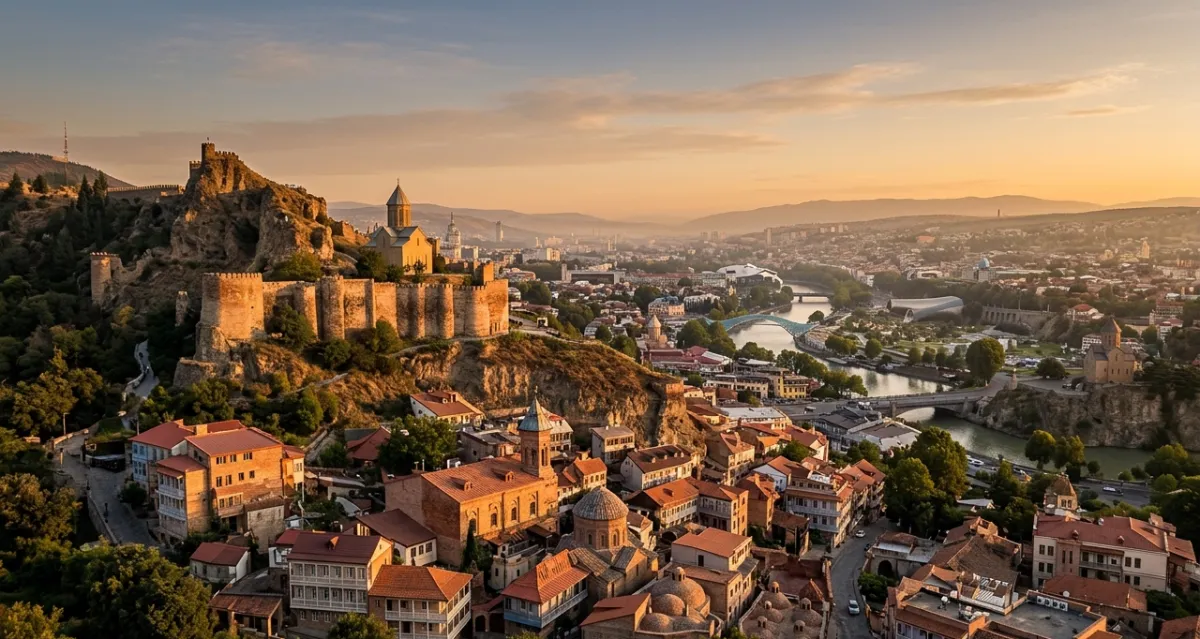
Late September into October. The brutal summer heat breaks, the rtveli grape harvest brings wine festivals and open cellars across Kakheti, and the light goes gold across the old town in the late afternoon around 5-6pm. July and August are peak for flights and prices, but the city center can hit 38C and the cobbles bake.
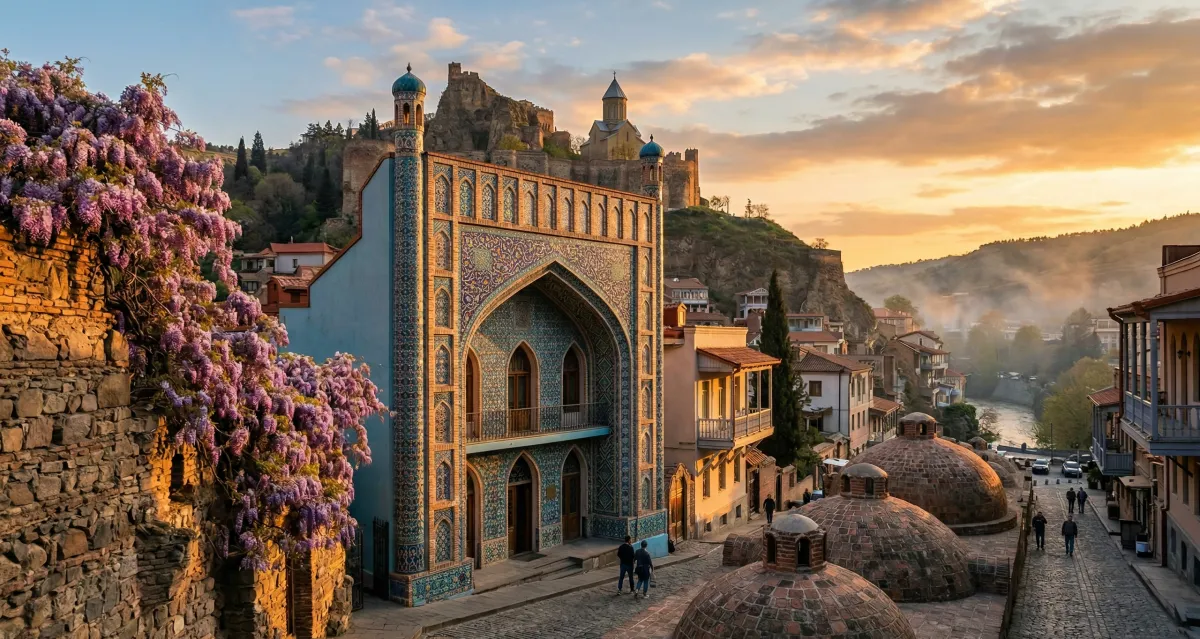
Counter-consensus moment: everyone says ride the cable car up to Narikala fortress for sunset, and the queue at the Rike Park base proves it. The cable car is fine. But the better light on the fortress is actually early morning, before 9am, when the haze lifts off the Mtkvari river and you have the ramparts nearly to yourself. For a wider view with fewer elbows, take the old funicular up Mtatsminda instead; it climbs higher, the platform is calmer, and the 7 GEL ride buys you the whole city laid out below. The trade-off is you're further from the old town, so plan it as its own half-morning.
What locals wish tourists actually understood
Two things, and they cost you nothing. First, the tap water in Tbilisi is mountain water and it's genuinely good. Don't buy cases of plastic bottles. Georgians drink straight from the tap and so did I for two weeks with zero trouble. Second, and this one trips up nearly every visitor: never toast with beer.
At a Georgian table, the wine toasts are sacred, led by the tamada, the toastmaster, and they move through family, peace, the dead, the living. Beer toasts are reserved for your enemies. Raise a beer to someone's health and you've quietly wished them ill. I watched a Dutch couple do exactly this at a supra in Kakheti and the whole table went silent before an uncle laughed and explained. Lift the wine. Let the tamada lead. When in doubt, just say "gaumarjos" and drink.
Fair warning: this is not a city for travelers who need everything in English, scheduled, step-free, and polished. The sidewalks buckle, stray dogs roam in friendly packs, and drivers improvise. If that stresses you out, Tbilisi will feel like work. If it doesn't, it's one of the easiest places I've found to feel like a regular within a week.
Keep 30 GEL in small notes in your left pocket for taxis and bakeries, your card in the right. That one habit saves more hassle than any guidebook. And the cheese-filled khachapuri at the corner bakery near Vera will still be warm at midnight when you stumble back from the wine cellar, cash gone, perfectly happy.
Map-o-World Team
Travel Writers & Destination Experts
We're a team of passionate travelers and writers who have explored destinations across 7 continents. Our guides combine first-hand experience with deep local research to help you plan unforgettable trips. Every recommendation comes from real visits and genuine insights.
Learn more about us arrow_forward