Tbilisi on $40 a Day: Your Spring 2026 Budget Guide
Quick answer: Tbilisi in spring 2026 is one of Europe's cheapest capitals. Budget $30-40 per day for hostel stays, full meals, wine, and local transport. Late March through April brings 15-22C weather, blooming gardens, and thinner crowds than summer. Most Western passport holders enter visa-free.
I first walked into Tbilisi on a cold March evening, dragging a suitcase down Rustaveli Avenue with no hotel booked and roughly 200 Georgian lari in my pocket. That's about $75. I figured it would last a day, maybe two. It lasted four.
Something about this city recalibrates your sense of what travel should cost. Khinkali dumplings with wine for 15 lari. Five lari for a soak in sulfur baths that have been steaming since the 1700s. A marshrutka ride across town for 50 tetri - literally twenty cents. When I returned for spring 2026, prices had crept up, but Tbilisi still felt like a city designed for travelers who actually watch their bank balance. If you want a Tbilisi travel guide for 2026 with real numbers instead of vague promises, this is it.
What Does a Day in Tbilisi Actually Cost?
Tbilisi on a budget is not a compromise. The city just works that way. I tracked every lari across three days in April 2026, eating well, drinking wine, and doing everything I wanted.
- Accommodation: Hostels in the Old Town (Fabrika, Envoy) run 25-45 GEL per night ($9-16). Private guesthouse rooms on Betlemi Street cost 80-120 GEL ($28-42). Midweek rates drop noticeably.
- Food: A khinkali meal at Zakhar Zakharich costs 12-18 GEL. Lobiani from a street bakery on Kote Apkhazi: 2-3 GEL. Churchkhela at the Dezerter Bazaar runs 3-5 GEL per stick.
- Transport: Metro rides are 1 GEL with a Metromoney card. Bolt rarely tops 5-8 GEL for trips across the city center.
- Wine: A bottle of Saperavi from a shop on Erekle II Street costs 15-25 GEL. A glass at a wine bar in Vera: 8-12 GEL.
- Activities: Narikala Fortress is free. Cable car up from Rike Park: 2.50 GEL. Public sulfur baths in Abanotubani start at 5 GEL.
My daily average came to 95-110 GEL ($33-38). Sleep in dorm beds and cook at your hostel occasionally, and you can push it under $25.
Card acceptance is patchy outside the main tourist strips. ATMs along Rustaveli Avenue dispense both GEL and USD, but carry cash when heading to the Dezerter Bazaar or neighborhood bakeries. I got caught trying to tap my card at a bread shop in Sololaki once - the woman laughed and pointed me toward the ATM next door.
Three Days in Tbilisi - A Spring Itinerary That Doesn't Rush
Most Tbilisi 3-day itinerary posts try to cram in too much. This city rewards slowness. Block out these three days as a framework, then let yourself drift when something catches your eye.
Day 1 - Old Town and the Sulfur Baths
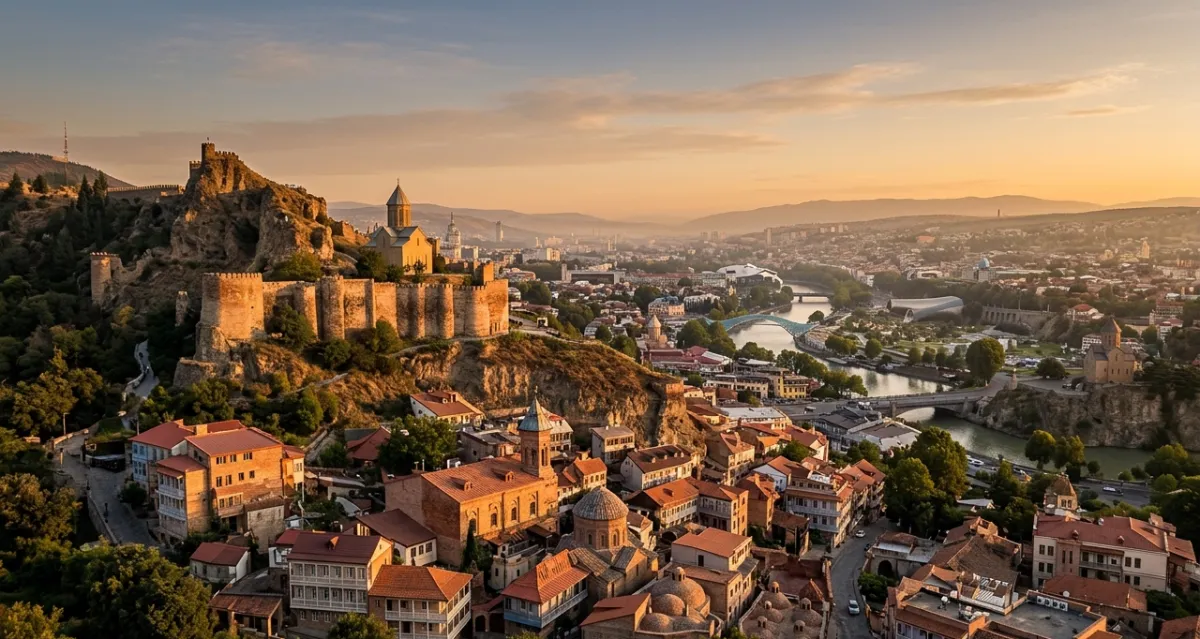
Start on Shardeni Street around 9 AM, before the restaurant touts show up. The cobblestones catch morning light in a way that turns the whole block amber. Walk south to the Metekhi Church overlook - this is the best panoramic view you'll find in the old city. On a clear spring morning, Caucasus peaks still carrying snow are visible behind the Narikala ridge.
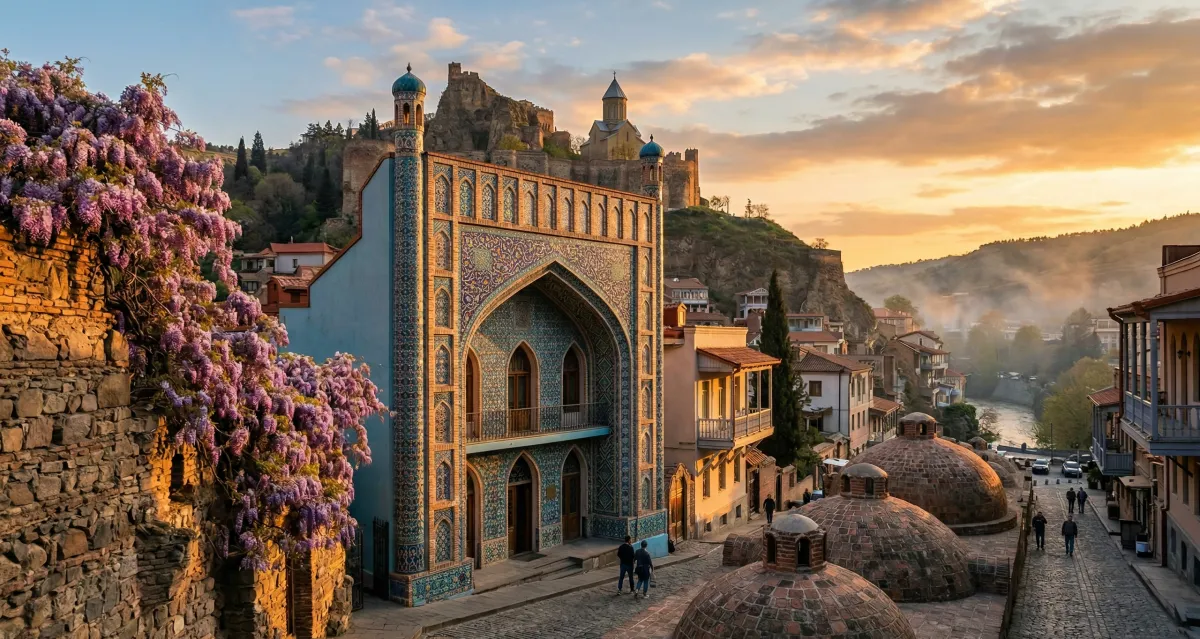
Drop down to Abanotubani by 10 AM for the sulfur baths. The public pool at Orbeliani Baths - the one with the blue-tiled facade you've seen all over Instagram - costs 5 GEL. A private room with a scrub runs 80-100 GEL. Fair warning: the sulfur smell hits hard when you walk in. You adjust after five minutes, and by the time the hot water has soaked through your shoulders, you won't care.
Afternoon: take the cable car from Rike Park up to Narikala Fortress (2.50 GEL), or hike from the botanical garden entrance on the south side. Watch your step near the crumbling eastern wall. Late afternoon light from up here is something else - the Mtkvari River below turns a milky green, and the Old Town fans out in a jumble of terracotta and corrugated tin. For dinner, try Shavi Lomi on Zubalashvili Street. It's a converted apartment with mismatched furniture and some of the best modern Georgian food in town. Budget 35-50 GEL per person with wine.
Day 2 - Rustaveli Avenue, Vera, and Georgian Wine
Walk the full length of Rustaveli Avenue in the morning. Soviet-era theatres stand beside glass-fronted cafes, street musicians set up near the Georgian National Museum (10 GEL entry - the gold artifact collection alone is worth the price, and don't skip the basement level). The avenue feels spacious at any hour, wide enough to never get bottlenecked by crowds.
After lunch, cross into Vera. Most first-timers skip this neighborhood while chasing Old Town photos, and that's a real mistake. Vera is where young Tbilisians actually hang out - coffee shops on Barnovi Street, low-key wine bars, the occasional record store with vinyl spilling out of crates. Cafe Leila does a solid shakshuka for 12 GEL.
Evening: wine. Georgia's winemaking tradition runs back 8,000 years, and that's not marketing copy - it's archaeology. Head to Vino Underground on Tabidze Street for a natural wine tasting. Staff will walk you through qvevri-aged amber wines made in clay vessels buried underground. A flight of four costs 25-30 GEL. And honestly? The amber wines taste like nothing you've had before. Tannic, floral, with a slight oxidized edge. It takes getting used to, but once it clicks, regular white wine starts to feel flat.
Day 3 - Markets, Mtatsminda, and Getting Lost on Purpose
Morning at the Dezerter Bazaar. This is a working market, not a tourist attraction. Stalls piled with churchkhela, ground spices, sulguni cheese, fresh herbs in big heaps. Cheese vendors will hand you samples if you linger - try the smoked sulguni. Bring cash only. The noise is constant: prices being called, plastic bags crinkling, someone debating walnut quality with visible passion.
Take the funicular up Mtatsminda Park from the station on Chonkadze Street. The ride itself is the highlight - the carriage climbs at a steep angle through dense forest while the city drops away beneath you. At the top, skip the aging amusement park and walk to the TV tower viewpoint. On a clear spring day, the Caucasus range fills the northern horizon while dry hills roll south toward Armenia.
Spend the rest of the afternoon with no plan. Wander through Sololaki, look up at carved wooden balconies sagging under generations of weight, duck into a courtyard when a door happens to be open. Spring brings jasmine and wisteria climbing every surface, and the scent on a warm April afternoon is thick enough to stop you mid-stride.
"In Georgia, a guest is a gift from God." You'll hear this constantly. It's not just a saying - strangers will invite you for wine, shopkeepers will refuse payment for small things, and your taxi driver will insist on teaching you five Georgian words before the ride ends.
When Is the Best Time to Visit Tbilisi?
Late March through April is the window you want. Daytime temperatures sit around 15-22C (59-72F), nights cool to 7-10C, and rain rarely lasts more than a passing shower. The city's parks hit peak bloom by mid-April, and Tbilisi Botanical Garden fills with wild tulips and blossoming fruit trees in the gorge behind Narikala.
Summer gets genuinely uncomfortable. I'm talking 35-38C with humidity radiating off the river. The sulfur baths become unbearable in that heat, and the Old Town takes on a different smell entirely. Winter has its own draw - Christmas markets, snow dusting the fortress walls - but many restaurants cut hours and some guesthouses close.
Spring also makes day trips easy. Marshrutkas to the Kakheti wine region cost 40-60 GEL, and wineries like Pheasant's Tears in Sighnaghi welcome walk-ins this time of year. Planning Georgia travel for spring 2026? Add two or three extra days for the wine country. You won't regret it.
Here's a counterintuitive tip: skip the weekends at Abanotubani. Locals pack the sulfur baths on Saturday mornings, pushing wait times for private rooms past 90 minutes. Go on a Tuesday or Wednesday instead. Same water, no crowd, and you'll have better luck negotiating the scrub price down.
What Do Most First-Timers Get Wrong?
The biggest mistake: treating Tbilisi like a two-day city. Three days is the minimum to feel the rhythm of the place. You need time to sit in a wine bar without consulting a checklist, to walk uphill without a pin on your map, to eat khinkali slowly at a plastic table in a spot with no English menu.
People also make the error of staying exclusively in the Old Town. It looks incredible, yes. But the neighborhood has grown increasingly tourist-facing, and prices show it. Base yourself in Vera or Saburtalo for a more grounded experience of daily Georgian life. Bolt rides to the center take eight minutes and cost 4-6 GEL.
Third common mistake: choosing sit-down restaurants over food markets. The Dezerter Bazaar and small bakeries scattered through Sololaki turn out better food at a fraction of the price. A fresh shotis puri pulled from a tone oven costs 1.50 GEL and genuinely tastes better than anything on a Shardeni Street menu.
One last note for budget travelers eyeing spring 2026: book accommodation at least two weeks out. Georgia travel has surged over the past year, driven partly by TikTok and Reddit communities discovering Georgian wine culture, the sulfur baths, and Old Town aesthetics. Spring weekends fill up fast in the popular hostels. Midweek arrivals get lower rates and better availability across the board.
Map-o-World Team
Travel Writers & Destination Experts
We're a team of passionate travelers and writers who have explored destinations across 7 continents. Our guides combine first-hand experience with deep local research to help you plan unforgettable trips. Every recommendation comes from real visits and genuine insights.
Learn more about us arrow_forward