Kyoto Trip Cost Breakdown: Senior Travel 2026 Guide
A senior traveller in Kyoto during the November 2026 maple season should budget 12,000-15,000 yen (about $80-100) per day on a careful plan, 22,000-30,000 yen ($145-195) mid-range, and 50,000 yen ($325) or more upscale. That covers a step-free hotel, short taxi hops, temple fees and two meals, not flights. This kyoto trip cost breakdown assumes one person and a slower pace.
I watched a couple in their late seventies pay 8,800 yen (around $57) for a single taxi from Arashiyama back to Kyoto Station last November, because the bus was so jammed with koyo crowds they could not get a foot on it. The wife had a cane. The driver shrugged and said it happens every day in maple season. That fare, repeated a few times, is where senior budgets in Kyoto quietly blow up.
Here is the thing about Kyoto right now: the weak yen has made it the best-value bucket-list city in Asia for 2026, and the November maple season, koyo, is the single hardest week to do cheaply or comfortably. Those two facts pull against each other. Get the logistics right and an accessible, unhurried trip costs less than most people fear.
How much does a Kyoto trip cost per day for seniors?
Expect 12,000-15,000 yen ($80-100) daily on a frugal but step-free plan, 22,000-30,000 yen ($145-195) mid-range with taxis and sit-down dinners, and 50,000 yen ($325) upward for a station hotel suite and guided days. November runs 15-20% higher than spring. Prices below are per person and exclude international flights.
Senior costs differ from a backpacker's in three ways. You will take taxis where a 25-year-old walks. You will pay for a hotel with a real elevator and a low bed, not a hostel bunk. And you will eat your bigger meal at lunch, when the same kaiseki set runs roughly half the dinner price. Build the budget around comfort and the daily total settles into a predictable band.
Three budget tiers, every line itemised
Frugal but comfortable: 12,000-15,000 yen ($80-100)
Accommodation eats the biggest slice. A clean business hotel near Kyoto Station with an elevator and a Western bed, think Via Inn or Sakura Terrace, runs 9,000-12,000 yen ($58-77) a night in November if you book by August. Breakfast at the hotel buffet: 1,200 yen. A teishoku lunch set at a station-area diner: 1,100 yen. Convenience-store dinner from Lawson, a hot bento and miso soup: 800 yen. Two temple entries at 500-600 yen each. One short taxi, 1,000 yen, when legs are tired.
Mid-range, the sweet spot: 22,000-30,000 yen ($145-195)
This is the tier I would pick at 70. Hotel Granvia, built directly above Kyoto Station with step-free access to every platform, runs 24,000-32,000 yen ($155-205) per double in koyo. Split between two, that is manageable. Add 3,000-4,000 yen of taxis a day, a 2,500 yen lunch, a 4,500 yen dinner of yudofu near Nanzen-ji, and 1,500 yen of temple and garden fees. You move on your own clock, never standing on a packed bus.
Upscale, slow and seated: 50,000 yen ($325) and up
A ryokan with a private bath and in-room kaiseki, or a suite at The Thousand Kyoto across from the station, starts near 40,000 yen ($258) per night in November and climbs fast. Add a private driver-guide for one day at 45,000-60,000 yen, and a single day tops 90,000 yen. Worth it if stairs and crowds genuinely stop you. For most, the mid-range tier buys 90% of the comfort at half the cost.
Where your money actually goes in Kyoto
Lodging is 55-65% of a senior's daily spend in koyo, full stop. Everything else is rounding error by comparison. Temple fees are almost trivial: 600 yen at Tofuku-ji, 500 yen at Tenryu-ji's garden, 600 yen at Kiyomizu-dera. You could see three of the great ones for under 1,800 yen, less than a single airport coffee back home.
Food is the pleasant surprise. The weak yen means a proper sit-down lunch, grilled fish, rice, pickles, miso, costs 1,000-1,500 yen ($6.50-9.70). I paid 1,300 yen for a tofu set near Tenryu-ji in November 2025 that would be $35 in any Western city. Transport is the silent budget-killer for older travellers, not because fares are high but because koyo crowds force you off cheap buses and into taxis.
Which Kyoto temples are step-free for older travellers?
Tenryu-ji in Arashiyama and To-ji near the station are the most genuinely step-free, with paved, level paths through the gardens. Shoren-in and the grounds of Nanzen-ji are gentle too. Avoid Fushimi Inari and the Sannenzaka approach to Kiyomizu-dera if stairs are a problem.
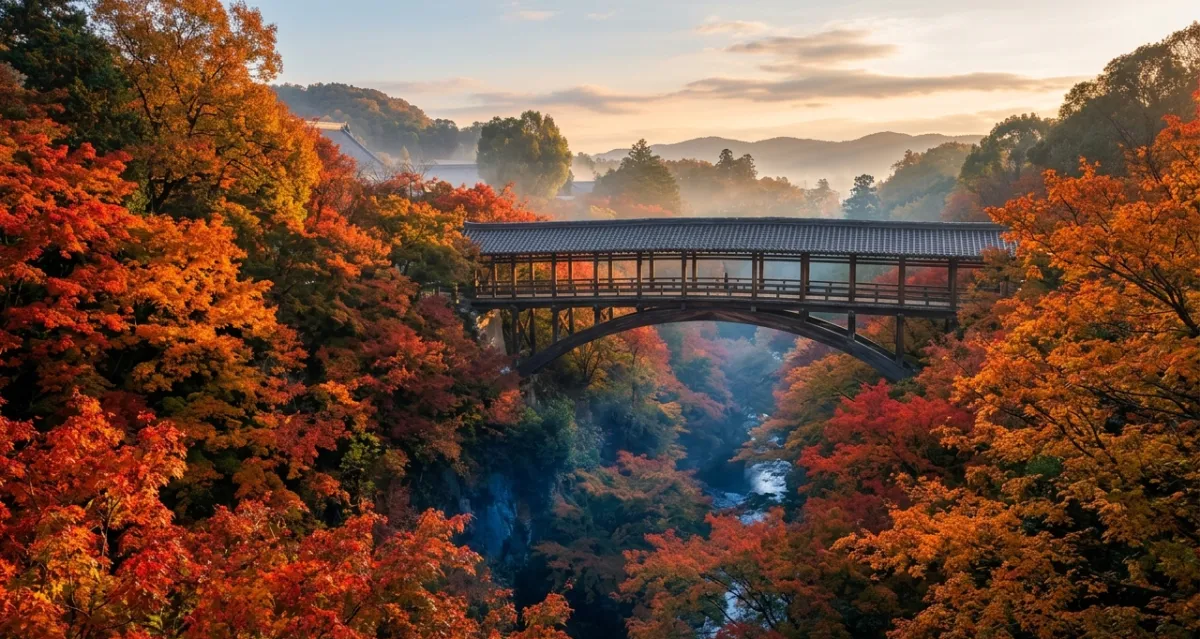
For autumn colour without the climbing, this is my counter to the guidebooks. Everyone funnels into Eikando and up the Kiyomizu slopes for the kyoto autumn leaves budget shots, and both punish weak knees with stone steps and steep cobbled lanes. Tofuku-ji gives you the same valley of maples viewed across a level main hall, and Murin-an, a small garden near Nanzen-ji, lets you sit on a flat veranda with a cup of matcha and the koyo right in front of you for 600 yen. Fewer steps, smaller crowds, better tea.
An old Kyoto innkeeper told me: in maple week, the wise traveller spends on time, not on tickets. The taxi that saves your knees is worth more than any garden fee.
Money-saving moves that work in koyo season
Skip the nationwide JR Pass if Kyoto is your main stop. At over 50,000 yen for seven days after the 2023 price jump, it only pays off if you are crossing the country. For a Kyoto-and-Osaka trip, top up an ICOCA card with 5,000 yen and tap as you go.
Is the Kyoto bus day pass worth it for seniors?
No, and not just because it is crowded. Kyoto scrapped the 700 yen city bus one-day pass in 2024 to ease overtourism. The subway-and-bus pass at 1,100 yen still exists, but in koyo the buses run standing-room-only and are slow to board with a cane or chair. For older travellers the maths flips toward taxis and the subway.
The moves that genuinely save money and pain:
- Base yourself directly at or above Kyoto Station. Elevators everywhere, taxi rank at the door, and you cut 1,500-3,000 yen of daily transfers.
- Eat your main meal at lunch. The yudofu set that costs 4,800 yen at dinner is 2,400 yen at noon, same kitchen.
- Share short taxis. A two-person hop from the station to Nishiki Market is 1,200 yen, just 600 yen each, and saves a transfer.
- Visit temples before 9am. Tofuku-ji opens at 8:30 in November; the first 40 minutes are quiet, cool, and free of tour groups.
- Book lodging by August. The same Granvia room I quoted at 28,000 yen in November was 41,000 yen for walk-up rates a week out.
A real day of spending in November
This is an actual mid-range day I logged on 18 November 2025, lightly rounded. Cold morning, clear sky, maples at full burn.
- Hotel breakfast, Western and Japanese buffet: 1,800 yen
- Taxi, Kyoto Station to Tenryu-ji, Arashiyama, shared: 1,400 yen each
- Tenryu-ji garden entry: 500 yen
- Tofu lunch set near the temple gate: 1,300 yen
- Hot canned coffee from a vending machine to warm my hands: 160 yen
- Randen tram back toward the centre: 250 yen
- Murin-an garden plus matcha: 600 yen plus 700 yen tea
- Taxi back to the hotel, legs done by 4pm: 1,900 yen
- Early kaiseki-style dinner, seated, near the station: 5,200 yen
Day total: 13,810 yen, about $89. That sat at the low edge of the mid-range band because I walked the flat parts and only taxied twice. The one thing that went wrong: I assumed the Arashiyama bamboo grove would be calm at 10am and it was a slow river of people, no place to stand still with a tripod, let alone a cane. I left after four minutes. Skip it in koyo. The maples were the reason to be there anyway.
Who is this not for? If you count every hundred yen and happily walk eight hours a day, you will spend far less than these numbers and ignore half my taxi advice. This pace, and this kyoto trip cost breakdown, is built for travellers who would rather arrive at the garden rested than save 600 yen on the bus. In maple season, with the yen this soft, that trade has rarely been cheaper.
One last practical note: keep 10,000 yen in cash on you. Several of the small garden gates and the tea counter at Murin-an still wave away cards, and the nearest ATM that takes a foreign card is back at the station.
Map-o-World Editorial Team
Travel Research & Editing
Our guides are researched from official tourism sources, local operators, transport authorities and recent traveller reports, drafted with AI assistance and reviewed by our editors before publishing. Prices, opening hours and entry rules change often - please double-check before you travel, and tell us if you spot something out of date.
Read our editorial policy arrow_forward