Kenya Trip Cost From India 2026 | Rs 1.2-2 Lakh
A 7-day Kenya trip from India costs Rs 1.2 lakh to Rs 2 lakh per person in September 2026, covering return Mumbai-Nairobi flights (Rs 42,000-55,000), a 3-night Masai Mara safari with park fees, Nairobi hotels and food. Kenya is now visa-free for Indian passport holders for stays up to 90 days.
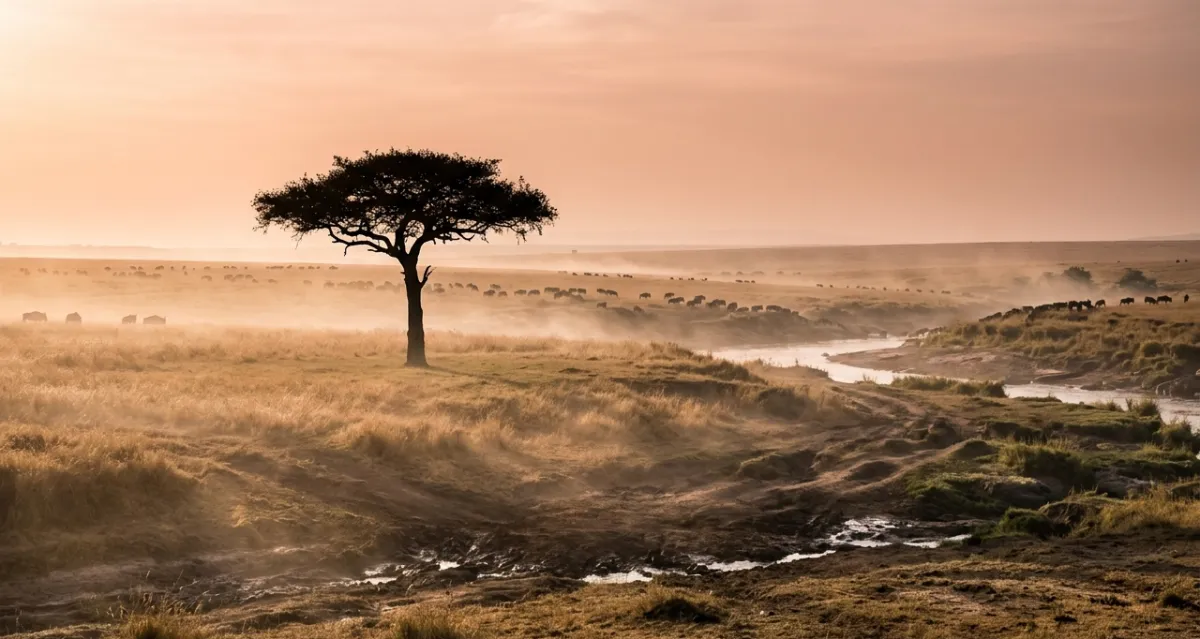
Two million wildebeest do not check visa rules before they thunder across the Mara River, and now, neither do you. Kenya scrapped its US$51 (roughly Rs 4,500) electronic travel authorisation and waves Indian passport holders through for 90 days with nothing more than a passport and a return ticket. Time it right and you land in Nairobi in September 2026, exactly when the Great Migration river crossings peak in the Masai Mara - dust hanging in the morning air, hooves drumming like distant rain, crocodiles waiting in the brown water below.
Here's the thing: an African safari carries a reputation as a Rs 5 lakh indulgence, and the luxury lodges are happy to keep it that way. The real Kenya trip cost from India sits far lower once you know where the money actually goes. This guide breaks down every rupee - flights from Mumbai, park fees, camps, food, forex - for a September window that lines up neatly with Onam and Ganesh Chaturthi long weekends.
How Much Does a Kenya Trip Cost From India?
Plan on Rs 1.2 lakh to Rs 2 lakh per person for 7 days in September 2026, flights included. A solo traveller on a group camping safari can squeeze under Rs 1.2 lakh, while a couple mixing a comfortable Nairobi hotel with a mid-range Mara camp should budget Rs 1.5 lakh to Rs 1.8 lakh each. Prices are approximate as of August 2026.
| Expense | Budget | Mid-Range | Luxury |
|---|---|---|---|
| Flights from India (return, Mumbai) | Rs 42,000 | Rs 52,000 | Rs 1.5 lakh (business) |
| Visa | Rs 0 | Rs 0 | Rs 0 |
| Accommodation (per night, Nairobi) | Rs 2,500 | Rs 7,000 | Rs 25,000+ |
| Food (per day, outside safari) | Rs 1,200 | Rs 2,500 | Rs 6,000 |
| Local transport (7 days) | Rs 6,000 | Rs 12,000 | Rs 30,000 |
| Activities (safari incl. park fees) | Rs 48,000 | Rs 90,000 | Rs 2.2 lakh |
| Misc (SIM, tips, forex margin) | Rs 5,000 | Rs 10,000 | Rs 20,000 |
| TOTAL (7 days) | Rs 1.2 lakh | Rs 1.8 lakh | Rs 4.5 lakh+ |
Nothing moves the Kenya trip cost from India like park fees, and this is the mistake almost every first-timer makes: budgeting flights and hotels carefully, then treating the safari as one more line item. It works the other way around. Gate fees alone run US$200 (Rs 17,600) per adult per 24 hours in the Masai Mara from July to December, plus US$50 (Rs 4,400) per child. A family of four spending two days inside the reserve hands over about Rs 88,000 in fees before a single bed or meal is paid for.
Group joining safaris soften that blow. A 3-day, 2-night shared camping safari from Nairobi costs Rs 45,000-55,000 (US$510-625) all-in: park fees, transport in a shared van, meals, tents and a guide. Mid-range 4-day lodge safaris in a proper 4x4 Land Cruiser run Rs 85,000 to Rs 1.1 lakh. Split the difference - budget camp, one splurge night, shared vehicle - and Rs 1.5 lakh for the whole week is genuinely achievable.
Carry Dollars, Not Rupees
Indian rupees are useless in Kenya; no forex counter in Nairobi will touch them. Carry US dollars in cash - notes printed after 2009, or banks refuse them - and change small amounts into Kenyan shillings as you go. Rs 100 gets you roughly KES 145. Load a zero-markup forex card in USD for hotels and bigger bills. One quirk worth knowing: the Masai Mara gates are cashless, so park fees go through card or M-Pesa, Kenya's mobile wallet - confirm your safari operator is paying them on your behalf.
Visa for Indian Passport Holders
None needed. Since Kenya dropped its eTA requirement, Indian passport holders get 90 days visa-free - no form, no fee, no processing wait. That saves about Rs 4,500 (US$51) per person over the old authorisation, and more usefully, it saves the two-to-three-day approval window that used to trip up last-minute bookings.
Carry these documents anyway, because immigration officers can ask: a passport valid six months beyond arrival with two blank pages, a confirmed return ticket, hotel or safari booking confirmations, and proof of funds (a card statement on your phone works).
The step everyone misses is yellow fever vaccination. Kenya sits on India's yellow fever country list, so you must show a vaccination certificate when you fly home - skip it and you risk quarantine on landing in Mumbai. Get the jab at a government-designated centre (Rs 300-2,000 depending on the city) at least 10 days before departure. The certificate is valid for life, so it covers every future Africa or South America trip too.
How to Reach From India
Kenya Airways flies Mumbai to Nairobi nonstop daily - about 6 hours 45 minutes, departing late night and landing at Jomo Kenyatta International around dawn, which means you clear immigration, drink your first Kenyan coffee and still have a full day ahead. Return economy fares for September 2026 sit at Rs 42,000-55,000 if you book by June; wait until August and Rs 60,000-plus becomes common, because migration season fills planes fast.
From Delhi, connect via Mumbai on a single Kenya Airways ticket or fly Ethiopian Airlines through Addis Ababa for Rs 48,000-60,000 return (11-13 hours door to door). Bangalore works best on Ethiopian via Addis or a Mumbai connection at Rs 50,000-65,000. Fair warning - the cheap Gulf routings via Dubai or Doha look tempting on booking sites but often add six hours or more each way, which matters when your safari starts at 6 am.
From the airport, an Uber or Bolt into the city centre or Westlands costs Rs 1,100-1,500 (KES 1,600-2,200) and takes 30-50 minutes, depending on Nairobi's famously stubborn traffic. Drivers will tell you, with a shrug, that the jam is the city's real national park.
What the Masai Mara Actually Costs in September
September is prime crossing season, when hundreds of thousands of wildebeest and zebra pile up on the Mara River banks, snorting and hesitating, until one animal jumps and the whole mass follows. The reserve charges non-resident adults US$200 (Rs 17,600 / KES 25,800) per 24 hours between July and December - double the low-season rate - and that single number shapes your budget more than any hotel choice.
Your realistic options, per person:
- Shared camping safari, 3 days / 2 nights: Rs 45,000-55,000 all-in from Nairobi. Basic tents, shared vans, excellent guides.
- Mid-range lodge safari, 4 days / 3 nights: Rs 85,000 to Rs 1.1 lakh with a 4x4, park fees and full board at camps along the Talek River.
- Luxury tented camp: Rs 40,000-80,000 per night before fees. Beautiful, but nobody needs it to witness a crossing.
- Hot-air balloon at dawn: Rs 39,000-42,000 (US$450) for an hour drifting over the herds, champagne breakfast included. Worth it? If the budget stretches, absolutely.
Guides in the Mara repeat an old Swahili line to impatient guests parked at the river: "Haraka haraka haina baraka" - hurry hurry has no blessings. Crossings happen when the wildebeest decide, and travellers who build in one full extra day are the ones who actually see one.
Is September too expensive for the Masai Mara?
It is the priciest month, but the premium is smaller than you would think - roughly 20-30 percent over shoulder season on camps, plus Rs 8,000-10,000 extra on flights. You pay peak rates to watch the greatest wildlife event on earth at its actual peak. Skipping September to save Rs 15,000 and missing the crossings is bad math.
Best Time to Visit
For the Great Migration in the Masai Mara, the window is July to October, and September is the sweet spot for river crossings. Mapped against the Indian calendar, here is how the year plays out:
- September 2026: crossings peak, and Onam plus Ganesh Chaturthi long weekends help you stretch leave. Highest prices of the year - book flights by June, camps by July.
- Dussehra (late October 2026): herds still linger, crowds thin out and camps start discounting. Honestly a smart pick for families who missed the September rush.
- Diwali (November 2026): short rains arrive. Green, moody, 25-30 percent cheaper, but the migration is heading back into Tanzania.
- Christmas-New Year: high season returns with warm, dry weather and big cats everywhere. Prices spike again and camps sell out by October.
- Summer school break (May-June): the bargain window. Park fees halve to US$100 (Rs 8,800), lodges discount heavily, but rain and tall grass make sightings harder and the migration has not arrived yet.
Which month is cheapest to visit Kenya from India?
April and May. Long rains keep tourists away, park fees drop to Rs 8,800 (US$100) per day, lodge rates fall 40-50 percent and Mumbai-Nairobi returns dip to around Rs 35,000. You trade dry-season sightings for empty parks and green scenery - a real bargain for birders and photographers, less so for first-time safari-goers.
Sample Daily Spend
Two very different days share one budget. A safari day is mostly prepaid - your package covers game drives, meals and the camp, so out-of-pocket spending shrinks to tips (Rs 800-1,000 a day for the guide is standard) and the odd beaded souvenir. A Nairobi day, though, is entirely in your control:
- Breakfast at a Java House cafe: Rs 500 (KES 750)
- Giraffe Centre, Lang'ata: Rs 1,050 (KES 1,500), open 9 am to 5 pm - arrive before 10 am to beat the school groups
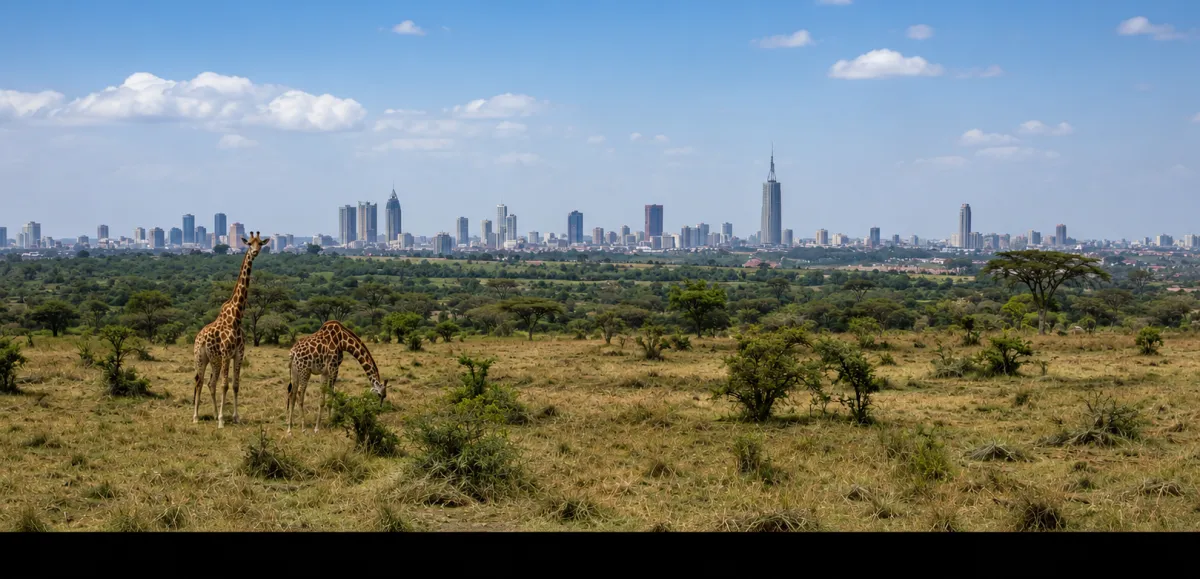
- Nairobi National Park half-day game drive: Rs 3,800 (US$43) entry plus about Rs 4,000 for a shared vehicle - lions with skyscrapers behind them, 20 minutes from downtown
- Gujarati thali lunch at Diamond Plaza, Parklands: Rs 550 (KES 800)
- Uber/Bolt across town: Rs 900 (KES 1,300) over three or four rides
- Dinner and a Tusker in Westlands: Rs 1,500 (KES 2,200)
Call it Rs 10,000-12,000 for a packed day with big-ticket sights, or under Rs 3,000 for a slow one built around markets and cafes. That flexibility is what keeps the overall Kenya trip cost from India close to the Rs 1.5 lakh mark even in peak September.
Where do vegetarians eat in Nairobi?
Everywhere, honestly. Nairobi's Indian community dates to the railway construction of the 1890s, and Parklands is its heart - Diamond Plaza's food court serves dosa, chaat and Gujarati thalis at Mumbai prices. Safari camps handle vegetarian and Jain meals confidently if you flag it at booking; Indian guests are now among their biggest markets.
At around Rs 1.5 lakh per person for a week with migration crossings included, Kenya in September 2026 undercuts a comparable Europe trip and beats it hollow on drama. Zero visa cost, a direct overnight flight from Mumbai and vegetarian food solved - no other long-haul destination stacks up this cleanly for Indian families right now. Book the flight by June, the camp by July, and let the wildebeest handle the rest.
Map-o-World Editorial Team
Travel Research & Editing
Our guides are researched from official tourism sources, local operators, transport authorities and recent traveller reports, drafted with AI assistance and reviewed by our editors before publishing. Prices, opening hours and entry rules change often - please double-check before you travel, and tell us if you spot something out of date.
Read our editorial policy arrow_forward