Hanoi vs Phuket: Which Is Better for September From India
For a mid-September trip from Delhi under Rs 60,000, Hanoi and Ha Long Bay beat Phuket. Vietnam now gets a 4.5-hour direct flight from Delhi, a Rs 2,200 e-visa, and improving late-September weather, while Phuket sits in its wettest month with red-flag beaches. Pick Phuket only for discounted resort downtime, not for swimming or island hopping.
Scroll through r/IndiaTravel any evening this month and the same thread keeps popping up: Vietnam or Thailand for mid-September? The question got sharper this year. Air India began non-stop Delhi-Hanoi flights on May 1, 2026, and Air India Express added a Bengaluru-Phuket direct from June 1, so both trips now involve exactly one boarding pass. Same rough budget, same shoulder season, wildly different holidays.
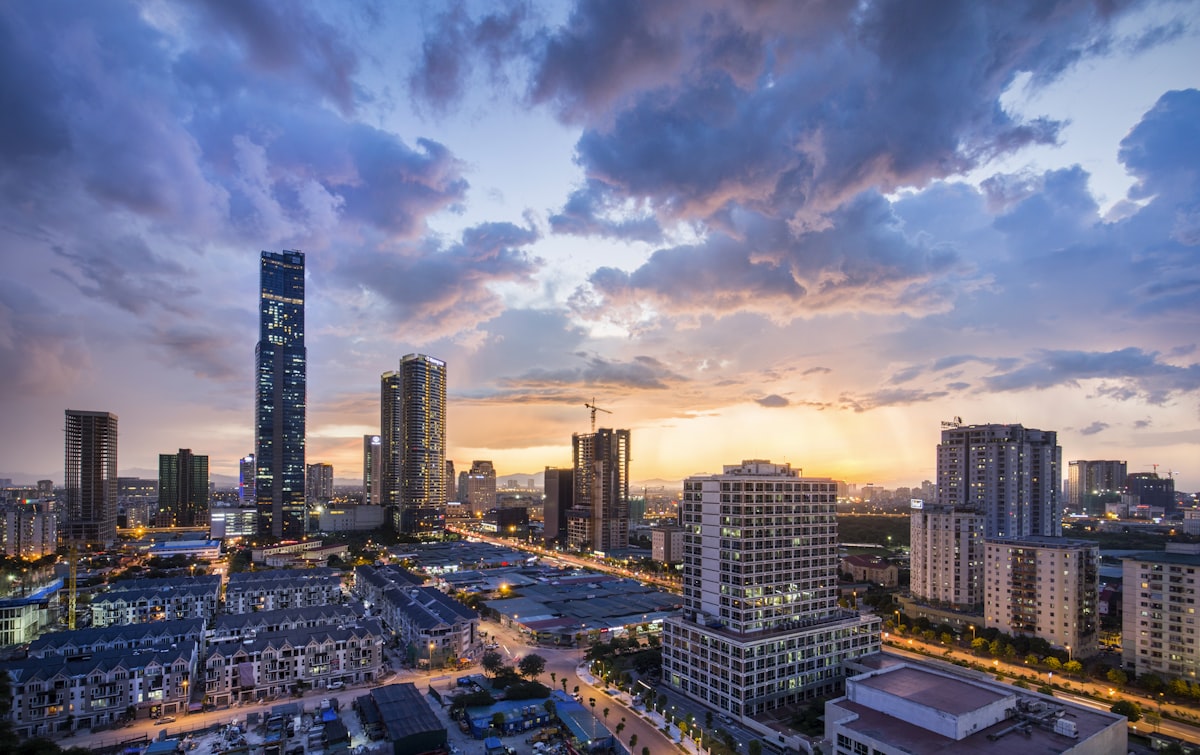
Here's the thing: this is not really a beach versus beach contest. Phuket means sand, pool bars and island hopping. Hanoi means egg coffee at dawn, French-era shophouses with laundry strung between balconies, and a two-hour drive to the limestone towers of Ha Long Bay. One of these handles September rain far better than the other, and it is not the one most people assume. The Vietnam vs Thailand trip from India debate usually ends in a coin toss; for September specifically, it should not.
Hanoi and Ha Long Bay vs Phuket - The Side-by-Side
Numbers first, opinions after. Prices are approximate as of August 2026 and assume seven days for one person from Delhi in mid-range hotels.
| Factor | Hanoi and Ha Long Bay | Phuket |
|---|---|---|
| Trip cost from India (7 days) | Rs 55,000-65,000 | Rs 50,000-70,000 |
| Visa for Indians | E-visa, Rs 2,200 (USD 25), 3-5 working days | Visa-free, 60 days |
| Flight time from Delhi/Mumbai | 4h 30m non-stop from Delhi (Air India) | 7-9h via Bangkok from Delhi; about 4h 30m direct from Mumbai |
| Best months | October to April; late September already decent | November to April; September is the wettest month |
| Food for vegetarians | Doable with effort - dedicated chay restaurants | Easy - Indian restaurants on every second street |
| Best for | Couples, culture-first travellers, budget backpackers | Resort families, nightlife, first-time flyers |
| Safety | Very safe; watch for petty scams near Hoan Kiem Lake | Safe on land; dangerous swimming conditions in September |
How much does a 7-day Hanoi and Ha Long Bay trip cost from Delhi?
Budget Rs 55,000-65,000 per person for seven days from Delhi, flights included. That covers return airfare (Rs 18,000-24,000), five nights in mid-range Old Quarter hotels, a two-night Ha Long Bay cruise (Rs 9,500-13,000), food, Grab rides and the e-visa. Backpackers can squeeze under Rs 45,000; a balcony-cabin luxury cruise pushes past Rs 85,000.
The Delhi-Hanoi direct flight is the single biggest change to this math. Before May 2026 you connected through Bangkok or Kuala Lumpur and lost half a day each way; now Air India does it non-stop in about four and a half hours, with September return fares dipping to Rs 18,000 if you book six weeks out. On the ground, Vietnam is absurdly kind to Indian wallets. A bowl of pho on Hang Trong street runs Rs 175 (VND 50,000). Egg coffee at Cafe Giang, the cramped upstairs room at 39 Nguyen Huu Huan where the drink was invented, costs Rs 120 (VND 35,000). Entry to the Temple of Literature is Rs 240 (VND 70,000), and a decent Old Quarter double room sits at Rs 2,200-3,500 a night.
Phuket lands in a similar band but distributes the money differently. Flights from Delhi via Bangkok cost Rs 17,000-22,000 return, and September is when Phuket hotels slash rates - a four-star near Karon that charges Rs 8,000 in December drops to Rs 3,000. Food costs more than Vietnam: a veg pad thai is Rs 250 (THB 100), a thali on Rat-U-Thit road in Patong is Rs 640 (THB 250), and a Phi Phi speedboat tour is Rs 3,400 (THB 1,300) - when it runs, which in September it often does not. In the Vietnam vs Thailand trip from India ledger, the totals converge; what differs is how much usable holiday each rupee buys in this specific month.
Visas, Flights and Forex - The Paperwork Round
Thailand wins the visa point outright. Indian passport holders enter visa-free for up to 60 days; carry a return ticket and hotel bookings, since immigration occasionally asks. Vietnam needs an e-visa: USD 25 (about Rs 2,200) on the official government portal, single entry, valid 90 days, issued in three to five working days. Apply a fortnight ahead and print two copies.
A common mistake worth correcting: paying an agent Rs 5,000-6,000 for an express Vietnam visa. The official portal is in English, takes twenty minutes, and rejections for tourists with clean paperwork are rare. Another one, and this trips up almost everyone: do not buy Vietnamese dong in India. Most Indian forex counters either do not stock it or quote insulting rates. Carry US dollars and change them at the gold shops on Ha Trung street in Hanoi, or withdraw from ATMs and eat the Rs 250-odd fee. Thai baht, by contrast, is available at fair rates in every Indian metro.
Flight logistics favour whichever city you actually live in. From Delhi, Hanoi is the obvious one-hop. From Bengaluru, the Air India Express Phuket direct (about 4 hours) flips the equation. Mumbai sits in between, with a roughly 4h 30m IndiGo direct to Phuket and one-stop routings to Hanoi via Bangkok or Ho Chi Minh City.
What is September weather really like in Hanoi and Phuket?
Hanoi in September is hot and sticky early in the month, around 32C with short, violent afternoon downpours, then turns golden and dry towards the end as autumn arrives. Phuket in September is the opposite trajectory: the peak of the southwest monsoon, roughly 350mm of rain across twenty-plus wet days, with rough seas and red flags on Patong and Karon.
Locals in Hanoi will tell you late September brings the best light of the year - low sun through the tamarind trees on Phan Dinh Phung street, cool mornings around Hoan Kiem Lake where the tai chi groups gather before 6am. Rain comes in bursts you can wait out over a coffee. And honestly? A drizzly Hanoi is atmospheric in a way a drizzly beach simply is not.
Phuket's monsoon deserves plain talk. The Similan Islands are closed from May to October. Speedboat tours to Phi Phi get cancelled with a day's notice when swells rise. Drownings spike in September because visitors ignore red flags, and lifeguards on the west coast beaches take the season seriously. You will still get sunny windows, dramatic skies and the cheapest five-star breakfasts of the year - but plan a pool-and-spa trip, not a swimming one.
Is Ha Long Bay worth it in September?
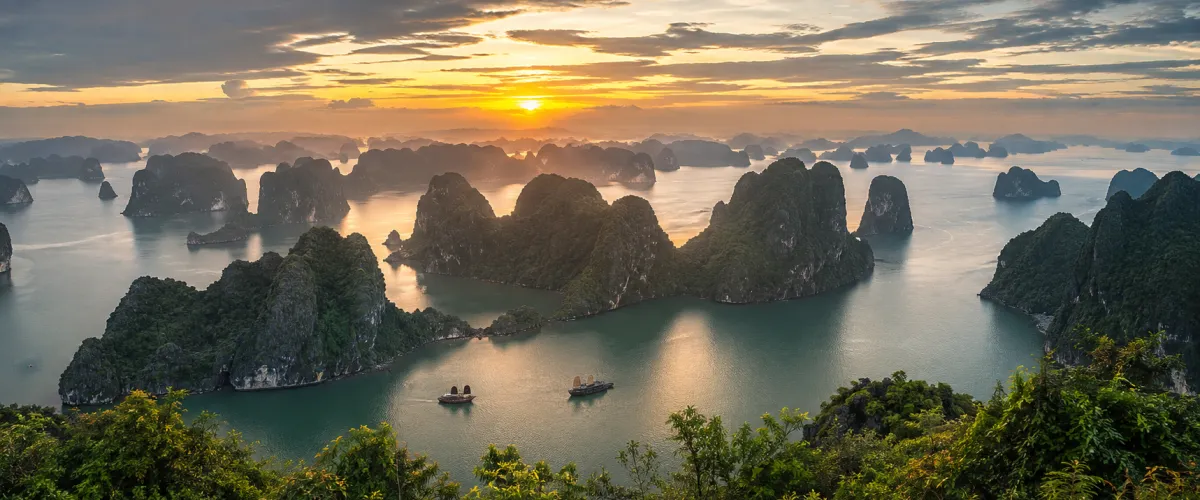
Yes, with one condition: book an overnight cruise with a flexible cancellation policy, because this is typhoon season on the Gulf of Tonkin and the port authority halts sailings a few days each year. Between weather systems, the bay is at its moody best - mist threading the karsts, half the boat traffic of December.
The bay decides your schedule in September, not the brochure. Keep one spare day in Hanoi and you will never regret it - a line cruise captains repeat to travellers, and they are right.
Skip the day trip from Hanoi, another classic error. Four hours of bus for two hours on the water is a bad trade. A two-day, one-night mid-range cruise costs Rs 9,500-13,000 (USD 110-150) with meals, kayaking and a cave stop included, and sleeping on anchor among the limestone pillars is the single best thing either destination puts on the table this month. Book a cruise departing on day 2 or 3 of your trip, not your last day, so a typhoon delay costs you nothing.
Food, Culture and the Vegetarian Test
Phuket is the easy option for vegetarians, no contest. Indian restaurants cluster along Rat-U-Thit road and around Bangla, most Thai kitchens understand vegetarian requests, and the local jay (pure veg) food tradition means even street stalls can feed you. Jain travellers manage fine with a day of notice to restaurants.
Hanoi asks more of you and pays you back in flavour. Fish sauce hides in nearly everything, so learn one phrase: an chay, meaning I eat vegetarian. Dedicated chay restaurants do remarkable things - Uu Dam Chay near Hoan Kiem serves a lotus-stem set lunch for Rs 500 (VND 145,000) that converts sceptics, and on the 1st and 15th of the lunar month, half the city eats vegetarian by custom. Vegetarian pho chay exists; you hunt for it, and the hunt is part of the trip.
On culture, Hanoi is playing a different sport altogether. The Old Quarter's 36 guild streets still trade roughly by trade - silver on Hang Bac, silk on Hang Gai - and the smell of grilled pork smoke and wet stone after rain is the city's actual perfume. Catch the water puppets at Thang Long theatre (Rs 350, VND 100,000, book the 5:10pm show), walk the Long Bien bridge at sunset, stand well back when the train squeezes through Train Street. Phuket Old Town's Sino-Portuguese shophouses and the Sunday walking market on Thalang road are genuinely underrated, worth an afternoon; they are also the extent of it.
Verdict
For honeymooners: Hanoi and Ha Long Bay, clearly. A private-balcony cabin on an overnight cruise, mist on the water at 6am, egg coffee dates in hundred-year-old cafes - September Phuket cannot answer that with a rain-lashed pool deck, however discounted.
For families with school-age kids: this one splits. Phuket's resorts are built for children, but September seas take swimming off the menu, which removes the main event. If the dates are fixed for September, take Hanoi and the cruise, which kids treat as a floating adventure. If you can shift to December, Phuket returns to form.
For a first international trip: Phuket, narrowly. Visa-free entry, English everywhere, Indian food on demand and forgiving logistics make it the gentler introduction, monsoon and all. Fair warning - budget for indoor days.
For budget backpackers: Hanoi, and it is not close. Rs 400 dorm beds, Rs 175 pho, Rs 30 bia hoi beer on a plastic stool at the Ta Hien crossing. Anyone searching for the best vietnam vs thailand trip from india value this September should book the Delhi-Hanoi flight before fares notice the demand. Worth it? Absolutely.
Tags
Map-o-World Editorial Team
Travel Research & Editing
Our guides are researched from official tourism sources, local operators, transport authorities and recent traveller reports, drafted with AI assistance and reviewed by our editors before publishing. Prices, opening hours and entry rules change often - please double-check before you travel, and tell us if you spot something out of date.
Read our editorial policy arrow_forward