Cherrapunji in Early Monsoon: 2026 Root Bridge Guide
Quick answer: Early monsoon (June) is the best time to see Cherrapunji at full power. The living root bridges turn deep green, Nohkalikai Falls roars at its loudest, and the Nongriat double decker trek runs with far fewer people than autumn. Expect heavy rain, slick stone steps, and the lushest scenery in India. Pack a poncho and grippy shoes.
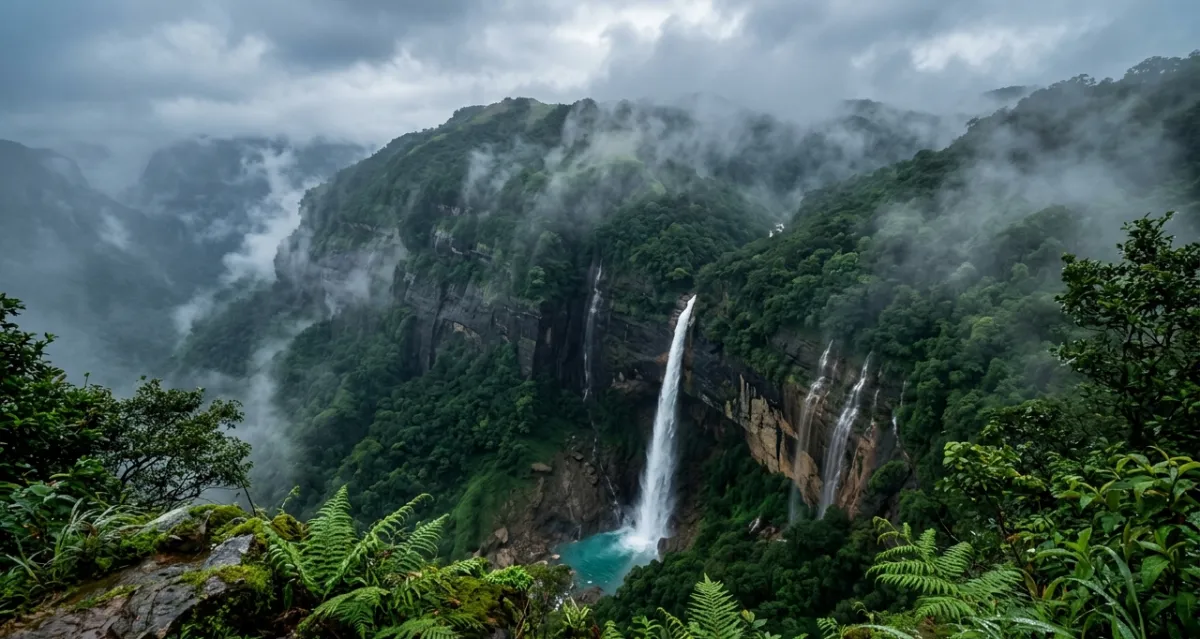
The rain in Sohra does not fall so much as arrive. It comes sideways off the plains of Bangladesh, slams into the cliff near Mawsmai, and turns the entire plateau into a sheet of moving water. I have stood on that edge in June with a five-rupee poncho flapping like a broken kite, soaked through in ninety seconds, grinning like a fool. This is the wettest place on Earth, and early monsoon is the season it actually earns the name.
Most travellers come to Cherrapunji (officially Sohra) in October, chasing clear skies. They get the postcard and miss the real thing. Show up in June instead and you trade the wide views for raw force: waterfalls at full volume, root bridges glowing wet and alive, trails that smell of moss and woodsmoke and crushed leaves. Fewer tourists, too. This is the Cherrapunji monsoon travel guide 2026 I wish someone had handed me on my first trip out of Shillong.
Why Early Monsoon Turns Sohra Into the Greenest Trek in India
Here is the thing about the living root bridges. They are not carved or constructed. The Khasi people train the aerial roots of the rubber fig across rivers, hand over hand, splicing them into hollow betel trunks until the living wood grips both banks. It takes fifteen to thirty years before a bridge can hold a person. Some near Nongriat are well over a century old and getting stronger, because they are still growing.
In the dry months these roots look brown and a little tired. Come in June and the whole structure flushes green, ferns sprouting from the bark, the river below swollen and brown with runoff. The living root bridges trek through Meghalaya in monsoon is a different animal from the autumn version. Louder. Slipperier. Far more alive.
"We do not build the bridge. We teach it." That is how a farmer in Nongriat explained the root bridges to me, leaning on a machete, and I have not heard it put better since.
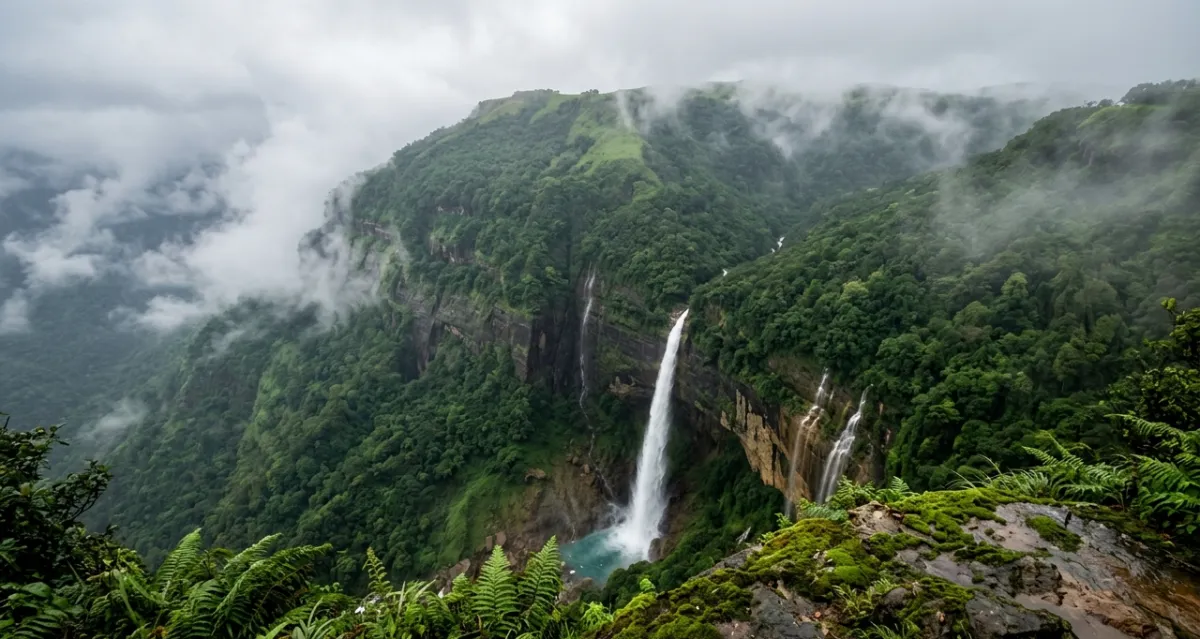
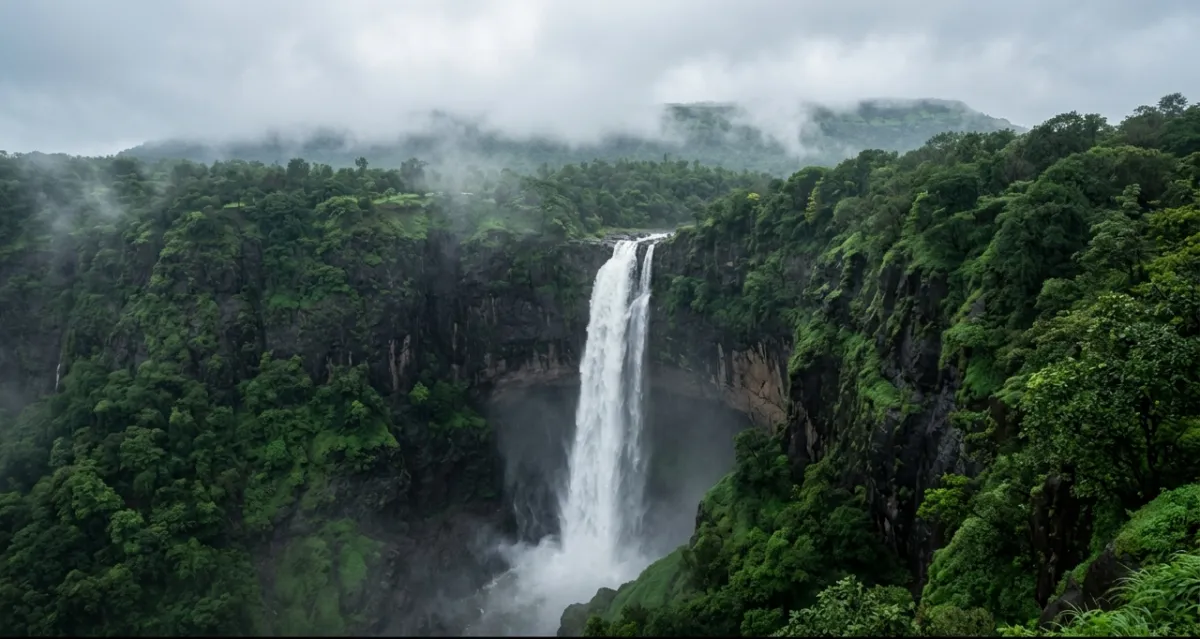
The waterfalls make their own case. Nohkalikai Falls, India's tallest plunge waterfall at around 1,115 feet, drops off the plateau a short drive from Sohra town. In the dry season it thins to a ribbon. After the first heavy June rains it becomes a wall of white noise you can feel in your chest from the viewpoint. Entry to the Nohkalikai viewpoint runs about 30 rupees, and the gates open by 8 am.
The Nongriat Double Decker Root Bridge Itinerary, Step by Step
The famous double decker root bridge sits in Nongriat village, at the bottom of a gorge below the village of Tyrna. People ask me for a Nongriat double decker root bridge itinerary expecting a casual half-day. It is not. The descent is roughly 3,500 stone steps, and the climb back out will find muscles you did not know you owned.
Getting to the Tyrna trailhead
Tyrna is about 16 km from Sohra town, a 40-minute taxi ride on a road that hugs the cliffs. A private cab from Cherrapunji costs around 800 to 1,200 rupees one way in 2026; a shared Sumo is cheaper if you are patient. Pay the small trail fee at Tyrna, hire a local guide if you want company on the path (500 to 800 rupees), and start early.
- Descend from Tyrna through Nongthymmai village, where you cross your first single root bridge over a green pool. Stop. This one gets overlooked because the famous one is still ahead.
- Keep dropping to the two long steel suspension bridges over the Simtung river. They bounce. In monsoon the water below is loud and the color of milky tea.
- A final climb of maybe 30 minutes brings you into Nongriat and the double decker bridge itself, two tiers of woven root stacked over the stream.
- If your knees still work, push another 90 minutes to Rainbow Falls, where the spray catches the light when the sun breaks. It often does not break in June, and the pool is worth the walk anyway.
My one firm piece of advice, and the mistake I see ruin people's trips: do not attempt this as a day trip from Shillong. The drive is two hours each way before you even reach Tyrna. Stay overnight at a Nongriat homestay (Serene Homestay and a handful of others charge roughly 600 to 900 rupees a night with simple meals of red rice, dal, and pork). You wake up to the bridge with no one else on it. That alone is the trip.
When is the best time to visit Cherrapunji?
The best time to visit Cherrapunji depends on what you came for. For full waterfalls, glowing root bridges, and thin crowds, early monsoon from mid-June to mid-July is unmatched. For clear plateau views and easy walking, come in October or November. Avoid the deep rains of late July and August unless you genuinely love getting wet.
I keep landing on June for a reason. The waterfalls have switched on but the truly punishing rain has not fully settled in, so you get dramatic skies with windows of light between downpours. The hill stations of north India are packed in June. Sohra is not. You can have the Mawsmai cave entrance, the Seven Sisters viewpoint, and long stretches of trail nearly to yourself.
How much does a Cherrapunji monsoon trip cost?
A comfortable three-day Cherrapunji monsoon trip in 2026 runs roughly 6,000 to 10,000 rupees per person, not counting your flight or train into Guwahati. That covers a shared taxi from Shillong, two nights of mid-range stay, the Nongriat trek with a guide, viewpoint fees, and plenty of pork, rice, and sweet milky tea along the way.
- Shillong to Cherrapunji taxi: 2,500 to 3,500 rupees private, or around 250 to 400 rupees for a seat in a shared Sumo from Bara Bazar.
- Homestays and guesthouses in Sohra: 800 to 2,000 rupees a night; cliffside resorts like Polo Orchid climb well past that.
- Nongriat homestay: 600 to 900 rupees with meals.
- Guide and trail fees for the double decker route: under 1,000 rupees total.
- Viewpoint entries (Nohkalikai, Mawsmai cave, Seven Sisters): 20 to 50 rupees each.
Carry cash. ATMs in Sohra town are unreliable and the homestays down in the gorge do not take cards, full stop. The nearest dependable machines are back in Shillong.
Is the Living Root Bridges Trek Hard, and What Should You Pack?
Honest answer: the Nongriat trek is moderately hard, mostly because of the climb out. The path is well maintained stone steps the whole way, no scrambling, but 3,500 steps down and back will leave first-timers sore for two days. A reasonably fit walker manages it in 5 to 7 hours round trip with breaks.
The counterintuitive part people get wrong is footwear. Everyone packs sandals for the river crossings and regrets it within an hour. Wet stone in monsoon is treacherous, and the leeches come out in force. Wear closed trail shoes with real grip, tuck your trousers into your socks, and carry a little salt or a bottle of insect spray for the leeches. They do not hurt, but they are persistent, and squeamish trekkers lose their nerve over them more than over the steps.
- A proper rain poncho or jacket, not a flimsy umbrella that dies in the cliff wind.
- A dry bag or two heavy zip bags for your phone, camera, and cash.
- Quick-dry clothes; cotton stays wet all day here.
- Trail shoes with aggressive tread, plus dry socks waiting at the top.
- A headlamp if you are staying over in Nongriat, where power flickers.
I left Sohra on a grey afternoon with my boots full of water and a leech bite on my ankle, already plotting how soon I could come back. Early monsoon shows you a version of this place that the clear-sky crowd never meets. Go before everyone else catches on.
Map-o-World Editorial Team
Travel Research & Editing
Our guides are researched from official tourism sources, local operators, transport authorities and recent traveller reports, drafted with AI assistance and reviewed by our editors before publishing. Prices, opening hours and entry rules change often - please double-check before you travel, and tell us if you spot something out of date.
Read our editorial policy arrow_forward