Coorg vs Munnar in Monsoon: Skip the Traffic Jams
Skip Munnar this monsoon. Coorg gives you the same Western Ghats rain, waterfalls, and coffee-and-pepper hill country for roughly 40 percent less money, with a fraction of the traffic that turned Munnar's roads into a parking lot in June 2026. You trade a postcard tea-garden panorama for empty roads and homestays where the owner remembers your name.
Six hundred cars. That's the count a Reddit user in r/IndiaTravel posted after filming the jam between Adimali and Munnar town on June 14, 2026 - wipers going, horns going, nobody moving. The clip hit two million views on Instagram Reels inside three days. Munnar had always been crowded in peak season. Monsoon was supposed to be the quiet window. It wasn't, not this year.
I was 210 km east of that jam, on the veranda of a homestay outside Madikeri, watching mist erase a coffee estate one row of Robusta at a time. My phone had no signal. The rain hit the tin roof, the areca palms, and a steel bucket someone had left under the drip line, three different sounds layered on top of each other. That's Coorg in July: unglamorous, wet, and almost entirely without other tourists.
What Coorg Actually Gives You That Munnar Promises
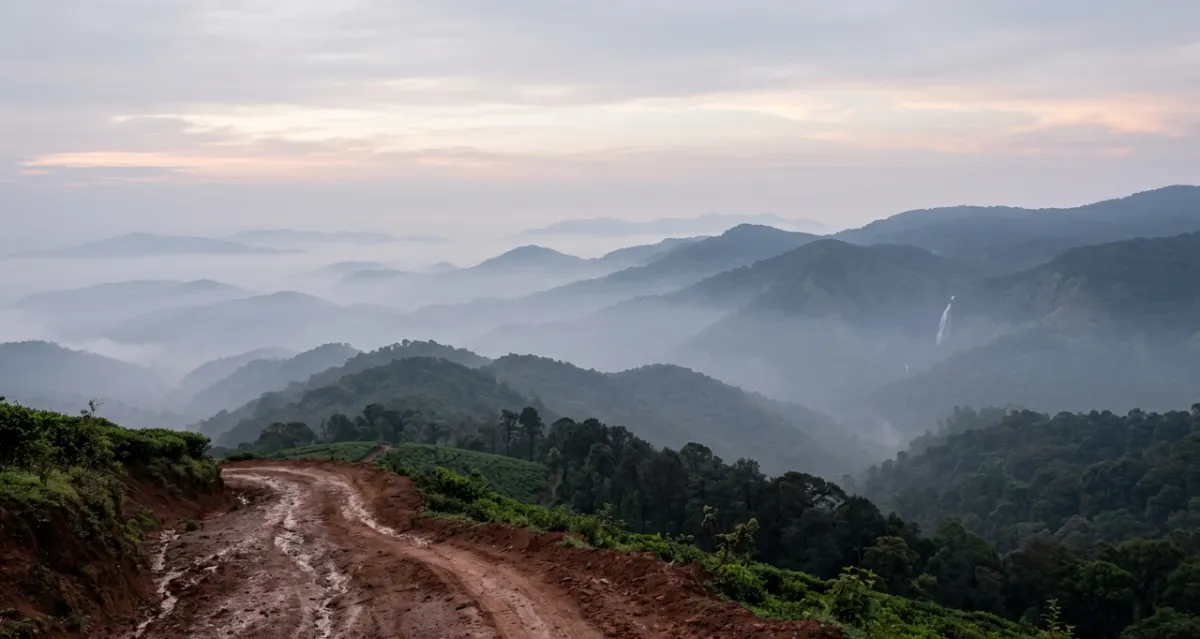
Coorg sits at 900 to 1,500 metres in Kodagu district, Karnataka, roughly the same elevation band as Munnar. Daytime monsoon temperatures run 18 to 22 degrees Celsius, cool enough for a shawl at breakfast. Where Munnar grows tea, Coorg grows coffee - Arabica higher up, Robusta lower down - interplanted with pepper vines and cardamom under a canopy of silver oak. Drive the back road from Suntikoppa toward Nuggehalli past Tata Coffee's estates and you get the same green-on-green effect Munnar is famous for, minus the tour buses.
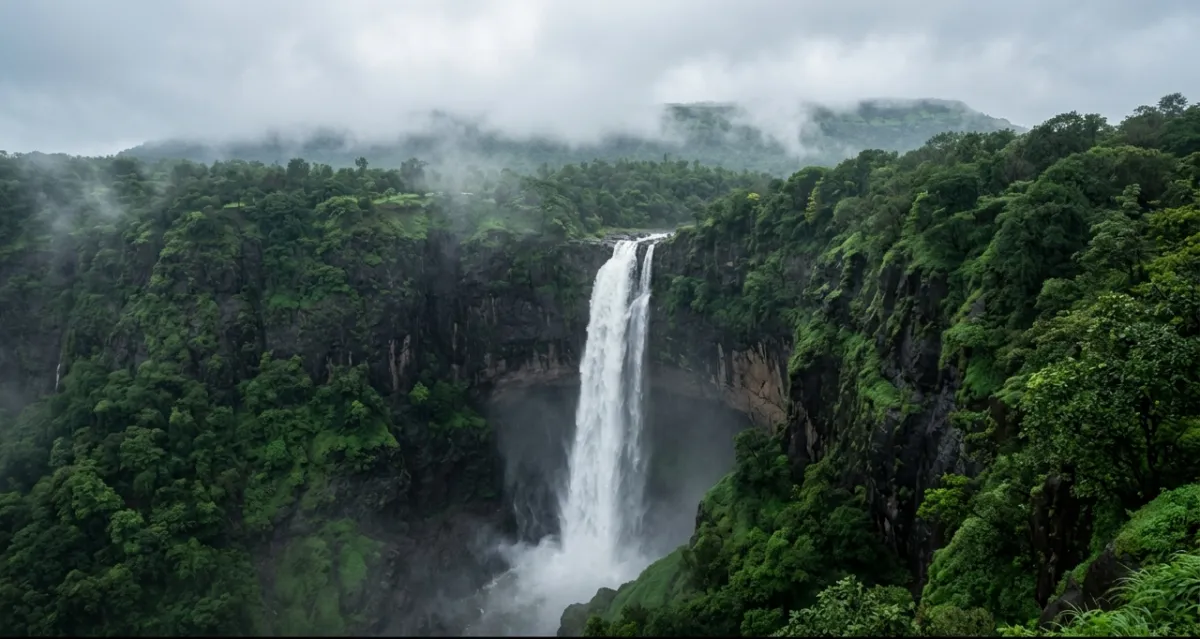
Abbey Falls sits 8 km from Madikeri, a 20-minute auto ride for about 150 rupees, roughly $1.75. Entry is free. By late July the Cauvery's feeder streams are running full and the falls go from a trickle to a genuine roar, loud enough that conversation stops at the viewing bridge. For something quieter, hire a jeep to Mandalpatti - 1,800 rupees ($21) for four people, because the last 6 km of track needs a 4WD and a driver who knows the ruts. From the top you get layered ridgelines disappearing into cloud, one after another, with nobody else up there most mornings.
Does Coorg Have Waterfalls and Tea Gardens Like Munnar in Monsoon?
Yes. Coorg swaps tea for coffee and pepper, keeps the same misty ridgelines and swollen waterfalls, and adds river viewpoints Munnar doesn't have. Talakaveri, the source of the Kaveri river, and Chelavara Falls (a 1.5 km walk through estate land) cover the same visual ground Munnar's tea gardens and Attukad Falls do.
Talakaveri sits at 1,276 metres above Bhagamandala, and in July the whole hillside disappears into fog by 10am, which locals treat as normal rather than a problem. Chelavara Falls requires a short walk through private estate land - the family that owns it charges 50 rupees ($0.60) per person and will point you to the safe rock ledge, not the slippery one three metres to its left, which is exactly where I nearly went down on my first visit.
Dubare Elephant Camp, on the Kaveri's opposite bank near Kushalnagar, runs a coracle crossing for 50 rupees and lets you watch mahouts bathe their elephants most mornings before 10am. It's not wild elephant spotting - these are camp animals - but it's closer contact than anything comparable in Munnar, where Eravikulam's tahr sightings happen from a fenced distance.
Kodagu district gets around 2,700mm of rain a year, most of it between June and September, against Munnar's roughly 3,000mm over a similar window. The numbers are close enough that neither place is a fair-weather trip in July - pack a proper poncho, not an umbrella, since wind off the ridgelines turns umbrellas inside out within a day. What changes the experience isn't rainfall totals. It's what you do between the showers.
Homestays here run their own guided walks, and they're not templated nature-trail loops. At Rainforest Retreat, Anurag's cousin Deepak took me on the Nishani Falls to Chelavara stretch, about 4 km through estate and reserve forest, for 500 rupees ($5.80) including a flask of black coffee halfway. He pointed out a Malabar giant squirrel and a stretch of wild pepper climbing a silver oak that his family has been harvesting from since the 1980s. Munnar's equivalent walks tend to run through Forest Department-managed trails with fixed timings and a group cap - useful, but scripted in a way Coorg's estate trails aren't.
The Real Gain: Emptier Roads, Lower Prices, an Owner Who Knows Your Name
A double-occupancy homestay room in Coorg during July runs 2,500 to 3,800 rupees a night ($29 to $44), meals included. The same monsoon booking in Munnar, at a mid-range resort, runs 6,500 to 9,500 rupees ($76 to $110), and that's before the "monsoon package" markup some properties add for in-room activities on rain days. The Madikeri-Mysore road, 90 km, stayed clear on every one of the four days I drove it. Munnar's MC Road toward Kochi, normally a 90-minute run, was stretching to four or five hours by mid-June, according to three separate homestay owners I spoke with who'd had guests cancel because of it.
How Much Cheaper Is Coorg Than Munnar During Monsoon?
Expect to pay 40 to 55 percent less on accommodation in Coorg than Munnar for a comparable monsoon stay, plus lower food and transport costs since local buses and shared jeeps still run reliably on Coorg's roads when Munnar's are jammed or landslide-closed.
I stayed at Rainforest Retreat, a homestay in Galibeedu run by Sujata and Anurag Goel, for 3,200 rupees a night ($37), twin-sharing with meals. I booked it by phone call, not an app, because their website still runs on a contact form from what looks like 2014. Anurag picked me up at Suntikoppa bus stand in a Mahindra Bolero with a missing door handle on the passenger side - you pull a loop of rope instead. Small thing, but it told me more about the place than any listing photo would have.
Sujata told me on my second morning, over filter coffee grown on their own three acres: "Munnar sells you the view. Coorg sells you the quiet. You can't put quiet on Instagram, so nobody comes looking for it."
Here's the part most comparison posts miss: everyone assumes Munnar's Eravikulam National Park, home to the Nilgiri tahr, is the region's unmissable wildlife draw. The actual gap is on the Coorg side - Nagarhole National Park, an hour from Madikeri, runs boat safaris through monsoon when several other Western Ghats parks close for the breeding season. I saw a herd of gaur and, from the boat, two elephants drinking at the shoreline, with zero crowd management because there was no crowd.
What You Genuinely Give Up by Skipping Munnar
Mobile signal drops out completely in stretches of the Kabbinakad valley - both Jio and Airtel - so don't plan on video calls or real-time map navigation past Suntikoppa. The Mandalpatti and Nishani Motte roads are unpaved and need a 4WD or a strong two-wheeler; a sedan will not make it. Leeches show up on any monsoon trek here, and I picked up two bites near Chelavara despite tucking my trousers into my socks, which locals had specifically told me to do. Bring salt or a leech-repellent spray, and don't skip the advice the way I half did.
Coorg's sights are also spread further apart than Munnar's. Abbey Falls, Talakaveri, Dubare, and Nagarhole sit 20 to 40 km from each other, while Munnar clusters Eravikulam, Top Station, and Mattupetty Dam within 15 km of town. And Coorg has no single airport nearby - Mangalore is 140 km, Bangalore 260 km - versus Munnar's 130 km run from Kochi, which has far more flight options. If you land in Kochi wanting a short transfer, Coorg is not the efficient choice.
Skip Raja's Seat at sunset in monsoon season. Everyone in Madikeri will tell you to go; I did, and got a wall of grey cloud, a crowded viewing platform, and roughly thirty people taking the identical selfie against nothing. Go to Mandalpatti at sunrise instead - same district, a fraction of the people, and on a clear morning you actually see the valley the cloud usually hides.
Who Should Still Book Munnar This Monsoon
Munnar still makes sense if you're flying into Kochi and want a short, well-paved transfer with resort infrastructure - spas, pools, room service - intact. It's the better call for honeymooners chasing that specific tea-garden photo, for older travelers who want smooth roads over jeep tracks, and for anyone without a rental vehicle who's relying on package tours and fixed group itineraries. Families traveling with small kids on a tight three-day window also do better in Munnar, simply because Eravikulam, Top Station, and the tea museum sit close enough together that a single tired toddler doesn't wreck the whole day.
Is Coorg Safe and Comfortable to Visit During Monsoon?
Yes, with the usual monsoon caveats: expect occasional short road closures after heavy rain, patchy phone signal outside Madikeri town, and leeches on forest trails. It suits travelers who don't mind unpaved roads and prefer fewer, quieter sights over a packed itinerary of famous ones.
This swap is not for people who need a hotel spa, a guaranteed cellular signal, or a single, iconic postcard view to build a trip around. It's for people who'd rather spend four days doing less, on wetter roads, for less money, with nobody else on the trail. The last afternoon at Rainforest Retreat, the rain broke for maybe forty minutes. Long enough to watch a woman on the next estate over pick coffee cherries into a bamboo basket, red against wet green, before the cloud closed back over Igguthappa hill. No jam. No wait. Just that.
Map-o-World Editorial Team
Travel Research & Editing
Our guides are researched from official tourism sources, local operators, transport authorities and recent traveller reports, drafted with AI assistance and reviewed by our editors before publishing. Prices, opening hours and entry rules change often - please double-check before you travel, and tell us if you spot something out of date.
Read our editorial policy arrow_forward