Udaipur Monsoon Guide: Lakes, Palace Views, Best Weeks
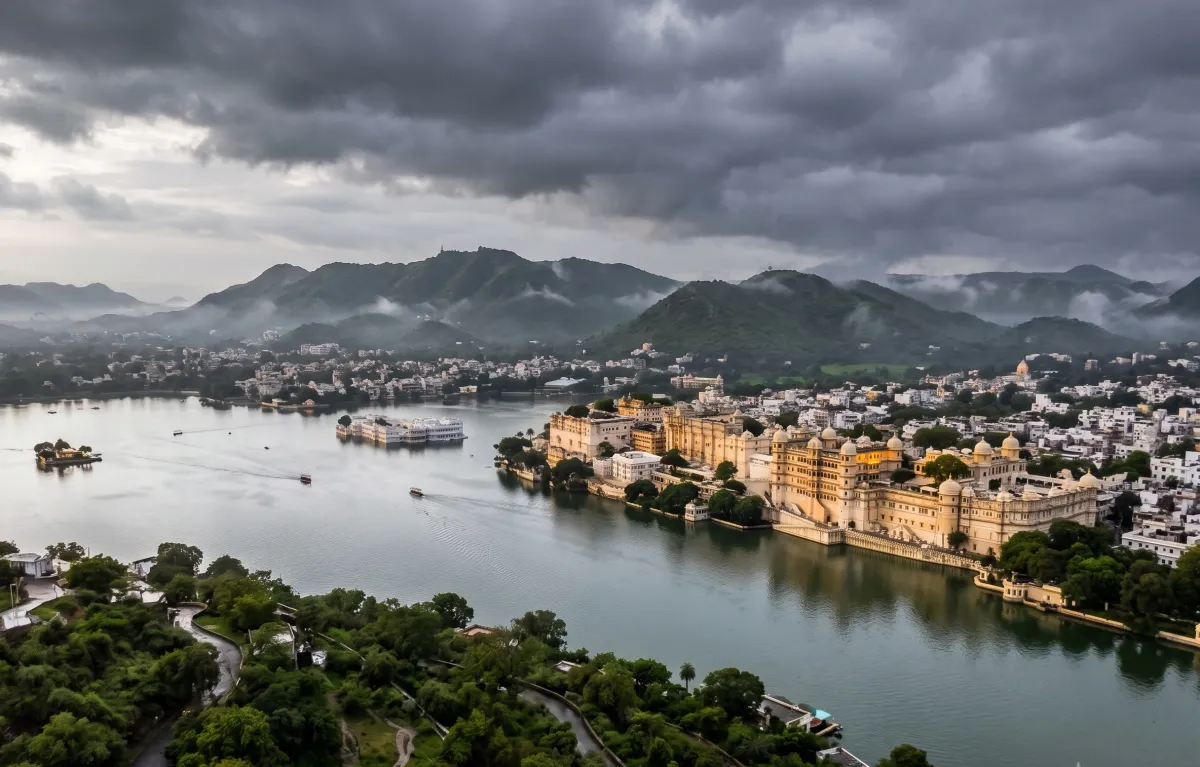
Udaipur's monsoon runs mid-July to late September, when Lake Pichola and Fateh Sagar climb back toward their banks and Sajjangarh, the Monsoon Palace on Bansdara hill, disappears into fog for hours at a stretch. The sharpest window sits between the last week of August and the third week of September, after the heaviest downpours but while both lakes still hold near-full.
A boatman at Ambrai Ghat told me in September 2023 that he'd spent June ferrying tourists across mud, not water. Lake Pichola had dropped so low that season the jetty sat twenty feet from the shoreline, and his boat had scraped bottom twice in a week. Three months later I stood on the same jetty and watched the water lap the third step of the ghat stairs. That is the entire pitch for visiting Udaipur in monsoon: you watch a dead lake come back to life in real time.
Everyone plans Udaipur around winter, when the skies are clean and the photos come out postcard-flat. Fair warning - flat is the wrong word for what happens here between July and September. Clouds sit low over the Aravalli hills, the City Palace turns the color of wet sandstone, and the whole town smells like rain on limestone and frying pakoras. It rained on four of the six days I was there, and I'd go back for exactly that reason.
Why Udaipur's Monsoon Season Is Worth the Risk
Udaipur sits in a rain shadow pocket of the Aravallis, so it never gets drenched the way Mumbai or Goa does. Total rainfall for the season averages around 600mm, most of it falling in short, hard bursts rather than all-day washouts. That matters because it means you get maybe two or three wet hours a day, then hard sun, then the lakes catch the runoff and rise almost visibly between one afternoon and the next.
The upside is specific. Lake Pichola, which drops low enough by May that boat rides get suspended entirely, is usually running again by the second week of August. Fateh Sagar Lake fills faster and sometimes overflows its Moti Magri spillway by early September, drawing a crowd of locals who come just to watch water crash over the edge. None of that happens in October. By then the lakes look full but static, and the drama is over.
Tourist numbers drop hard too. Hotel staff at three different properties quoted me a 40 to 50 percent occupancy dip compared to December, which meant no line at the City Palace ticket counter and an audio guide I could pause without dodging elbows. My own contribution to the season's chaos: a rickshaw quote of 150 INR to Sajjangarh that turned into 400 INR halfway up the hill once the driver claimed the rain was slowing his engine. It wasn't. I paid it anyway, mostly to get out of a downpour that had started without warning.
How much does a monsoon trip to Udaipur cost?
Budget 2,500 to 4,000 INR a day (about $30 to $48) for a mid-range hotel, three meals, a boat ride, and entry to Sajjangarh and the City Palace museum. Monsoon rates run 20 to 30 percent below the November-to-February peak, and I paid 2,200 INR (about $26) for a lake-facing room at a haveli near Gangaur Ghat that would have run 3,400 INR in December.
What You Only See in Udaipur Between July and September
Sajjangarh, the Monsoon Palace, was built in 1884 by Maharana Sajjan Singh specifically so the royal family could watch storm clouds roll in over the city. That's not folklore, it's the actual brief the architects were given. In monsoon the hill it sits on, Bansdara, turns from brown scrub to a green that lasts about six weeks before the dust settles back over everything in October. Drive up in the late afternoon and there's a real chance the palace itself is sitting above the cloud line, which means you look down on fog instead of up at sky.
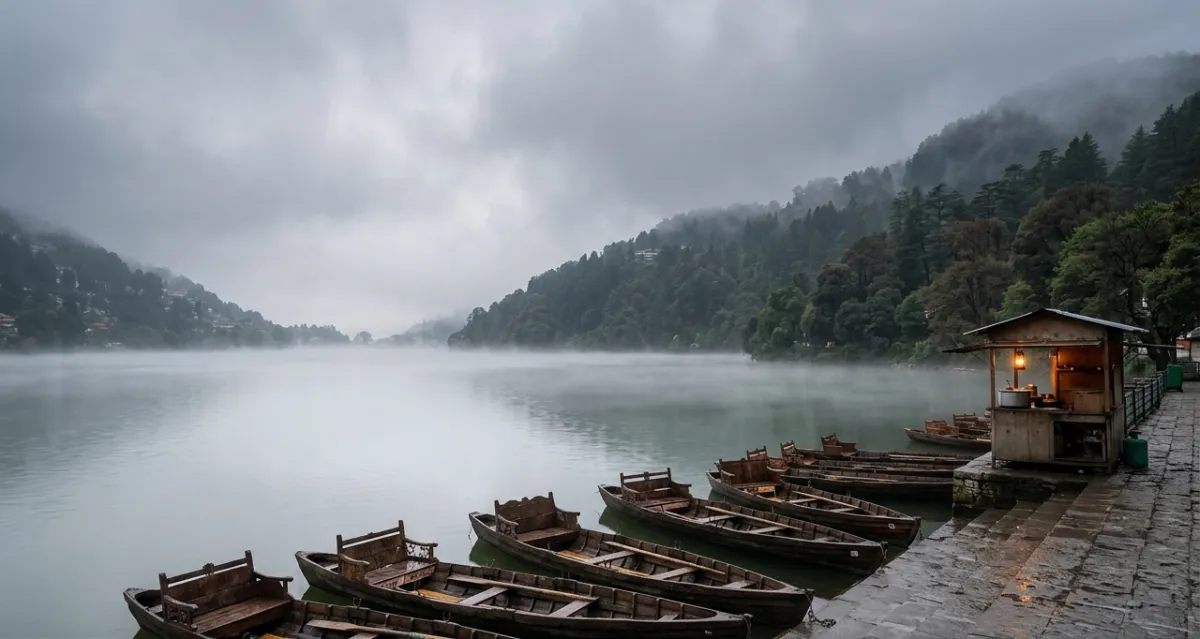
Locals don't call it monsoon here so much as lake season. Ask any boatman on Pichola and that's the phrase you'll get back, not "monsoon," not "rains." Inside the city, the change is smaller but sharper. Bagore ki Haveli's courtyard, usually baking, turns cool enough to sit through the full evening Dharohar dance show without sweating through your shirt. Jag Mandir's marble domes go from glare-white to something closer to bone, and the boat crossing to reach it stops feeling like a novelty and starts feeling necessary, since the ghat steps are half underwater and walking around isn't an option anymore.
A shopkeeper on Jagdish Chowk put it to me plainly: "In summer you come to see the palace. In monsoon you come to see the lake decide if it wants to be a lake."
Best Spots and the Exact Weeks to Time It Right
When is the best time to visit Udaipur during monsoon?
The last week of August through the third week of September is the sweet spot. The heaviest rain, which usually lands between July 10 and August 5, has passed, roads to Sajjangarh stay open, and the lakes are at or near capacity without yet drying back down. Early July looks tempting on paper but I'd skip it. That's when Rajasthan Tourism sometimes restricts vehicle access up Bansdara hill during red-alert rain warnings, and I watched two full tour groups turn back at the checkpoint one Tuesday afternoon.
For the Monsoon Palace itself, go up between 4:30 and 6 PM. The last shared jeeps stop around 6:15, entry runs 300 INR (about $3.60) for foreign nationals and 105 INR for Indian nationals, and the light at that hour cuts through the cloud cover in a way midday flatness never does. Skip the sunrise slot people recommend online. I tried it once and got nothing but a wall of white mist for forty minutes straight.
On the lake, Ambrai Ghat is where every guidebook sends you, and for the sunset view across to the City Palace it earns that reputation. But it gets crowded by 6 PM with tour buses from Jaipur. The real trade: walk ten minutes north to the terrace at Jagat Niwas Palace Hotel, order a 250 INR lime soda you don't have to be a guest to buy, and get the same angle with a third of the people. You lose the ghat-level street energy. You gain the ability to actually hear yourself think.
- Lake Pichola boat rides resume once water crosses a minimum depth mark, typically by mid-August, at 700 INR for a shared 30-minute crossing to Jag Mandir
- Fateh Sagar's spillway is best watched in the first two weeks of September, after a multi-day rain spell
- The Sajjangarh Wildlife Sanctuary leopard safari closes entirely during peak monsoon weeks, so check same-day before planning around it
What to Wear and What the Roads Actually Do
Pack for humidity, not cold. Daytime temperatures hold around 27 to 31 degrees Celsius, but the air sits thick enough that cotton kurtas beat synthetic hiking gear every time. I brought one pair of proper rain boots and never used them. Cheap rubber flip-flops and a pair of quick-dry trousers did more work than anything else in my bag, especially on the ghat steps, which turn slick with algae the moment they're wet.
Bring a dry bag or two large ziplock bags for your phone and camera. Sudden fifteen-minute downpours are normal, and umbrellas turn useless the second wind comes off the lake, which it does most evenings around 7.
Is Udaipur safe to visit during monsoon?
Yes, with one caveat: the ghat steps and the winding road up to Sajjangarh get genuinely slippery, and local authorities do close the palace road during red-alert warnings a handful of days each season. Check the Rajasthan Tourism advisory each morning, keep a buffer day in your itinerary, and you'll rarely lose more than a few hours.
This season is not for anyone who needs guaranteed clear-sky photos on a fixed two-day layover. It's also rough going if you're prone to motion sickness, since the auto-rickshaw ride up Bansdara hill switches back hard enough to test anyone's stomach even on a dry day. If either of those describes you, come in November instead and accept the flatter light.
Seasonal Food and the Festivals That Land Mid-Monsoon
Rain in Udaipur means one thing at every street corner: frying. Mirchi bada, a batter-fried green chili stuffed with spiced potato, shows up on carts around Bapu Bazaar the moment the first clouds gather, usually 15 INR a piece. Pair it with cutting chai, served in small glasses for 10 INR, and you've got the actual local ritual, not the version written up for tourists.
Corn sellers set up along Fateh Sagar's promenade once the lake starts rising, roasting bhutta over coal and rubbing it with lime, salt, and chili powder for about 30 INR an ear. It's messy, it's smoky, and it's better eaten standing up watching the water than sitting anywhere with a tablecloth.
Hariyali Teej, usually landing in early August, is the festival worth planning around. A procession carries the idol of Goddess Parvati from the City Palace through the old city streets, with drummers and dancers in green clothing that matches the newly wet hills. Fewer visitors know about Jal Jhulani Ekadashi in September, when boats carry temple idols out onto Lake Pichola itself for a ceremonial float. I stumbled onto it by accident on a Tuesday evening, and it beat every organized tour I'd booked that week.
Last evening there, the power cut out along Lal Ghat for maybe ten minutes, the whole street lit only by shop candles and the occasional flash of lightning out over the lake. Somewhere behind me a temple bell kept going through the whole blackout, off-rhythm, like it didn't know the electricity was gone. That's the image I keep instead of the postcard shot of the City Palace at sunset.
Map-o-World Editorial Team
Travel Research & Editing
Our guides are researched from official tourism sources, local operators, transport authorities and recent traveller reports, drafted with AI assistance and reviewed by our editors before publishing. Prices, opening hours and entry rules change often - please double-check before you travel, and tell us if you spot something out of date.
Read our editorial policy arrow_forward