Kuala Lumpur Public Transport: The No-Grab 2026 Guide
Skip Grab and default to Kuala Lumpur's MRT and LRT: air-conditioned, RM1.30 to RM6.40 a ride (under $1.50), with trains every 4 to 8 minutes. From KLIA, take the KLIA Ekspres (28 minutes, RM55) or the KLIA Transit and MRT combo for about RM15. A Touch 'n Go card or a contactless bank card opens every gate.
A Grab from KLIA Terminal 1 to Bukit Bintang quoted RM94 (about $21) at 5.40pm on a Friday in February 2026, with an estimated 75 minutes crawling up the Maju Expressway. The train under the same terminal did it in 28 minutes for RM55. That gap is the entire case for learning Kuala Lumpur public transport before you land, and with Visit Malaysia 2026 filling the arrivals halls - Lufthansa starts flying Frankfurt to KL five times a week from 25 October - the queue at the Grab pickup bay is only getting longer.
I spent 12 days on that trip riding every line end to end: the driverless Putrajaya MRT, the wheezing 2003-era monorail, and the KTM Komuter trains that run on what I can only describe as rumour. I also got lost inside a shopping mall while making what the map called a 'transfer'. What follows is the network as it actually behaves, with the fares I paid.
Which train should you default to in Kuala Lumpur?
Default to the MRT - the Kajang and Putrajaya lines - backed up by the LRT Kelana Jaya line. Between them they reach Bukit Bintang, KLCC, Chinatown, Merdeka 118 and TRX, run every 4 to 8 minutes, and cost RM1.30 to RM6.40 (about $0.30 to $1.50) per ride.
The MRT stations are the newest infrastructure in the city and it shows: platform screen doors, lifts that work, air-con set to arctic. I wore a jacket underground in February and meant it. Grab still wins three specific situations - after midnight, door-to-door in a downpour, and groups of three or more with luggage - but for a solo traveller or a couple doing the sights, rail beats the car from roughly 7am to 8pm, because Jalan Tun Razak at 6pm is a car park with traffic lights.
Every Mode Priced: MRT, LRT, Monorail, KTM and the Free GoKL Bus
Kuala Lumpur public transport splits into five modes, and they are not equals. Here is each one with the numbers that matter.
MRT Kajang and Putrajaya lines - the workhorses
Fares run RM1.30 to RM6.40 with a card, trains come every 4 minutes at peak and every 8 off-peak, and service runs from 6am to about midnight. The Putrajaya line only opened fully in March 2023, so the carriages still smell of new plastic. Use the MRT for Bukit Bintang, TRX and its Exchange mall, Pasar Seni for Chinatown, Muzium Negara, and the Merdeka 118 tower.
LRT - three older lines, one great one
The Kelana Jaya line is the keeper: driverless since 1998, every 3 to 5 minutes at peak, and it serves KLCC for the Petronas Towers, Masjid Jamek for the old colonial core, and Dang Wangi for walking into Kampung Baru's night food streets. Fares sit in the same RM1 to RM5 band as the MRT. The Ampang and Sri Petaling lines mostly haul commuters to suburbs you have no reason to visit.
KL Monorail - short, useful, creaky
Eleven stations from KL Sentral to Titiwangsa, RM1.20 to RM4.10, every 5 to 10 minutes, in two-car trains that pack solid after 5.30pm. It glides at second-storey height along Jalan Sultan Ismail, which makes it the best RM2.50 view in the city, but the station lifts fail often enough that I never saw all of them working on the same day. Ride it for Chow Kit market and Medan Tuanku hotels; avoid it with a big suitcase.
KTM Komuter - for Batu Caves and nothing else
RM2.60 (about $0.60) from KL Sentral to Batu Caves in 25 minutes sounds great until you learn trains run every 30 to 40 minutes. Check the departure board before you commit, and plan the caves around the train, not the reverse.
GoKL and feeder buses - free or RM1
GoKL city buses cost nothing and loop through the centre, decent between 10am and 4pm and useless at rush hour, when they marinate in the same traffic you took the train to avoid. MRT feeder buses charge a flat RM1 with a card and cover the last mile from suburban stations.
One honest skip: the KL Hop-On Hop-Off bus at about RM60 ($13.60) for 24 hours. It sits in the identical Jalan Ampang jams as every other vehicle, and the monorail covers most of the same corridor for a tenth of the price.
How do you get from KLIA to the city centre by train?
Two rail options leave from under the terminals. The KLIA Ekspres reaches KL Sentral nonstop in 28 minutes for RM55 (about $12.50), departing every 15 to 20 minutes. The budget route - KLIA Transit to Putrajaya Sentral, then the MRT into town - costs about RM15 and takes roughly 90 minutes.
The fast way: KLIA Ekspres, step by step
- From arrivals at Terminal 1 or 2, follow the purple KLIA Ekspres signs one level down to the station.
- Book online at kliaekspres.com for RM50; the counter and machine price is RM55.
- Trains run every 15 minutes at peak, every 20 off-peak, from about 5am to midnight.
- Ride 28 minutes nonstop to KL Sentral; boarding at Terminal 2 adds 3 minutes.
- At KL Sentral, connect onward: the covered walkway to Muzium Negara MRT takes 5 to 8 minutes for Bukit Bintang and TRX, the LRT Kelana Jaya line goes to KLCC, and the monorail sits across NU Sentral mall.
The RM15 way: KLIA Transit plus MRT
Everyone repeats that the Ekspres is the only sane train from the airport. What they miss is that the Putrajaya MRT line quietly created a second route when it opened. Take the KLIA Transit from the same station area to Putrajaya Sentral (RM9.40, about $2.10, around 20 minutes), walk the covered link for 5 minutes to the MRT, then ride the yellow line north for about 45 minutes to TRX or Bukit Bintang for roughly RM5. Total: RM15 against RM55, in exchange for an extra hour and no luggage racks. I did it once in daylight with a backpack and would do it again; jetlagged at 11pm with a 25kg case, I would not.
Fair warning - this whole section is not for groups. Three people with bags will pay RM75 to RM95 for a Grab to Bukit Bintang, which splits to less per head than the Ekspres. Take the car and feel no guilt.
Do tourists need a Touch 'n Go card in Kuala Lumpur?
Not strictly. Since 2023 every Rapid KL rail gate accepts contactless Visa and Mastercard, so you can land and ride on your bank card alone. A Touch 'n Go card (RM10, about $2.30) still earns its keep if you will ride buses, stay longer than three days, or want to dodge foreign transaction fees.
Older guides all insist the card is step one before anything else, and that advice has quietly expired for rail-only visitors. Here is the real calculus: a typical sightseeing day costs RM8 to RM12 in fares, and a 3 percent bank markup on that is pocket lint. The card wins on buses (which take Touch 'n Go but not all foreign cards), on consistency (one card in, same card out, no declined-tap drama), and on speed at the gate. I bought mine at a 7-Eleven on Jalan Tun Sambanthan for RM10 and loaded RM30 in cash; every station ticket machine tops it up too. The eWallet app is a separate headache with foreign numbers - skip it and treat the card as a dumb cash chip.
The attendant at Pasar Seni put it better than any FAQ: 'Keep ten ringgit on it, always. The gate checks what you have going in, not what the ride costs coming out.'
Pass Maths: When the KL TravelPass Actually Pays Off
Kuala Lumpur public transport is so cheap that most passes are solutions hunting for a problem, with one exception. The KL TravelPass bundles a one-way KLIA Ekspres ride with two days of unlimited Rapid KL trains for RM70 (about $16). Since the Ekspres alone costs RM50 to RM55, you are paying RM15 to RM20 for 48 hours of unlimited rail, which breaks even at about six rides. Worth it? On a two-day stopover where you were taking the Ekspres anyway, yes, clearly.
The My50 pass - RM50 for 30 days unlimited - shows up in half the blog posts about the city, and tourists cannot buy it. It requires a Malaysian MyKad identity card. Budget travellers staying a week should instead expect RM60 to RM80 total in pay-as-you-go fares, which no available pass undercuts. Spend the mental energy on food instead.
Five Transit Mistakes I Watched Tourists Make (Two Were Mine)
- Treating the KL Sentral to monorail transfer as one station. It is an 8-minute walk through the NU Sentral shopping mall, and the signage gives up halfway. I followed the wrong escalator into a Level 2 food court, stood in the smell of kaya toast and floor polish, and missed two trains.
- Buying single-journey tokens for every ride. The machine queue at KLCC ran 14 people deep at 6pm when I counted; anyone with a card walks straight past it.
- Trusting the journey planner on KTM Komuter. Apps show the route but soften the 40-minute gaps, which is how people end up stranded at Batu Caves as the 4pm thunderstorm rolls in. It rolled in on me at 4.10.
- Entering the system on a nearly empty card. The gates enforce a minimum balance, so my card with RM3.40 left drew a double beep and a shut paddle at Muzium Negara even though the fare was under RM2. Top up before, not after.
- Tapping in with a phone and out with the physical card, or splitting one bank card across two people. The system reads each tap as a separate traveller, flags the mismatch, and sends you to a counter to pay a penalty fare while your train leaves.
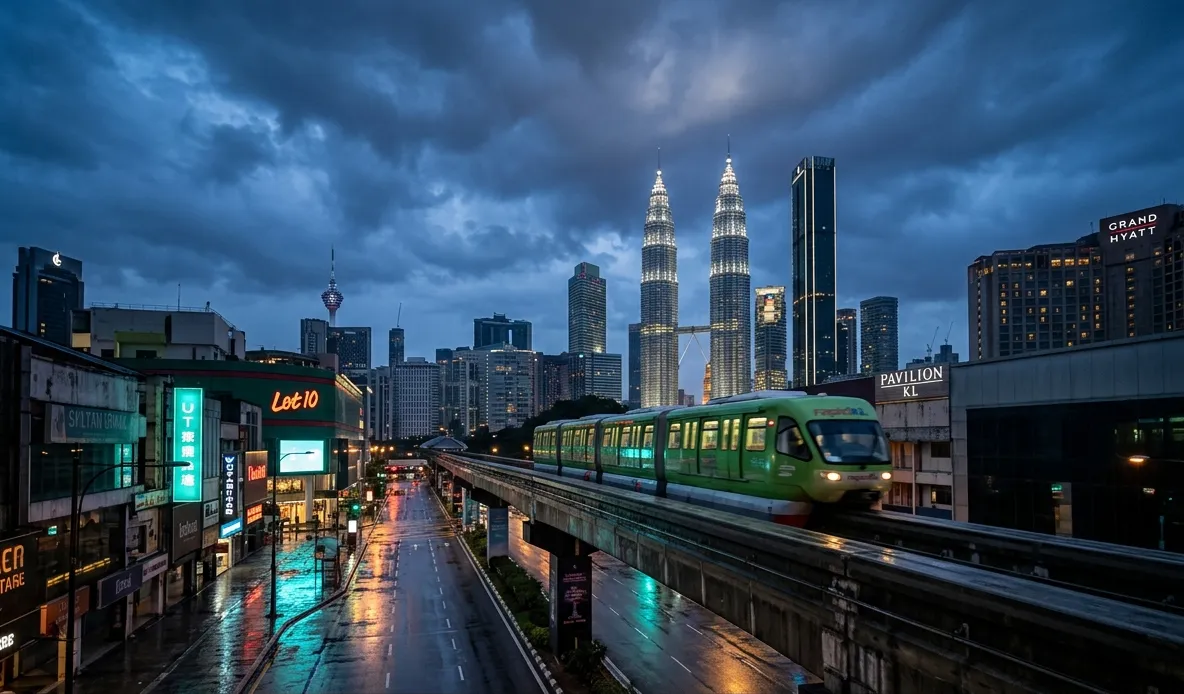
My last tap of the trip came at 11.52pm at Bukit Bintang: RM1.60 off the card, rain still dripping from the shop awnings on Jalan Sultan Ismail, and the monorail sliding overhead - two cars, lit up like an aquarium. Grab's app, still open in my pocket, wanted RM18 for the same 900 metres.
Map-o-World Editorial Team
Travel Research & Editing
Our guides are researched from official tourism sources, local operators, transport authorities and recent traveller reports, drafted with AI assistance and reviewed by our editors before publishing. Prices, opening hours and entry rules change often - please double-check before you travel, and tell us if you spot something out of date.
Read our editorial policy arrow_forward