Cherrapunji 5-Day Itinerary From Delhi | Under Rs 40,000
A 5-day Cherrapunji trip from Delhi costs roughly Rs 32,000-38,000 per person in August-September, travelling as a couple or pair. That covers return IndiGo or Air India flights to Guwahati, four nights in homestays, shared taxis, the Double Decker root bridge trek and all the major waterfalls. No permit is needed for Meghalaya.
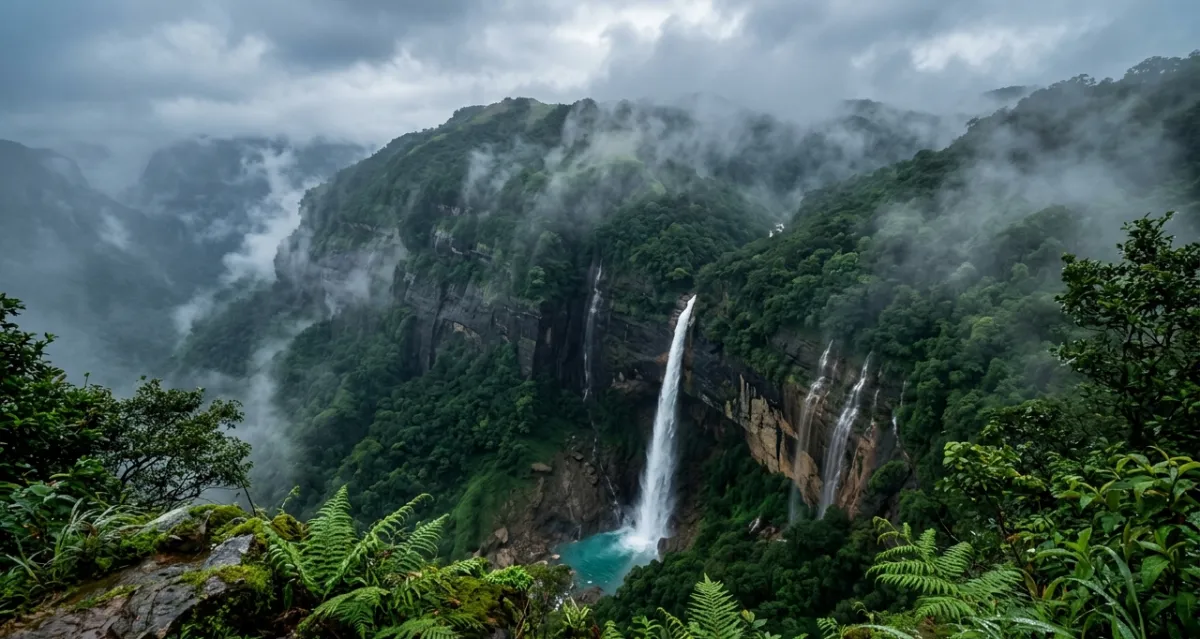
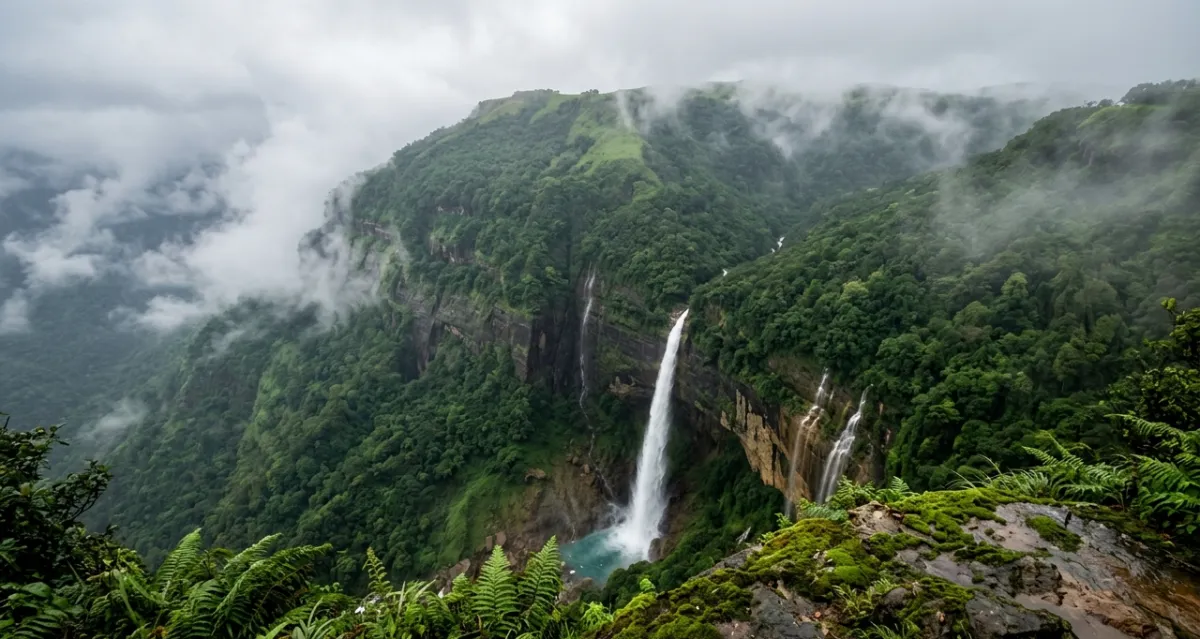
Here's the thing about Cherrapunji: everyone tells you to skip it in the monsoon. Wrong. The wettest place on earth is wet for a reason, and that reason is the show. Nohkalikai Falls in August is a 340-metre column of white water that you hear before you see. The same falls in March is a trickle that regulars politely call 'disappointing'. Guides in Sohra (the local name, and the one you will see on every signboard) will tell you the same thing. Come between late July and early October or don't bother.
With Guwahati suddenly on the international map thanks to Air India Express's new Dubai and Abu Dhabi routes, domestic fares into the Northeast have loosened up a little, and Meghalaya is getting the 2026 extreme-monsoon treatment in every travel feed. So this cherrapunji itinerary from delhi is built for exactly that window. Five days, one pair of shoes you are prepared to ruin, and a budget that stays under Rs 40,000 without sleeping in a dormitory.
How much does a 5-day Cherrapunji trip cost from Delhi?
Expect Rs 32,000-38,000 per person for five days, assuming two people sharing rooms and taxis. Flights are the biggest line at Rs 11,000-14,000 return. Stay runs Rs 1,500-2,500 a night for a clean double homestay. Transport, food and entry fees together add another Rs 12,000-14,000. Solo travellers should add about Rs 6,000.
Prices are approximate as of August 2026, and the single biggest variable is your flight. Delhi-Guwahati is a two-and-a-half-hour nonstop, and IndiGo, Air India and Akasa all fly it several times a day. Book three to four weeks out for the monsoon season and you will see Rs 5,000-6,500 one way. Book the week of travel and the same seat is Rs 9,000. The meghalaya monsoon trip cost question really comes down to whether you planned ahead.
The second variable is how you move around. Sohra has no Ola, no Uber and no auto-rickshaws worth mentioning. You either hire a taxi for the day (Rs 2,500-3,500 for a small car, Rs 3,500-4,500 for a Sumo or Innova) or ride shared Sumos between towns for Rs 150-500 a seat. This itinerary mixes both. Couples should hire; solo travellers should make friends in Shillong's Police Bazar and split a car, which is what nearly every backpacker there is already trying to do.
Getting There From India
Fly Delhi to Guwahati (GAU). There is no airport in Shillong worth planning around; Umroi handles a handful of small flights from Kolkata and Dibrugarh and cancels them whenever the cloud sits low, which in August is most days. Guwahati is the reliable door.
- IndiGo 6E has four to six daily nonstops from Delhi T1, including a 6:00 am departure landing around 8:35 am. Fares from Rs 5,200 one way booked three weeks out.
- Air India runs two or three nonstops from T3, typically 7:00 am and early afternoon. Rs 5,800-7,000 one way. Better legroom, and you get a meal.
- Akasa Air has one morning nonstop most days at around Rs 5,000-5,500. Check the timing; it shifts with the season.
- Train: the Dibrugarh Rajdhani (20503) leaves New Delhi at 9:25 am and reaches Guwahati about 28 hours later. 3AC is Rs 3,000-3,400. Cheap, but it eats two of your five days, so this guide assumes you fly.
From Guwahati airport, the shared Sumo and Traveller stand is just outside arrivals. A seat to Shillong is Rs 450-600 and the run takes three to three and a half hours via Jorabat and Nongpoh. A private taxi is Rs 2,800-3,500. There is also the Meghalaya Transport Corporation helicopter to Shillong for about Rs 2,000, which sounds like a bargain until you learn it does not fly in heavy rain. In August, assume it will not fly.
No inner line permit exists for Meghalaya. Indian citizens need nothing beyond a photo ID for hotel check-in. Keep a physical copy; mobile signal in Nongriat is a rumour.
Day 1 - Delhi to Guwahati to Shillong
Take the earliest flight you can stomach. The 6:00 am IndiGo puts you in Guwahati by 8:35 am, and with luck you are in a Sumo by 9:30. The road climbs through Nongpoh, where every vehicle stops for tea and the air gets noticeably cooler and wetter with each hairpin. Around Umiam Lake the windows fog up. That is your first real sign you have left the plains.
Shillong itself is a base, not a destination, on this plan. Check into a guesthouse around Laitumkhrah or near Police Bazar; Rs 1,500-2,200 for a double with hot water. Laitumkhrah is the better choice for food. Cafe Shillong on Laitumkhrah Main Road does a reliable veg thali and decent coffee, and the area's Marwari-run dhabas serve pure veg dal-roti for Rs 120-180 a plate. Jain travellers will find the dhabas more willing to cook without onion and garlic than the Khasi kitchens, which lean heavily on both.
Spend the afternoon at Ward's Lake (Rs 20 entry) and the Don Bosco Museum (Rs 100 for Indians, closed Sundays, last entry 4:30 pm), which is far better than it sounds and explains the Northeast's tribes in a way no guidebook manages. Sleep early. Tomorrow is long.
Day spend: Rs 9,500 (including one-way flight at Rs 5,500, Sumo Rs 500, stay Rs 1,000 share, food Rs 500, entries Rs 120, buffer).
Day 2 - Shillong to Sohra via the waterfalls
Hire a taxi from Police Bazar for the full day, Rs 3,000 for a small car to Sohra with all the stops. Leave by 7:00 am. The Shillong-Sohra road is only 54 km but it is the best drive in the state, and the clouds are thinner in the morning.
First stop is the Mawkdok Dympep Valley viewpoint at Duwan Sing Syiem bridge, where the plateau simply ends and the gorge below fills with mist that moves like smoke. There is a zipline here (Rs 300-500) if you want one. Next, Wei Sawdong, a three-tiered waterfall that demands a slippery 20-minute scramble down bamboo ladders. Entry Rs 30, and a local guide for Rs 200 is money well spent in the rain. Fair warning - this one is a bit of a trek for anyone with knee trouble.
Nohkalikai Falls is the big one. Rs 50 entry, and the viewing platform is a short walk from the car park. In August you may wait 40 minutes for the cloud to lift and then get 90 seconds of the full drop before it closes again. Locals treat this as normal. Bring tea from the stalls (Rs 20) and wait. The Seven Sisters Falls viewpoint at Mawsmai is 15 minutes further, and unlike the dry-season postcards, all seven streams actually run.
'You do not visit Sohra in the rains. You let Sohra happen to you.' - the line every homestay owner in Cherrapunji seems to repeat to first-timers, and it is not wrong.
Stay in Sohra town or, better, in one of the homestays along the Mawsmai road. Expect Rs 1,800-2,500 for a double with hot water and dinner included. Jiva Resort and Sa-I-Mika are the mid-range names; the smaller Khasi homestays are cheaper and serve jadoh (rice cooked in stock) and a surprisingly good veg version with just rice, turmeric and local greens if you ask in advance. Ask in advance. Veg is not the default here.
Day spend: Rs 3,400 (taxi Rs 1,500 share, entries Rs 130, guide Rs 100 share, stay Rs 1,100 share, food Rs 400, tea and snacks).
Day 3 - The Double Decker root bridge and Nongriat
This is the day the whole trip is built around, and the most common mistake travellers make is doing it as a day hike. Don't. The trailhead at Tyrna village is 12 km from Sohra (taxi Rs 700-900 one way). From there it is roughly 3,500 steps down to Nongriat, and the same 3,500 back up. Done in one go, that is six hours of stairs in 90 percent humidity, and you arrive at the bridge exhausted and leave after 20 minutes. Stay the night in Nongriat instead. Rooms at Serene Homestay or the handful of others run Rs 500-800 per person with dinner, and you get the bridge at dawn with nobody on it.
The descent takes about two hours. Halfway down, two steel-cable suspension bridges cross the Umunoi river, and they sway exactly as much as you fear. The Umunoi root bridge, a single-decker, is a 10-minute detour worth taking. Then the village, then the Double Decker itself: two tiers of living Ficus elastica roots, trained across the Umshiang stream over 150 years, thick as a man's thigh and slick with green moss. Entry Rs 50 for Indians, camera Rs 20. Villagers will tell you the bridge gets stronger every year, which is the opposite of every other piece of infrastructure in the country.
If your legs allow it, carry on 45 minutes past the bridge to Rainbow Falls, a blue plunge pool that earns its name on the rare sunny afternoon. Swim only if locals are swimming. The current in August is not a joke.
Food in Nongriat is simple: rice, dal, boiled vegetables, eggs, Maggi, and tea. Vegetarians are fine. Strict Jain eaters should carry theplas and dry snacks from Delhi, because nobody in the village is going to skip onion. Phone signal is minimal. Carry cash; the nearest ATM is in Sohra.
Day spend: Rs 1,700 (taxi Rs 400 share, entries Rs 70, homestay with dinner Rs 700, lunch and water Rs 250, guide optional Rs 300 share).
Day 4 - Climb out, caves and the living edge of the plateau
Start the climb by 6:30 am before the heat builds. Budget two and a half hours to Tyrna, three if you stop to breathe, which you will. A pre-booked taxi (arrange it with your Sohra homestay the day before) takes you back to Sohra for a late breakfast and a shower that will feel like a religious experience.
The afternoon is for the caves, with one caveat. Mawsmai Cave (Rs 30) is the famous one, a 150-metre lit walk through limestone, but in peak monsoon the lower passages flood and the forest department shuts it without notice. Arwah Cave, 3 km away, is the better monsoon bet: Rs 30 entry, fossils in the walls, and a 15-minute forest walk in that smells of wet earth and betel nut. Dainthlen Falls, 5 km from Sohra on the Shella road, is free and almost always empty, a wide, flat sheet of water with a rock ledge you can sit on in the drizzle.
And honestly? If your legs are done, skip the caves and sit at one of the roadside stalls near the Sohra market with a plate of pukhlein (fried rice-flour cakes, Rs 20) and sweet tea, watching the rain come in sideways. Nobody will judge you. Eat dinner at your homestay; the Rs 300-400 thali, veg on request, is hard to beat.
Day spend: Rs 3,200 (taxi Rs 450 share, entries Rs 60, stay Rs 1,100 share, food Rs 700, tea and snacks, laundry Rs 200).
Day 5 - Sohra to Guwahati and the flight home
Shared Sumos leave Sohra market for Shillong from about 6:00 am, Rs 150-200 a seat, 90 minutes. From Shillong's Bara Bazar or Police Bazar, shared Sumos to Guwahati airport run every 20-30 minutes until mid-afternoon, Rs 450-600. Total door-to-door time is five to six hours, so an evening flight is safe; a 2:00 pm departure is cutting it fine in monsoon traffic at Jorabat.
If you have a late flight, pause at Umiam Lake for an hour. The Orchid Lake Resort cafe charges Rs 150 for tea and a lakeside table, which on a clear morning is worth every rupee. The IndiGo 7:30 pm and Air India 6:15 pm Guwahati-Delhi services land you home well before midnight. Book the return leg at the same time as the outbound; the Rs 5,500-6,500 fare disappears fast in August.
Day spend: Rs 7,300 (Sumos Rs 750, tea and food Rs 500, return flight Rs 6,000).
When is the best time to visit Cherrapunji from Delhi?
For waterfalls and root bridges at full power, late July to early October. August and September are peak, with Nohkalikai at its loudest and the forest around Nongriat at its greenest. October to November gives clearer views and easier hiking. December to February is cold, dry and, frankly, underwhelming for falls.
The calendar works nicely for Delhi travellers. The Independence Day long weekend (15 August 2026 is a Saturday, so pair it with a Friday leave), Janmashtami, and the Ganesh Chaturthi window all fall inside peak season. Avoid the Durga Puja week in October if you dislike crowds: half of Kolkata and Guwahati heads to Shillong, and homestay prices jump 30-40 percent. Diwali week is the start of the dry season; pleasant, but the big falls are already thinner.
Is Cherrapunji worth it in the monsoon with family or kids?
Yes, with adjustments. Nohkalikai, Seven Sisters, Mawkdok, Dainthlen and Arwah Cave are all manageable with children over six and with parents in their sixties. The Nongriat trek is not. Swap Day 3 for the Mawlynnong root bridge at Riwai, a 15-minute flat walk from the car park, and a day trip to Dawki on the Bangladesh border. Dawki's famous clear water turns brown in August, so go for the village and the drive, not the boat.
Pack a proper rain jacket, not an umbrella, because the wind in Sohra turns umbrellas into modern art within minutes. Quick-dry clothes, two pairs of shoes, zip-lock bags for phones, and a small bottle of Dettol for the leeches on the Nongriat trail, which are real but harmless. Many travellers also swear by salt in a sock. Rub it on your ankles before the descent.
Cherrapunji 5 days itinerary - Trip Cost Summary
The figures below assume two people sharing rooms and taxis, flights booked three to four weeks ahead, and one night in Nongriat. A solo traveller paying full taxi and room costs should budget closer to Rs 42,000. A couple willing to take shared Sumos everywhere, including to Tyrna, can trim another Rs 2,000-3,000 per head.
| Item | Cost per person (INR) |
|---|---|
| Flights (Delhi-Guwahati return) | Rs 11,500 |
| Stay (4 nights, shared) | Rs 4,000 |
| Food (5 days) | Rs 2,800 |
| Transport (Sumos, day taxis, share) | Rs 5,800 |
| Activities and entry fees | Rs 1,200 |
| Buffer (rain delays, tips, snacks) | Rs 2,500 |
| Total | Rs 27,800 |
That leaves over Rs 12,000 of headroom under the Rs 40,000 headline. Spend it on a better homestay in Sohra, a private car for the full five days, or a detour to Mawlynnong and Dawki. Or keep it. Worth it? Absolutely. Sohra in the rain is the kind of place that makes you check the Guwahati fares again before the plane has even landed in Delhi.
Tags
Map-o-World Editorial Team
Travel Research & Editing
Our guides are researched from official tourism sources, local operators, transport authorities and recent traveller reports, drafted with AI assistance and reviewed by our editors before publishing. Prices, opening hours and entry rules change often - please double-check before you travel, and tell us if you spot something out of date.
Read our editorial policy arrow_forward