Prague vs Vienna in Autumn 2026: The Luxury Verdict
Prague wins the four-day luxury autumn break in 2026. Five-star rates run 30 to 40 percent below Vienna's, its tasting menus now trade blows with Austria's best at half the price, and the September-October shoulder season empties the old town. Choose Vienna only if opera, imperial museums and coffee-house ritual outrank everything else on your list.
A number settled this argument for me. Last October the Hotel Sacher quoted 960 euros (about $1,040) for a Thursday night in a deluxe room. The Augustine in Prague, a former 13th-century monastery five minutes from Charles Bridge, charged me 12,400 CZK (about $535) for a suite nearly twice the size, with a bar in the old monks' cellar pouring St. Thomas dark lager brewed to a recipe the Augustinians have held since 1352. I did both cities back to back, four nights each, same week, same weather, to settle the Prague vs Vienna question properly. One felt like a discovery. The other felt like a beautifully run museum with excellent cake.
The market has noticed. US flight-search interest in Czechia is up roughly 180 percent year over year as travellers swerve around overbooked Paris and Rome, and Prague is the main beneficiary. Autumn 2026 is the window: rates haven't caught up with demand yet, and September and October are when the city is at its best.
The Quick Verdict on Prague vs Vienna
Prague, by a length, for a four-day luxury city break. You get more hotel for less money, a food scene that rewards curiosity instead of reverence, and golden late-afternoon light on baroque facades with nobody standing in front of them. Vienna is the right call for a culture-first trip built around the Staatsoper, the Kunsthistorisches Museum and three-hour coffee-house sittings. If you're torn on a Prague or Vienna city break and this is your first run at Central Europe, pick the city that feels like an event rather than a syllabus. That's Prague.
Prague vs Vienna Head-to-Head: Money, Mood, Food, Crowds, Logistics
How much does a luxury trip to Prague cost in 2026?
Plan on 60,000 to 80,000 CZK per person (about $2,600 to $3,450) for four days: a five-star room at 10,000 to 16,000 CZK a night, two tasting-menu dinners, a private guide for a morning, and car transfers. The identical standard in Vienna priced out at roughly $4,100 for the same October week.
The gap is widest at the top. In late September the Four Seasons Prague listed river-view rooms from 15,500 CZK (about $670), down from over 21,000 CZK in June. Vienna's Imperial and the Rosewood both sat between 750 and 1,100 euros a night for the same dates. Fine dining follows the same curve: the tasting menu at Field, Prague's Michelin-starred kitchen on U Milosrdnych street, runs 4,400 CZK (about $190), while Steirereck in Vienna's Stadtpark charges 335 euros (about $365) before you've opened the wine list.
Mood: crooked streets versus imperial order
Vienna behaves itself. The Ringstrasse sweeps, the cakes arrive with silver forks, the trams run to the minute, and by day two I caught myself craving a street that bent. Prague supplies nothing but streets that bend. Mala Strana at 7 am in October smells of coal smoke and wet linden leaves, an odd old-Europe combination that decades of restoration haven't scrubbed out. My shoulders dropped an inch that first morning on the Kampa side of Charles Bridge. Not a figure of speech; I felt it happen.
Is the food better in Prague or Vienna?
Vienna has the higher ceiling: Steirereck and Silvio Nickol are genuine top-tier European rooms. Prague has the better four-day eating trip, with starred menus at half Vienna's prices, a serious Moravian wine scene, and autumn game - venison, wild boar, chanterelles - landing on menus from late September.
Everyone repeats that Vienna is the culinary capital of Central Europe, and on pure pedigree it is. What the consensus misses is pace and price. In Prague I ate the 11-course menu at La Degustation Boheme Bourgeoise, built on a 19th-century Czech cookbook, for 4,950 CZK (about $215), then drank orange wine at Veltlin in Karlin until midnight for less than one Steirereck dessert course. Book both Prague rooms five to six weeks out. I tried for a Saturday at La Degustation four weeks ahead, got waitlisted, and ended up at the chef's counter on a Tuesday instead. Better seat, as it turned out.
Crowds: the real shoulder-season difference
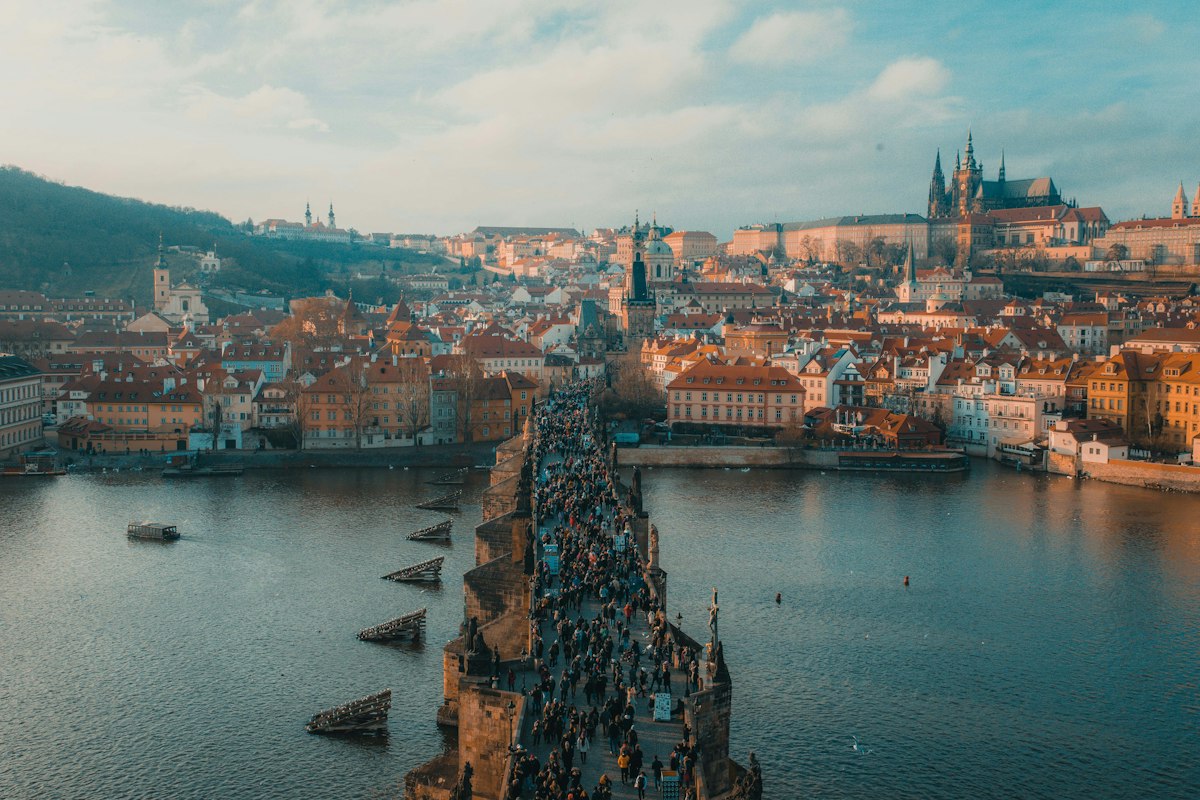
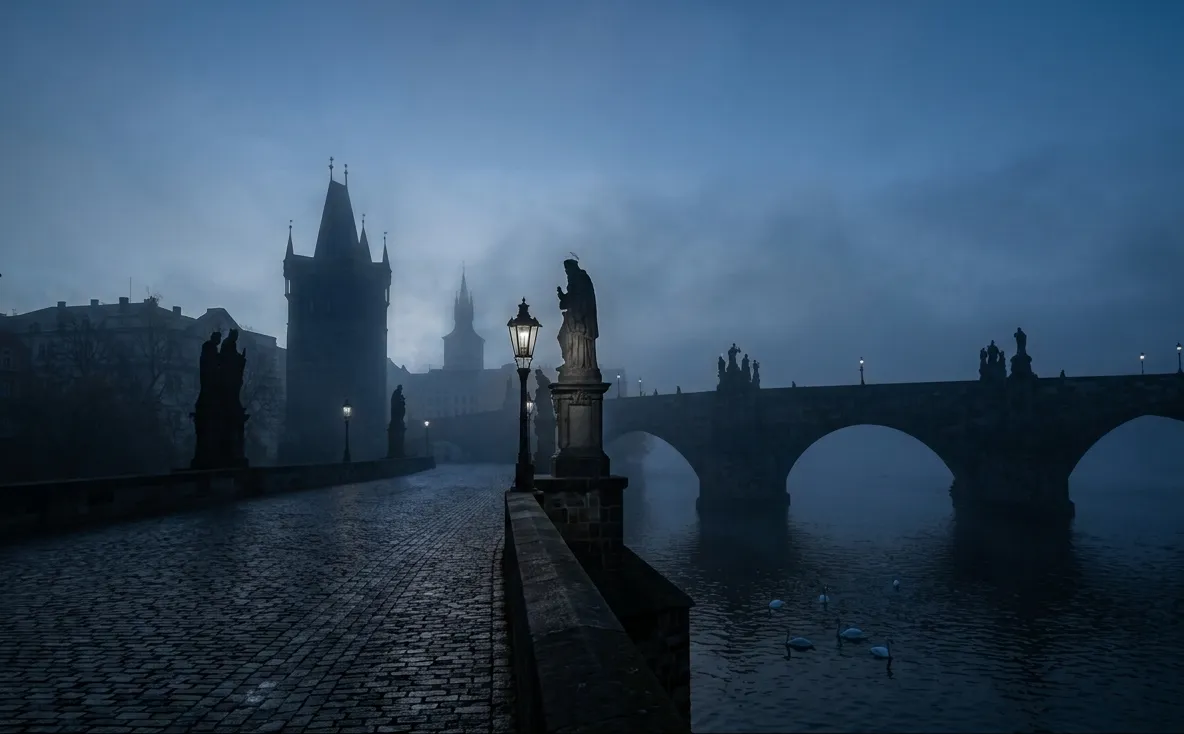
Prague's crowding problem is concentrated, and therefore solvable. The Royal Route from Old Town Square up to the castle is a scrum from 10 am to 5 pm even in October, but at 7:30 am I counted nine people on Charles Bridge, most of them photographers waiting for fog to lift off the Vltava. Vienna spreads its visitors more evenly, yet Schonbrunn still had a 40-minute ticket queue on a wet Wednesday. Autumn works harder for Prague: the tour-group tide visibly recedes after the third week of September.
"In September the city breathes out," the doorman at the Augustine told me, holding an umbrella over my bags. "You are here in the right month."
Logistics: Vienna wins, narrowly
Honesty hands this one to Austria. Vienna's airport train (CAT, 16 minutes, 14.90 euros) beats Prague's 30-minute taxi run, the tram map is easier to read, and top-end service is more consistent in English. Prague's wrinkle is airport transport: a tout at Vaclav Havel Airport quoted me 1,200 CZK to Mala Strana; the Bolt I ordered while standing next to him cost 420 CZK (about $18). Have your hotel send a car or use a ride app - never the rank touts. The Augustine's Mercedes transfer was 1,450 CZK and worth it after a long flight.
When Vienna Wins, and When Prague Runs Away With It
Book Vienna when the anchor of your trip is a specific cultural event: a Staatsoper premiere, the Philharmonic at the Musikverein, or a slow morning with Bruegel at the Kunsthistorisches. Book it too if your ideal afternoon is three uninterrupted hours with old masters followed by a melange at Demel. Prague can't match that; its museums are a supporting act.
Prague runs away with everything else. Evenings, first: a negroni at Hemingway Bar costs 285 CZK (about $12) in a room you can actually get into, which quietly embarrasses Vienna's stiff hotel lobbies. Light, second: castle-and-bridge views in October fog make the best urban photographs in Europe, and I shot both cities in the same week. Romance, third, if that's the brief - the hill below the castle glows amber by 5 pm once the gas-style lamps come on.
Two things to skip. In Prague, the Vltava dinner cruises: 2,200 CZK for a reheated buffet behind windows that fog over exactly when the views get good; take a river-facing table at Kampa Park instead and watch the same bridge from dry land. In Vienna, the queue outside Cafe Sacher; the famous torte runs drier than its legend, and Demel's version, five minutes away, involves no 25-minute wait.
Prague is not for everyone. If you rank museum depth above streetscape, if cobbles are a dealbreaker (pack flat shoes or book cars everywhere), or if you measure a luxury city by its shopping - Vienna's Kohlmarkt flattens Parizska street - stay on the Austrian side of this argument.
The Honest Tie-Breaker: Day Trips by Private Car
Which city has better day trips, Prague or Vienna?
Vienna owns the single best day trip: the Wachau Valley, 75 minutes west, for Gruner Veltliner tastings in Durnstein and lunch above the Danube. Prague counters with variety - Karlovy Vary's spa colonnades, Kutna Hora's bone chapel, the sandstone towers of Bohemian Switzerland - all under two hours by private car.
Full disclosure on my Wachau day: it rained sideways from 11 am, the terrace tasting at Domane Wachau moved indoors, and it was still one of the best days of either trip, which tells you something about the wine. A private car with driver and two tastings ran 490 euros for two people. Prague's options cost less and sort themselves by mood. Karlovy Vary (90 minutes) if you want thermal springs and lunch at the Grandhotel Pupp for around 1,800 CZK for two. Kutna Hora (one hour) if you want the strange: the Sedlec Ossuary and St. Barbara's cathedral back to back. Chateau Mcely (50 minutes) if you want a country-house spa afternoon. On day trips alone, Vienna edges quality and Prague takes range - a draw that leans Prague once you've already done the Wachau.
If You Only Have Four Days, Make Them Prague Days
When is the best time to visit Prague for a luxury break?
Mid-September to late October. Five-star rates drop 20 to 30 percent from summer peaks, daytime highs sit around 12-17C (54-63F), river fog builds the morning views, and tour groups thin out after the third week of September. Skip late November onward, when the Christmas-market surge refills the squares.
Structure the four days around mornings, because luxury Prague in autumn is really a morning proposition nobody prices in. Day one, the castle complex at 8 am with a private guide from Prague Behind The Scenes (about 4,200 CZK for three hours) before the gates crowd at nine. Day two, Mala Strana and Kampa on foot, lunch under Cafe Savoy's restored 1893 ceiling, dinner at Field. Day three, your day trip. Day four, nothing booked before noon, which is its own five-star amenity.
On my last morning I walked onto Charles Bridge at 7:20, the October fog sitting so thick on the water that the far tower floated free of its own bridge. A swan came through it like a paper boat. Thirty metres away, a Czech grandmother fed it half a rohlik roll and never once looked up at the castle. That's the Prague on offer between September and October 2026. Vienna will still be there, running perfectly on time, whenever you get around to it.
Map-o-World Editorial Team
Travel Research & Editing
Our guides are researched from official tourism sources, local operators, transport authorities and recent traveller reports, drafted with AI assistance and reviewed by our editors before publishing. Prices, opening hours and entry rules change often - please double-check before you travel, and tell us if you spot something out of date.
Read our editorial policy arrow_forward